

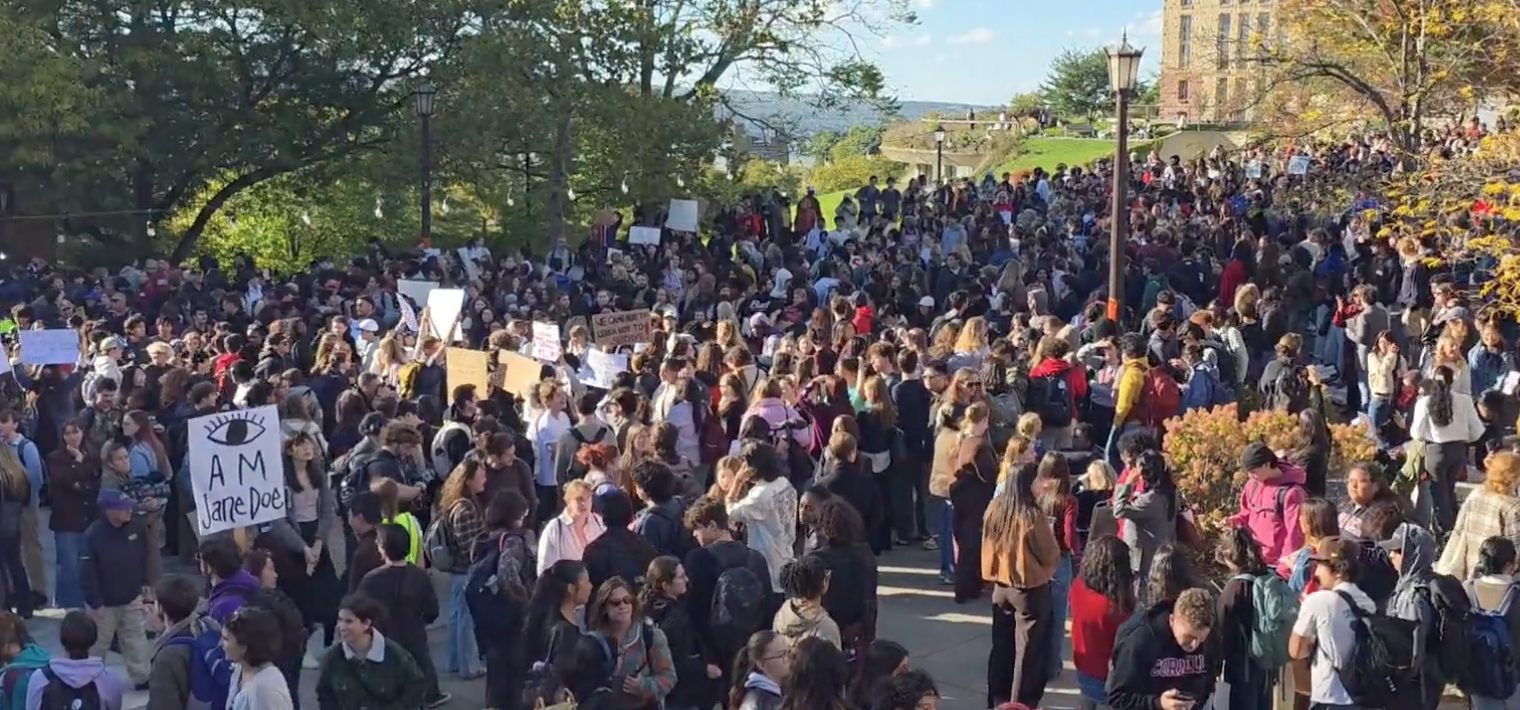
Hundreds of students, faculty members and supporters marched across Cornell University’s campus Monday, demanding changes to how the university investigates sexual assault complaints and disciplines students found responsible.
The “Justice for Survivors” demonstration began at Ho Plaza and moved to Day Hall, Cornell’s administration building, as scrutiny continued over the university’s handling of an alleged October 2024 assault involving seven former Chi Phi fraternity members.

Organized by Students for a Democratic Cornell and other campus and advocacy groups, the Oct. 5 rally filled the plaza and spilled onto the hillside near the Cornell Store, according to CNY Central. After more than an hour of speeches, demonstrators marched to Day Hall, where speakers addressed university leadership with a list of demands.
The protest focused on both accountability in the case involving a former student identified in court papers as Jane Doe and broader changes to Cornell’s disciplinary system.
Protesters demand changes to investigations and sanctions
Organizers called for expulsion or degree revocation for anyone found responsible for involvement in the alleged assault, along with changes to Cornell’s Policy 6.4 requiring independent hearings and minimum sanctions in sexual assault cases.
Their demands also included an external investigation of Cornell’s administration, a return to an independent judicial system, mandatory sexual assault prevention training for students, trauma-informed training for Cornell police and full compliance with New York’s “Enough is Enough” law.
Speakers argued that survivors need clearer ways to report assaults and obtain support. Some participants described how sexual violence had affected people close to them.
Cornell postdoctoral researcher Sky Kunkel told CNY Central that watching a friend cope with an assault while Kunkel was an undergraduate helped motivate participation.
“I saw the toll that it took on her,” Kunkel said.
Rally follows renewed scrutiny of Cornell Seven case
Doe’s September civil lawsuit alleges that seven former fraternity members sexually assaulted her after she was pressured to consume ketamine. The allegations have not been proved in court, and no criminal charges had been announced in the reports describing Monday’s protest.
Cornell has said its disciplinary investigation resulted in suspensions and expulsions and that the Chi Phi chapter was closed and barred from campus. The university has not publicly identified which individuals received those sanctions.
As previously reported, Tompkins County District Attorney Matthew Van Houten reopened the criminal investigation after Doe filed her lawsuit. Gov. Kathy Hochul subsequently appointed Attorney General Letitia James’ office as special prosecutor.
That criminal investigation is separate from Doe’s civil lawsuit and Cornell’s promised outside review of its response.
In previous coverage of President Michael Kotlikoff’s weekend message, Kotlikoff pledged greater transparency and said trustees would announce an outside law firm to conduct the review. He also said Cornell would begin making changes to prevention education, survivor support and investigative processes without waiting for the reviews to conclude.
Pressure extends beyond campus
Monday’s march ended at the same building where graffiti and a broken door window were discovered over the weekend. Cornell police are investigating that damage. The available reporting does not identify those responsible or connect them to rally organizers.
Cornell spokesperson Kyle Kimball acknowledged frustration within the university community but said damaging property was unacceptable.
Separately, FingerLakes1 reported Monday that Ithaca’s Common Council is scheduled to consider a temporary moratorium on certain new city event permits for Cornell and affiliated student organizations Wednesday, Oct. 7.
The proposal would affect gatherings requiring the specified city permits, rather than every Cornell-affiliated event.
For Monday’s demonstrators, the immediate demands centered on university action: stronger sanctions, independent oversight and a reporting system that better supports survivors.

FingerLakes1.com is the region’s leading all-digital news publication. The company was founded in 1998 and has been keeping residents informed for more than two decades. Have a lead? Send it to news@fingerlakes1.com.