Seneca County residents and business owners whose properties were damaged by last week’s severe storms and tornadoes are being urged to submit information through a New York state damage self-reporting tool as local and state officials work to document the extent of the destruction.
The request is especially relevant in Seneca Falls, Waterloo and Fayette, where some of the most significant storm damage was reported. Seneca County Emergency Management and 911 said the information collected could help county and state officials identify additional damage and support potential requests for federal assistance.

The online form allows homeowners, renters and businesses to report damage caused by the disaster, including the location and type of property affected, whether the property is a primary residence, the nature of the damage and whether the event resulted in transportation or employment losses.
Officials stressed that the form is not an application for disaster relief and does not guarantee that financial assistance will become available.
The reporting tool is intended to help state and local governments build a fuller picture of storm losses as they evaluate whether damage reaches thresholds or otherwise supports requests for federal assistance programs.
Residents are asked to submit one survey for each affected housing unit or business.
The form requires users to confirm that the damage being reported was caused by the recent disaster rather than pre-existing conditions or maintenance issues. Residents must provide the physical address of the damaged property and identify whether the property is a business, conventional residence or manufactured home.
The survey also asks whether the property is owned or rented, whether it serves as the respondent’s primary residence and whether the storm caused the loss of personal, public or private transportation.
Another question asks whether the disaster resulted in unemployment or another job-related loss.
Property owners and residents are asked to identify the primary cause of damage, describe what happened and select a damage level. Photos are required when reporting properties with major damage or destruction.
The form also collects information about homeowners or renters insurance and flood insurance.
Contact information is optional, although the state advises respondents that information submitted through the survey may be shared with nonprofit organizations and government agencies involved in disaster response.
Seneca County Emergency Management emphasized that reporting through the tool is voluntary and does not replace contacting an insurance company.
Residents with insurance coverage should continue working directly with their insurer to document losses and pursue claims.
The state also warns residents not to use the damage reporting form for immediate or life-threatening emergencies. Those situations should continue to be reported through 911.
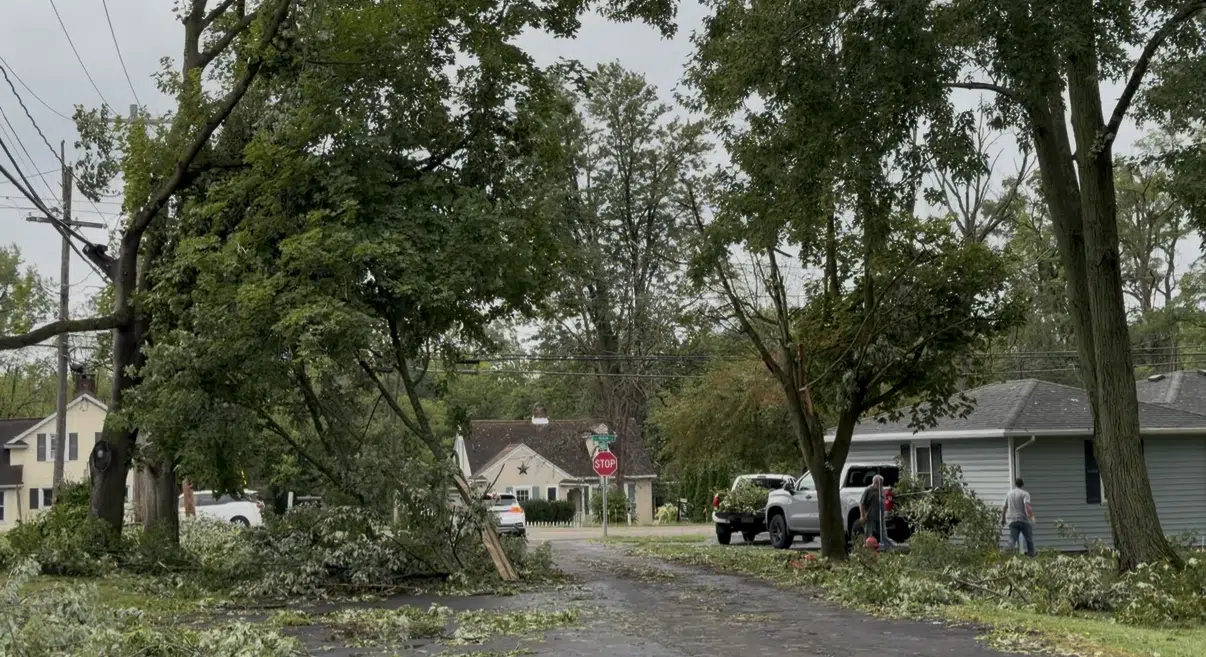
The reporting effort follows extensive storm damage in Seneca County, including areas of Fayette, Waterloo and Seneca Falls affected by confirmed tornadoes and damaging winds.
One tornado caused particularly severe damage in Fayette, while another traveled through the Waterloo and Seneca Falls area, damaging buildings, trees and other property along its path.
The damage assessment process is an important step because federal disaster assistance is not automatically triggered by a tornado or other severe weather event. State and local officials first need information documenting the scale, location and severity of losses.
The self-reporting tool is intended to supplement other assessments conducted by local governments, emergency management agencies and other officials.
That means even residents who have already reported damage to an insurance company or local government may still provide useful information through the state survey.
Officials are encouraging anyone with storm-related damage to a home or business to complete the assessment so the losses can be included as Seneca County and New York continue evaluating the overall impact of the disaster.

FingerLakes1.com is the region’s leading all-digital news publication. The company was founded in 1998 and has been keeping residents informed for more than two decades. Have a lead? Send it to news@fingerlakes1.com.