

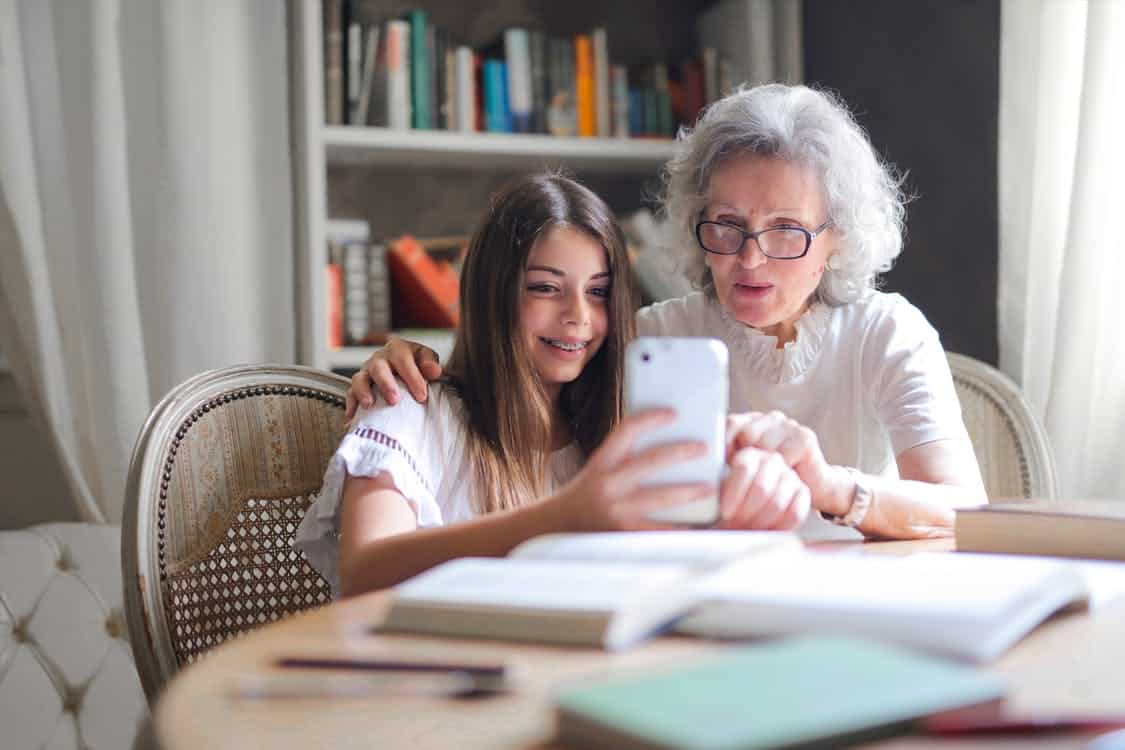
Grandparents remain a central part of American family life, with two-thirds of adults 65 and older now grandparents and millions of children growing up in households headed by grandparents, according to new Pew Research Center analysis released ahead of Grandparents Day.
The national findings offer a broad look at relationships that are familiar across New York, from grandparents providing regular child care to multigenerational households and older adults maintaining frequent contact with grandchildren. Pew’s analysis doesn’t provide a state-by-state breakdown, so the national percentages shouldn’t be treated as New York-specific estimates.

Grandparents Day falls on Sept. 13 this year, the first Sunday after Labor Day. Pew’s report draws on several major data sources, including the U.S. Census Bureau’s Survey of Income and Program Participation and American Community Survey, the University of Michigan’s Health and Retirement Study and Pew’s own national surveys.
Together, the data show that becoming a grandparent is increasingly common as Americans move through their 50s and 60s, while the role grandparents play can range from occasional family contact to substantial caregiving and shared households.
Two-thirds of Americans 65 and older are grandparents
About two-thirds of U.S. adults ages 65 and older were grandparents in 2024, according to Pew’s analysis of Census Bureau data.
Age makes a substantial difference.
Fewer than 1% of Americans in their 30s were grandparents. The share climbed to 27% among adults in their 50s and reached 51% among people in their 60s.
Grandparenthood was most common among adults ages 80 to 90, with 74% saying they were grandparents.
The average U.S. grandparent was 68 years old in 2024.
The figures measure biological family relationships through the Census Bureau survey used by Pew. Participants younger than 30 weren’t asked whether they were grandparents, while people older than 30 were asked only if they reported having at least one biological child.
That means the figures shouldn’t be interpreted as a complete count of every person who serves socially or practically in a grandparent role.
Six grandchildren is the average
Grandparents also tend to have relationships spanning multiple grandchildren.
According to the University of Michigan’s Health and Retirement Study, grandparents had an average of six grandchildren during the 2022-23 survey period.
About 24% had one or two grandchildren, while 43% had between three and six.
Another 19% reported seven to 10 grandchildren, and 14% had more than 10.
The Health and Retirement Study primarily surveys adults ages 50 and older, making it different from Census Bureau data examining the broader population.
Still, the findings illustrate the size of the family networks surrounding many older Americans.
For New York families, where children and adult relatives may live in different communities or even different parts of the state, the number of grandchildren alone doesn’t indicate how frequently families see one another or how much practical support grandparents provide.
Pew examined those questions separately.
One in five grandparents reported substantial caregiving
Some grandparents aren’t simply maintaining family relationships — they’re providing significant amounts of child care.
Twenty-one percent of grandparents responding to the 2022-23 Health and Retirement Study said they or their spouse had spent at least 100 hours caring for a grandchild or great-grandchild during the previous two years.
Spread evenly over that period, 100 hours works out to roughly one hour per week.
The remaining 79% who answered the question reported providing less than 100 hours of care.
Pew cautioned that those numbers come with an important limitation.
The Health and Retirement Study was conducted from March 2022 through December 2023, and part of the caregiving period respondents were asked to remember overlapped with the COVID-19 pandemic, when many families reduced in-person interaction.
As a result, Pew said the findings may not accurately represent how much time grandparents are spending caring for grandchildren today.
The survey also excluded grandparents from the calculation when they said they provided care but didn’t report the number of hours.
That makes the 21% figure a measure of reported caregiving within the study rather than a complete accounting of grandparents helping raise or care for children.
Millions of children live in grandparent-headed households
For some families, the relationship goes considerably further than occasional babysitting.
Pew found that 8% of U.S. children lived with a grandparent who was the head of the household in 2024, based on Census Bureau American Community Survey data.
The household arrangements varied.
Nearly half — 48% — of children living with a grandparent were in homes with two married grandparents.
Another 43% lived with a grandmother who didn’t have a spouse present.
The remaining 9% lived with a grandfather who didn’t have a spouse present.
Those numbers describe the household structure, not necessarily who had legal custody of the child or who was primarily responsible for raising them.
A child can live in a grandparent-headed household while also living with one or both parents, and Pew’s summary doesn’t provide enough information to determine the reasons each family lives together.
Still, the figures show that grandparents are part of the household structure for a significant segment of American children.
That distinction is important when interpreting the data in New York, where the national findings provide context but don’t establish what share of children statewide or in individual Finger Lakes counties live with grandparents.
Most older grandparents remain in frequent contact
Even when grandparents and grandchildren don’t live together, regular communication is common.
Seven in 10 grandparents ages 65 and older told Pew in September 2025 that they were in contact with their grandchildren at least a few times each month.
That contact could include seeing grandchildren in person, talking by phone or exchanging text messages.
Forty-one percent said they communicated with grandchildren at least a few times each week.
Fifteen percent said they were in contact daily or more often.
The results suggest that, for most older grandparents, the relationship isn’t limited to holidays or occasional family gatherings.
Grandchildren also emerged prominently when Pew asked older adults about their outlook on aging.
Among adults 65 and older who said they felt at least somewhat excited about what their lives would be like in their 70s and beyond, many spontaneously cited spending time with grandchildren as one reason for that optimism.
Many adults say they’re close with their grandparents
Pew also examined the relationship from the other direction — asking adults who still have living grandparents how close they feel to them.
Thirty-six percent of adults with at least one grandparent said they were extremely or very close to their grandparents.
Another 27% described themselves as somewhat close.
Thirty-eight percent said they were not too close or not at all close.
Pew found significant differences by race and ethnicity.
Among Black Americans with at least one living grandparent, 49% said they were extremely or very close to their grandparents.
That compared with 36% of Hispanic adults, 34% of Asian adults and 32% of White adults.
Pew found no statistically significant differences by gender, age or household income in the percentage saying they were extremely or very close to their grandparents.
Those findings again describe national patterns and shouldn’t be used to estimate relationships among particular racial, ethnic or demographic groups in New York without state-level data.
Different studies measure different parts of grandparenthood
Pew’s analysis combines several datasets, meaning the findings aren’t all measurements of the same population at the same moment.
The Census Bureau’s Survey of Income and Program Participation provided information about who was a grandparent in 2024.
The American Community Survey was used to examine children living in households headed by grandparents.
The University of Michigan’s Health and Retirement Study provided information about numbers of grandchildren and caregiving during 2022 and 2023.
Pew’s own surveys measured contact between older grandparents and grandchildren in September 2025 and adults’ reported closeness with grandparents in June 2025.
That makes the report a broad portrait of grandparenthood rather than a single survey measuring every aspect of the relationship.
It also means readers shouldn’t directly compare every percentage as though the same group of Americans answered all of the questions.
What emerges across the different studies is a consistent picture: Grandparenthood is common among older Americans, many grandparents remain closely involved with younger generations, and a meaningful share provide either regular care or a home for grandchildren.
For New Yorkers, the research provides national context for those family relationships without establishing how the state compares with the country as a whole.

FingerLakes1.com is the region’s leading all-digital news publication. The company was founded in 1998 and has been keeping residents informed for more than two decades. Have a lead? Send it to news@fingerlakes1.com.