

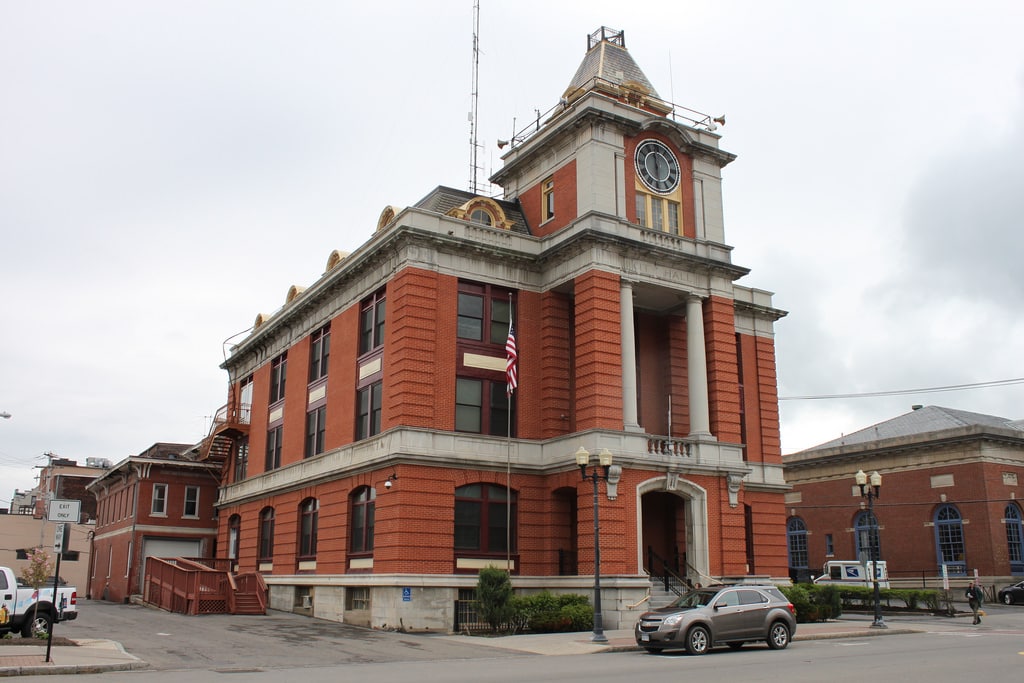
Geneva City Council is set to review a proposed local law that would create new rules for electric scooters, throttle-based e-bikes, dirt bikes, ATVs and other alternative motorized vehicles on city streets, sidewalks, parks and city-owned property.
The proposal is on the agenda for council's July 21 operations meeting at City Hall, where members are also scheduled to hold a public hearing on 2026 Community Development Block Grant applications, hear a budget gap analysis and discuss reassessment issues.

The meeting is scheduled for 7 p.m. in the second-floor council chambers at 47 Castle St. An executive session to discuss the employment of a particular person or persons is scheduled for 6 p.m. The meeting can be heard on the City of Geneva's YouTube channel.
The motorized vehicle proposal, listed as Resolution 40-2026, would adopt a new Chapter 336 of the City Code titled "Alternative Motorized Vehicles." A memo from Police Chief Ronald Eveland says council is being asked to review the measure and provide direction. If council approves, staff recommends scheduling a public hearing and later vote to formally enact the ordinance.
The proposed law says the city has seen unsafe and unlawful operation of alternative motorized vehicles, including all-terrain vehicles, off-highway motorcycles, minibikes and micromobility devices such as electric scooters, throttle-based electric bicycles, electric skateboards, hoverboards, Segways and electric unicycles.
Under the draft rules, no one under 16 would be allowed to operate a battery-powered alternative motorized vehicle on a public highway or city-owned property. Battery-powered alternative motorized vehicles also would be barred from sidewalks, city-owned parks, pathways, playgrounds and cemeteries.
Battery-powered vehicles covered by the proposal could not be operated on public highways with posted speed limits above 30 mph, and they could not be operated faster than 20 mph anywhere in the city. Reckless or unsafe operation, including weaving through traffic, unsafe passing, excessive speed for conditions and distracted operation, also would be prohibited.
The proposal also bars operation while impaired or intoxicated by alcohol or drugs, including operation with a blood alcohol content of 0.08% or higher.
Gas-powered alternative motorized vehicles would face additional restrictions. The draft law would prohibit them in city-owned parks, pathways, playgrounds and cemeteries, and would ban operation on public highways or public property unless the vehicle is properly equipped and licensed under New York State Department of Motor Vehicles rules.
The proposal also would prohibit operation of gas-powered alternative motorized vehicles on sidewalks, and it would require express permission from the owner or occupant before someone operates one off a public highway on private property in the city.
Parents or legal guardians could face penalties if a minor violates the rules. The draft law says a parent or guardian would be presumed to have known of, permitted or acquiesced in the operation by a minor, though it would allow an affirmative defense if the parent or guardian took reasonable steps to prevent the operation and did not knowingly permit it.
Violations could carry fines of up to $500 for a first offense, up to $750 for a second offense and up to $1,000 for a third or subsequent offense. Each level also could include up to 15 days in jail.
Police or other law enforcement officials also could immediately impound vehicles operated in violation of the proposed law. Battery-powered vehicles would carry redemption fees of $250 for a first offense, $500 for a second offense and $750 for a third or later offense, plus a $10 daily storage fee. Gas-powered vehicles would carry redemption fees of $500, $1,000 and $1,500, respectively, plus the same daily storage fee.
The proposed rules would not apply to vehicles controlled by the city or another government agency during lawful government work, or to emergency vehicles engaged in rescue operations. The definition also excludes bicycles with only electric assist and mobility assistance devices used by people with disabilities.
Council's agenda also includes a city manager's report, public comment, a reassessment update and a proposed reassessment phase-in process.

FingerLakes1.com is the region’s leading all-digital news publication. The company was founded in 1998 and has been keeping residents informed for more than two decades. Have a lead? Send it to news@fingerlakes1.com.