Editor’s Note: The following was published on”In Focus” on June 23. You can visit that directly or subscribe by clicking here.
Can a community stay the same and still thrive? That is the question sitting underneath almost every local debate in Upstate New York right now.
People want full downtowns. They want coffee shops, restaurants, parks, safe streets, small businesses, and neighborhoods that feel alive. They want their kids and grandkids to have a reason — and a way — to stay close to home.
But the second the conversation moves from the outcome to the changes required to get there, things get uncomfortable fast.
We say we want thriving places. Then we fight the housing that would give those places enough people to support them. We say we want walkable downtowns. Then we preserve zoning rules that make walkability almost impossible. We say we want affordability. Then we treat every new home, apartment, accessory dwelling unit, duplex, or townhouse as a threat to “community character.”
That disconnect isn’t just frustrating. It’s becoming economically dangerous.
In my conversations with Bill Fulton and Edward Erfert, two things became clear. First, place matters more than ever. Second, most communities are still using rules, habits, and assumptions built for a vastly different era.
Fulton put it plainly: Communities that want prosperity need to understand what kind of place they are trying to become. Not in vague branding language. Not in slogans. In economic terms. Are you a job center? A bedroom community? A regional retail hub? A historic village with untapped walkability? A rural town about to be pulled into the orbit of a major employer like Micron?
That matters because growth is not automatically good. Bad growth can bankrupt a community over time. But no growth is not neutral either. In desirable places, refusing to build more housing does not preserve the community as it exists. It changes who can afford to live there.
When people say they want to protect community character, they usually mean the physical character: The buildings, the lots, the traffic patterns, the look and feel of a place. But if a community freezes its physical form while demand rises, its social character changes anyway. Younger families get priced out. Workers live farther away. Local businesses struggle to hire. Schools lose enrollment. Volunteer networks thin out.
All of a sudden the community looks approximately the same, but it’s feel has changed dramatically. And really, it isn’t the same community anymore.

That is why the housing debate can’t just be about units. It has to be about whether communities are willing to build the conditions for the future they claim to want.
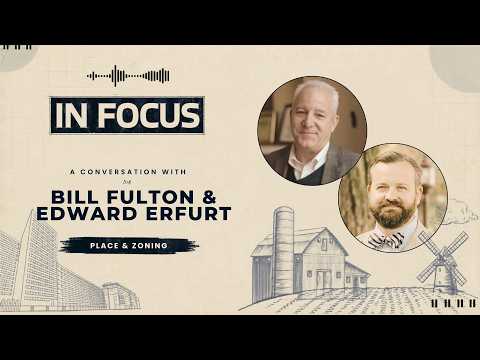
Erfert’s point from Strong Towns was just as important: Local governments have more control than they think, but they often waste that control on the wrong things.
A town board cannot lower interest rates. A village planning board cannot fix the national housing market. A city council cannot, by itself, unwind decades of federal housing policy.
But local governments can fix broken permitting systems. They can stop forcing routine projects through months of unnecessary review. They can clean up zoning codes filled with contradictions, outdated definitions, and rules that make the traditional development pattern illegal. They can make it easier to build the next small thing: an apartment over a garage, a duplex in an old house, a small infill project on an empty lot, a few more homes near a downtown that already has streets, pipes, sidewalks, and public services.
That’s the practical work.
It’s certainly not flashy. It won’t fit neatly into a campaign mailer. But it’s definitely where real change starts.
Too many communities treat every housing proposal as if it’s the beginning of the end. The better question is simpler: Does this project make the community stronger over time? Does it use existing infrastructure wisely? Does it add people near the places we say we want to revive? Does it create more options for different incomes, ages, and stages of life?
If the answer is yes, then the burden should not be on the applicant to spend years begging for permission. The burden should be on local government to explain why its rules are standing in the way.
Upstate New York has an opportunity it hasn’t had in ages. There is new economic energy. There is renewed interest in walkable places. There are people who want something other than the standard large-lot, drive-everywhere pattern that has dominated development for decades.
But opportunity does not wait for communities to get comfortable.
The places that succeed over the next decade will not be the ones that say yes to everything. They will be the ones honest enough to decide what they are, what they need, and what they are willing to change to get there.
Because staying exactly the same is not really an option.
The choice is whether change strengthens the community — or whether the community resists it until the only change left is more decline.

Josh is a columnist and host of the In Focus podcast. He’s also the vice president of FingerLakes1.com, Inc. Have a question or want to get in touch? Send it to josh@fingerlakes1.com.