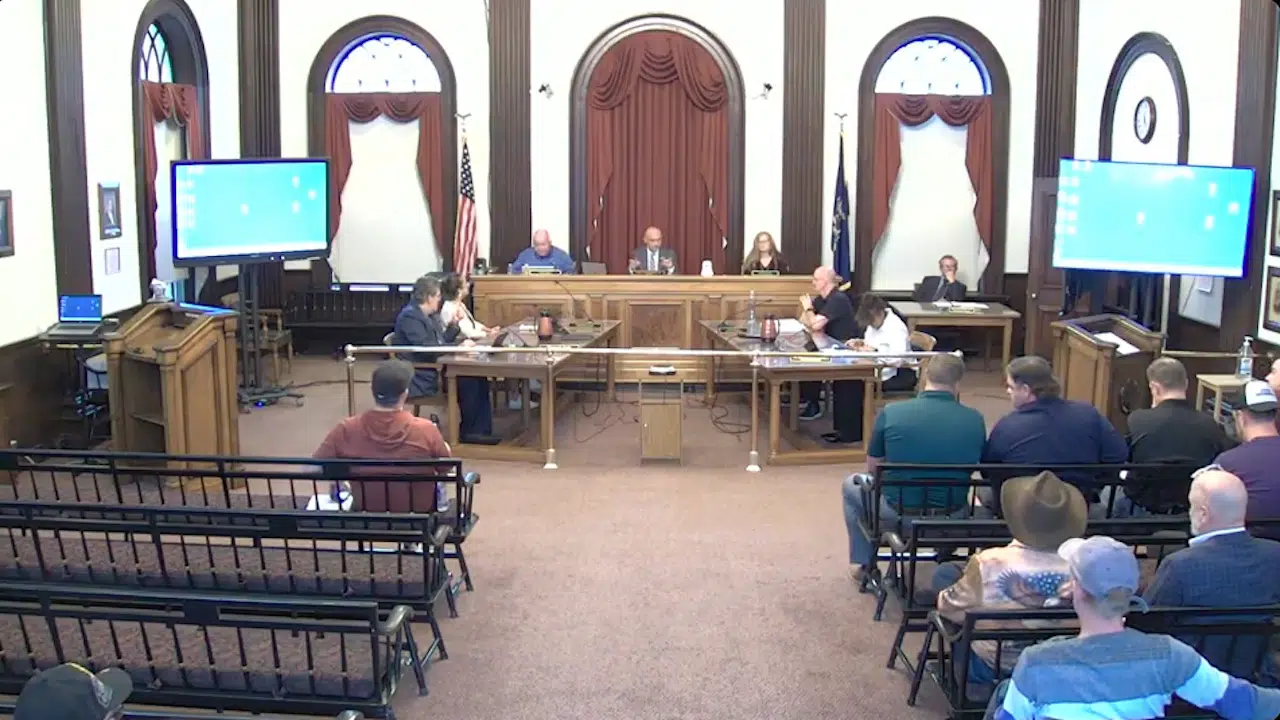
Auburn’s budget fight spilled across nearly every major issue before City Council Thursday, as residents challenged proposed parking increases, questioned the closure of Casey Park pool, pushed back on police surveillance technology and pressed officials to explain how the city is weighing cuts, fees and services heading into a critical public hearing next week.
Council members did not adopt the 2026-27 budget Thursday, but the meeting showed how difficult the final stretch could be. A public hearing on the proposed budget is scheduled for Thursday, May 28, along with a separate hearing on a local law allowing the city to override the state property tax cap.
Public comments focused heavily on whether city leaders are making the right choices in a year marked by financial pressure. Several speakers argued the city should be doing more to preserve youth recreation, limit new costs on downtown businesses and nonprofits, and scrutinize spending decisions before reducing services or raising fees.
Parking increase draws downtown pushback

Sue Wabe, owner of Regenerations on Genesee Street, criticized the city’s planned parking fee increases, saying higher rates would work against efforts to bring more people downtown.
Wabe said downtown customers already complain about parking, including back-in parking, and said doubling the hourly rate from $1 to $2 would discourage visitors while increasing costs for business owners and workers.
Scott Sincerebeaux, CEO of the Auburn YMCA, said the YMCA buys 34 annual parking passes for staff, mostly early learning center teachers. He said the increase from $178 to $360 for most of those passes would add about $5,400 in unplanned operating costs.
Sincerebeaux said that amount could otherwise support 18 camp scholarships, 18 youth memberships or 50 learn-to-swim scholarships.
Mayor Jimmy Giannettino defended the need to address parking costs, saying the city’s annual electricity expense for the parking garage has increased from about $10,791 in 2021 to a projected $36,000 in 2026. He said council’s job is to find the best available compromise, even when every option is unpopular.
Casey Park pool remains flashpoint
The planned closure of Casey Park pool remained one of the night’s biggest points of tension.
Several residents urged the city to find a way to reopen the pool this summer, saying it remains one of the few affordable cooling and recreation options for children and families. Speakers questioned whether repairs identified in a county inspection could be addressed before the usual pool season and argued the city should treat the pool as a quality-of-life priority.
Council members also discussed whether the YMCA could serve as an alternative if Casey Park pool cannot open. Councilor Craig Diego said YMCA access could cost far less than operating Casey Park, estimating a possible YMCA option around $16,000 to $25,000 compared with figures he cited of roughly $80,000 for four weeks or $181,000 for six weeks at Casey Park.
Councilor Christina Calarco said she remained hopeful state funding could emerge to help address the issue, while Councilor Terrence Cuddy said a lot could happen before the summer swim season.
Giannettino said he understood the public disappointment and noted he grew up using Casey Park pool. He said the city has shown a long-term commitment to the facility, including making it free after attendance lagged when fees were charged. But he said operating costs, including electricity, have become harder to absorb in the current budget climate.
City officials also clarified that Community Development Block Grant money cannot be used for routine maintenance the city is already required to perform, though it can be used for eligible capital projects after the required process.
Flock camera debate continues
The city’s use of Flock license plate reader cameras also drew another round of public comment and council discussion.
Residents again raised concerns about surveillance, data collection and the way the contract was approved. Speakers said the issue should have gone before elected officials before the city entered into the arrangement and called for local rules governing artificial intelligence-based policing tools and automated license plate readers.
Councilor Rhoda Overstreet-Wilson said she would not have supported the cameras had the issue come before council with the information now available. She said she does not trust that data collected locally can be controlled once it leaves Auburn or enters systems managed by private companies.
Cuddy also said he wants Corporation Counsel to continue reviewing how the process unfolded, including the fact that council did not accept the grant tied to the system.
Diego said he shares concerns about data collection but warned that ending the contract immediately could cost the city $80,000 to $90,000 at a time when the budget already contemplates eliminating 58 positions. He said he would support allowing the contract to expire while the city explores alternatives and creates a more transparent process.
Calarco said the issue may need to become a broader discussion about biometrics, data collection and public-private surveillance technology beyond one vendor or one police tool.
Council approves infrastructure work
Council approved a $178,000 CDBG-funded curb project on Curtis Place, awarding the work to Diamond Excavation and Masonry, the low bidder at $157,095. Officials said the higher authorization allows the city to use the full funding allocation within the project area.
Council also approved up to $165,000 for CDBG sidewalk work on Augustus Street. DiGeorge Construction Services submitted the only bid at $148,135.
Diego questioned why the authorized amounts exceeded the bid totals, asking whether unused money could potentially be used elsewhere, including Casey Park. Planning staff said the projects are based on unit pricing and project-area estimates, and any remaining money would stay within the CDBG program for possible future reprogramming.
Council also approved a master agreement with the state Department of Transportation for the Brookside Drive culvert replacement project. The $1.49 million project is expected to be fully reimbursable through Bridge NY funding, though the city will pay costs upfront before reimbursement.
Officials said design work is beginning and construction may still be a year and a half to two years away. A road closure is expected at some point during the project.
Opioid settlement and capital projects approved
Council voted to participate in a national opioid settlement involving six remaining defendants. Unlike some previous settlements, officials said this money would come directly to the city rather than flowing through the state.
Giannettino said past opioid settlement funds have been used to support local efforts including Nick’s Ride, CHAD, Auburn police and Auburn City Ambulance.
Council also approved closing several completed capital projects, including multiple road programs and an Auburn Police Department project. Unspent money from several bond-funded road projects will be moved into debt reserve to help reduce future borrowing costs.
One transportation-related resolution was tabled after staff said the state Department of Transportation requested changes to the language. The item would designate city officials for access to NYSDOT’s Equitable Business Opportunities system for locally administered federal aid projects.
Public hearing set for next week
The budget remains unresolved, and council members said more review is needed before final decisions are made.
Diego asked for another week to review documents before giving final budget input to City Manager Jenny Haines. The city is also preparing for next week’s public hearings on the proposed budget and the tax cap override.

FingerLakes1.com is the region’s leading all-digital news publication. The company was founded in 1998 and has been keeping residents informed for more than two decades. Have a lead? Send it to news@fingerlakes1.com.