

Snow that seems to appear out of nowhere, rolling hills that test traction, and postcard views that beg to be captured, winter road-tripping the Finger Lakes is magic with a side of “be prepared.” We’ve driven these routes enough to know how much the right tech matters, from finding the next safe turnout to keeping everyone powered and warm when the thermometer nosedives. That’s why a dependable dash cam becomes more than a gadget out there, it’s proof, perspective, and peace of mind on roads where conditions can flip in minutes.
If you’re new to lake-effect country, skim the National Weather Service’s primer on how quickly bands can form and shift, it’s a must-read for timing and safety. Below, we’ve curated the tech essentials road-trippers rely on for winter drives through the Finger Lakes, plus the why behind each pick.
What Makes Finger Lakes Winter Driving Unique
Lake-Effect Snow And Rapid Microclimate Shifts
Cold, dry air racing over the comparatively warmer lakes spins up narrow snow bands that act like conveyor belts. Ten minutes of blue sky can flip to whiteout conditions, then back again before your coffee cools. Around Cayuga, Seneca, and Keuka, those bands set up fast, drift, and lay down uneven totals, six inches in one valley, dusting just a few miles over. It’s not dramatic to say visibility can drop from miles to a few car lengths in under a minute. That’s why we keep our essentials tightened up, including protective gear for the tech we rely on; even something as simple as an iphone 13 pro max magsafe cases can make the difference between a working phone and a frozen, cracked screen when weather turns abrupt.
Hilly Two-Lanes, Vineyard Roads, And Limited Shoulders
Once you leave the Thruway, it’s a network of scenic two-laners, Route 14 hugging Seneca, 414 on the east side, 89 along Cayuga, plus vineyard access roads with shoulders that disappear under plow berms. Grades bite harder in the cold, and wind exposure near the lakes polishes intersections into skating rinks. Pull-offs aren’t guaranteed, and snowbanks can hide culverts. Cell coverage is decent overall, but there are stubborn dead zones in the valleys.
How This Shapes Your Tech Checklist
Our kit prioritizes three things: navigation that works offline and hands-free when the signal drops: weather and road intel that’s hyperlocal, not just a county-wide forecast: and safety power, jump starts, air, light, without relying on another vehicle. Everything else (comfort, connectivity, memory-making) is a close second, but those three pillars are what turn a detour into a story instead of a stress test.
Navigation, Weather, And Road-Condition Tools
Offline Maps And Redundant GPS
We always download offline areas in Google Maps for the full loop (Ithaca–Geneva–Watkins Glen is a classic) and keep Apple Maps offline areas too, two apps, two data sources. For true redundancy, a dedicated GPS like a Garmin with topo basemaps stays in the glove box. It’s immune to phone notifications, and it’ll still route when your handset dies or reboots in the cold. Pro tip: save pins for trailheads, wineries, and public lots while you still have Wi Fi.
Hyperlocal Radar And 511NY Alerts
Generic “chance of snow” isn’t helpful when a single band is the real decider. Apps like RadarScope or MyRadar visualize lake-effect bands with tilt and velocity that consumer apps often smooth out. Weather Underground’s crowd-sourced stations give you temp and wind at a vineyard, not a distant airport. For roads, New York’s 511NY offers live plow cams, incidents, and closures, set up route-based alerts before you roll so you hear about that jackknifed rig on 414 in time to detour.
CarPlay/Android Auto And Hands-Free Mounts
Voice-first matters when the pavement’s slick. We plug in for CarPlay or Android Auto to keep maps, radar snapshots, and messages on the dash. A low-profile, sturdy mount (we like magnetic with a metal plate on the case) keeps the phone in your peripheral vision without blocking defroster flow. Add a short, cold-rated USB-C cable: stiff cords become steering-wheel snares when temps drop.
Safety And Emergency Tech
Portable Jump Starters, Air Compressors, And Tire Care
Lithium jump starters have earned permanent glove-box residency. Pick one with at least 1000 peak amps and an integrated flashlight: charge it monthly. A compact 12V compressor with a threaded valve connection seats better in the cold than flimsy clip-ons. We also carry a low-temp tire pressure gauge and valve-core tool. Cold air slashes PSI, top-offs restore grip, and a slow leak on a shoulder-less road isn’t the place to learn your kit is missing.
Traction And Recovery Aids With Smart Features
Traction boards sized for cars (not just overlanding trucks) bite into ice surprisingly well: look for aggressive lugs and a pair that nests behind a seat. A collapsible snow shovel with a metal edge, a 20–30 ft recovery strap with a printed working load limit, and soft shackles (lighter, won’t freeze your fingers like steel) round out the set. A small digital inclinometer on the dash sounds fancy, but it helps you judge when to stop before a slick descent you can’t climb back up.
Beacons, Headlamps, And Power-Out Lighting
Power blinks happen. We pack a high-lumen headlamp with a warm tint that cuts through snow glare, an LED road flare/beacon for low-visibility pull-offs, and a lantern that can hang from the hatch. Reflective vests live by the spare. If we ever have to step out near a blind curve, we want to be seen from a quarter mile, not a car length.
Power And Connectivity On The Go
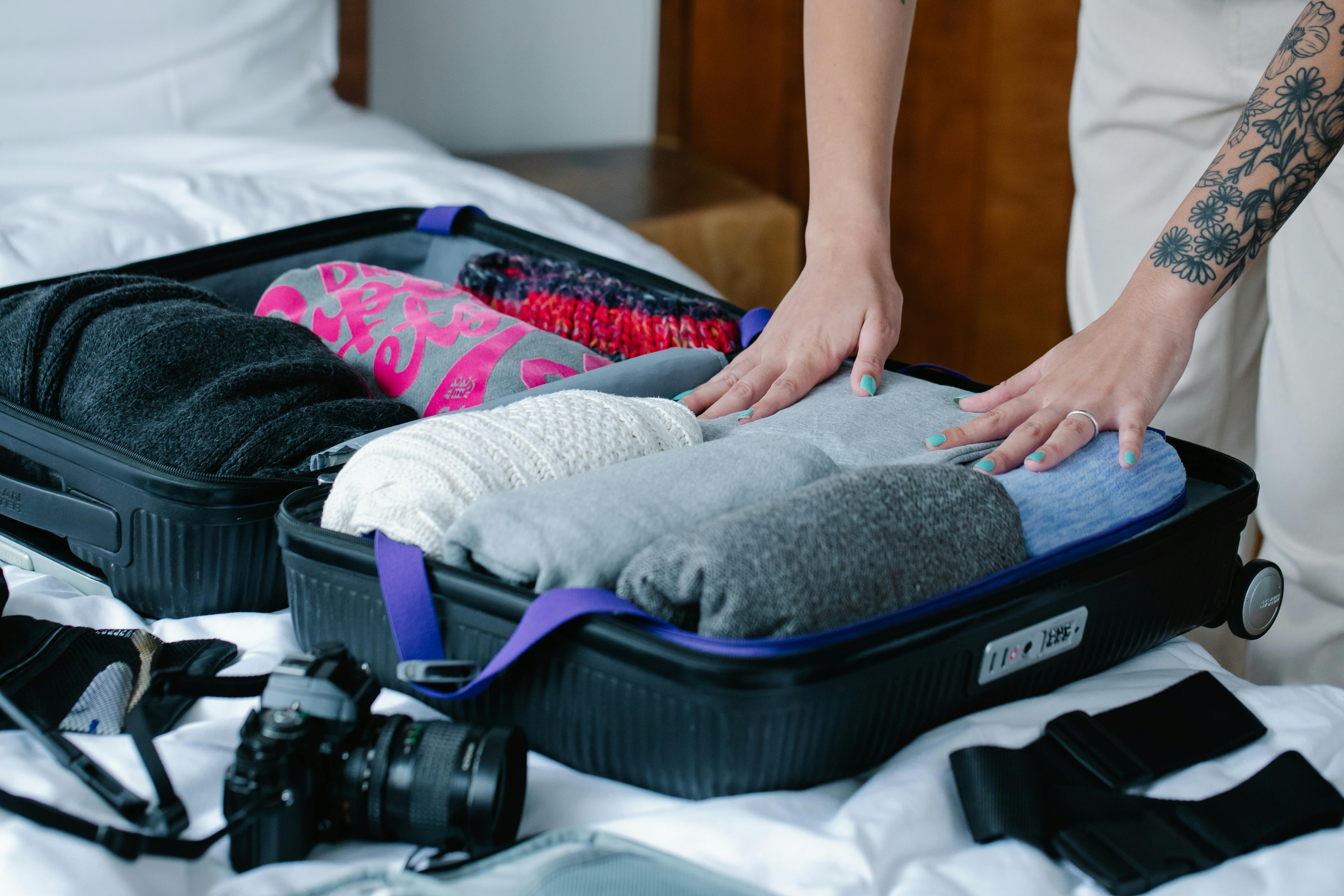
Photo by Emely on Unsplash
Multi-Port Fast Car Chargers And Inverters
Look for a 60–100W USB-C PD car charger with multiple ports so navigation, hotspot, and passenger devices can sip at once. If you’re running a laptop or charging camera batteries, a compact pure-sine inverter (150–300W) keeps sensitive gear happy. Keep it ventilated: inverters and floor mats don’t mix.
Power Banks And Compact Power Stations
Cold saps lithium, so we stash a 20,000–26,800 mAh PD power bank in an inside pocket, not the trunk. For multi-day cabin stays, a 200–300Wh power station is the sweet spot: charges cameras, drones, and headlamps without hogging cargo space. Bring a short PD-to-DC cable for faster recharges from the car between stops.
Hotspots, eSIMs, And Signal Boosters
On major routes, a phone hotspot is fine: in valleys, a dedicated hotspot with different carrier coverage can be the difference between booking a last-minute tasting and playing voicemail tag. Travelers from abroad can spin up a US eSIM on arrival, no store visit needed. For the chronic dead zones, a vehicle cell booster (think weBoost) can turn one bar into usable data. It won’t invent signal, but it stabilizes uploads when you’re sending that sunset reel from a windy overlook.
EV Range And Charging Strategy For Cold Weather
Preconditioning And Thermal Management
Cold can trim EV range by 20–40%. We precondition the cabin and battery while still plugged in, set departure times so the pack is warm at roll-out. Use seat and wheel heaters instead of blasting HVAC: they’re miserly on watts and keep comfort high. If snow is heavy, consider one-pedal driving’s regen limits at low temps and switch to a smoother friction-brake blend when needed.
Route Planners And Charger Networks Around The Lakes
We map with A Better Routeplanner (ABRP) for realistic cold-weather consumption, then cross-check with PlugShare for live availability and photos of plow access. Around the Finger Lakes, DC fast chargers cluster along I 90 and in hubs like Geneva, Ithaca, Auburn, and Canandaigua, while Level 2s dot wineries, colleges, and municipal lots. Tesla drivers can mix Superchargers with growing CCS access (check your adapter and app filters). In small towns, arrive with a buffer, roads can be plowed before lots are.
Cables, Adapters, And Charging Etiquette In Snow
Carry your own Level 2 cable if your EV supports it, plus a weatherproof bag so you’re not coiling a slushy snake into the trunk. Keep a brush to clear snow from pedestals and your charge port: ice can wedge connectors. Etiquette matters: move when you’re done, don’t block a station while you eat if charging has stopped, and leave the cable draped off the ground so it doesn’t freeze into a frozen pretzel for the next driver.
Comfort, Organization, And Memory-Making Tech
Heated Cushions, 12V Mugs, And Cabin Defoggers
We’re not above creature comforts. A 12V heated seat cushion takes the edge off cloth seats and sips power. Insulated, spill-proof travel mugs with 12V warming coasters keep tea warm on a scenic overlook. A compact window defogger/defroster helps after snowshoe stops when damp gear fogs everything in minutes.
Cable Management, Seat-Back Organizers, And Dry Bags
A tidy cabin keeps eyes on the road. Velcro cable ties prevent the charging-octopus dash look. Slim seat-back organizers swallow headlamps, gloves, snacks, and action cam mounts so they don’t migrate under pedals. We toss a couple of roll-top dry bags in the trunk for snowy boots and camera gear, no puddles, no regrets.
Dash Cams, Action Cams, And Stable Phone Video
Winter light around the lakes is gorgeous, pewter sky, iced vines, waterfall spray freezing midair. A dash cam with good HDR handles snow-bright scenes and protects you if someone slides into your lane. For creative shots, an action cam on a suction cup mount rides outside for a minute or two between stops: use anti-fog inserts and a safety tether. Phones do great with stabilization these days, add a compact windshield mount and nudge exposure down a notch so snow stays white, not gray.

This content is brought to you by the FingerLakes1.com Team. Support our mission by visiting www.patreon.com/fl1 or learn how you send us your local content here.