


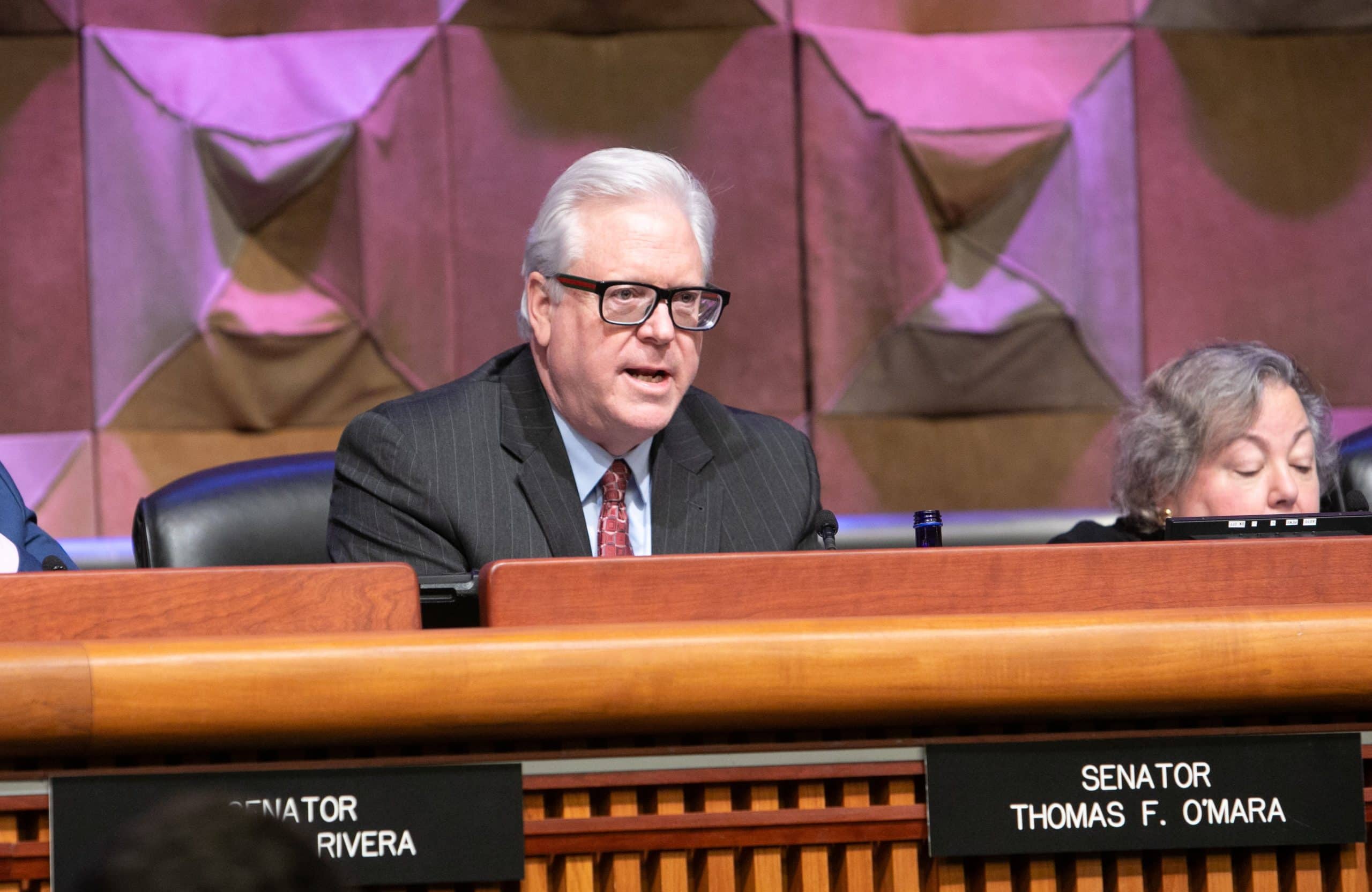
State Senator Tom O’Mara is warning that New York’s “spend now, figure it out later” approach is catching up with taxpayers — and the latest wave of vetoes from Governor Kathy Hochul may be a sign of what’s coming next.
In his weekly column, O’Mara criticized the governor for rejecting more than two dozen bills in recent weeks, many of which had strong bipartisan support and were aimed at addressing affordability issues across the state.

Among the vetoed bills was a proposal to create specialized emergency response training for electric vehicle (EV) incidents — a program designed to better equip first responders. Hochul acknowledged the bill’s importance, but said the funding wasn’t accounted for in the state’s financial plan.
According to O’Mara, this veto is just one example of the administration hitting the brakes after years of aggressive spending. “That’s essentially been the common refrain from the governor’s office lately: we don’t know if the state can afford it,” he wrote.
The Republican senator pointed out that despite Democrats making affordability their top priority at the start of the year, the final state budget told a different story. The 2025-26 budget totaled over $254 billion — an increase of at least $15 billion from the year before. Since 2019, O’Mara noted, the state budget has grown by roughly $85 billion — a nearly 50% jump during the period of one-party control in Albany.
He contrasted that with what he described as more restrained growth during prior years when Republicans held the Senate majority, claiming increases then stayed within the 2–3% range annually.
O’Mara also cited concerns raised by State Comptroller Thomas DiNapoli, who warned the 2025-26 budget lacked meaningful cost controls and relied on more than $23 billion in additional backdoor borrowing.
“The time to develop a strategy and structural reforms is before a crisis,” DiNapoli said at the time.
O’Mara echoed that concern, suggesting the state’s current financial path is unsustainable. “Albany Democrats have ignored the economic and fiscal warnings on the horizon and kept on increasing state government spending and handouts with no worry about tomorrow,” he wrote.
His column ended with a blunt warning for taxpayers: “The time to worry about tomorrow is on the doorstep. For the sake of state taxpayers, let’s hope it’s not too late.”

FingerLakes1.com is the region’s leading all-digital news publication. The company was founded in 1998 and has been keeping residents informed for more than two decades. Have a lead? Send it to news@fingerlakes1.com.