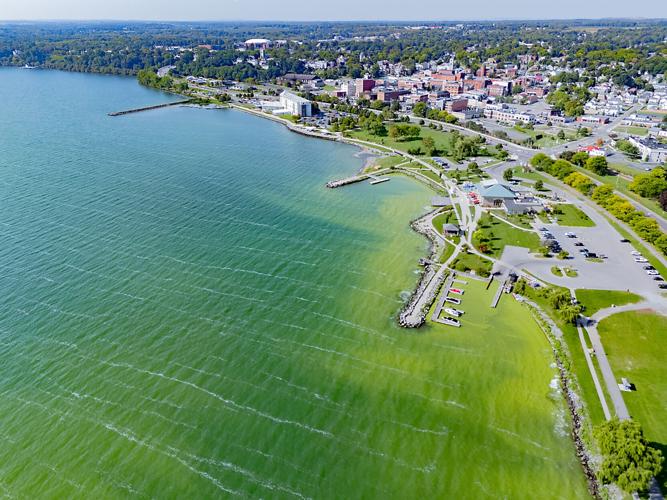
Despite millions spent to restore lake health, scientists say common misconceptions about treatment methods may be doing more harm than good—fueling toxic algal blooms and worsening ecosystem decline across New York’s Finger Lakes.
Algae blooms, particularly those caused by cyanobacteria, are now more frequent, toxic, and longer lasting. But experts say the real danger lies in the outdated practices and flawed assumptions still guiding many restoration efforts.

“Without long-term strategies focused on prevention and ecological balance, the risks to both environmental and public health will continue to intensify,” said Dave Shackleton, president of Clean-Flo International, a company specializing in biological water quality solutions.
Shackleton and other experts say that traditional responses—like chemical treatments, reliance on surface oxygen readings, and narrow water quality metrics—fail to address the underlying causes of harmful algal blooms (HABs). Worse, some of these methods may actually accelerate lake deterioration.
Myth: Chemicals control algae blooms
Algaecides and herbicides are widely used to kill algae and weeds. But Shackleton says they often backfire. While they may reduce visible symptoms temporarily, they trigger a cycle of deeper decay.
“By killing algae and cyanobacteria cells, toxins are released that lead to the destruction of more beneficial organisms,” he explained. The dead matter sinks, decomposes, and recycles nutrients—fueling new blooms and depleting oxygen in the water.
That process creates hypoxic “dead zones,” which are uninhabitable for aquatic life and favor cyanobacteria, which can thrive in low-oxygen conditions.
Myth: No algae bloom = healthy lake
Many lake monitoring programs rely on surface-level readings for dissolved oxygen or assume that visible clarity means good health. Shackleton calls this dangerously misleading.
“Hypoxia begins in the deeper layers of a lake,” he said. “Surface readings may look normal while the lower strata are critically low on oxygen.”
This invisible decay supports internal nutrient recycling—a key driver of recurring toxic blooms. Even seeing fish near the surface may be a red flag, not a healthy sign. “They may be fleeing hypoxic conditions below,” Shackleton said.
Myth: The problem is runoff
Watershed runoff is a real concern, but experts say it’s not the whole picture.
“In many lakes, it is the internal sources that contribute more nitrogen and phosphorus to algae blooms,” Shackleton noted. Sediment acts like a time-release capsule, storing nutrients for decades and releasing them under warm, low-oxygen conditions.
Lake Honeoye is a clear case. Despite major investments to reduce watershed inflows, blooms continue to worsen—driven by internal nutrient recycling when deep-water oxygen levels crash.
Myth: TSI scores tell the full story
The Trophic State Index (TSI), a tool developed in the 1970s, is still widely used to assess lake health. But Shackleton warns it focuses only on surface symptoms.
“TSI gives little indication of what’s happening at depth, where the root problems originate,” he said. That narrow focus has led to reactive management strategies that may improve scores briefly but accelerate underlying damage.
Instead, Clean-Flo recommends tools like the Reservoir Risk Assessment and Tracking System (RRATS), which monitor oxygen levels, sediment health, and phytoplankton balance to offer a more accurate risk profile.
From symptom-chasing to sustainable solutions
The takeaway? To truly heal lakes, communities must stop chasing short-term results and begin addressing the long-term ecological imbalances driving decline.
That means unlearning outdated beliefs, using smarter data, and adopting preventive strategies that restore oxygen balance, reduce internal nutrient release, and support the return of beneficial species.
“Only with this foundational understanding can lake managers effectively prioritize interventions and implement early risk mitigation measures,” said Shackleton.

FingerLakes1.com is the region’s leading all-digital news publication. The company was founded in 1998 and has been keeping residents informed for more than two decades. Have a lead? Send it to news@fingerlakes1.com.