

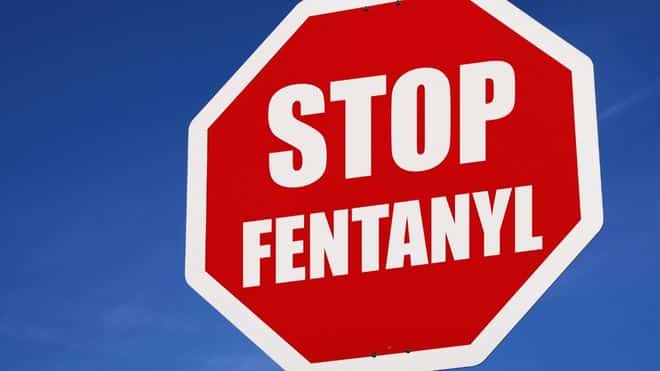
President Donald Trump signed the HALT Fentanyl Act—short for Halt All Lethal Trafficking of Fentanyl Act—into law as a landmark effort to address the ongoing fentanyl crisis. The bill permanently classifies fentanyl-related substances (FRS) as Schedule I controlled substances, making it easier for law enforcement to prosecute traffickers and regulate these synthetic opioids.
What the HALT Fentanyl Act does
The Act amends the Controlled Substances Act by:
- Adding all fentanyl-related substances (FRS) to Schedule I, the strictest drug category.
- Broadly defining FRS as any substance structurally similar to fentanyl, with specific chemical criteria.
- Giving the Attorney General authority to publish and update a list of these substances.
- Lawmakers clarified in the HALT Fentanyl Act that any substance meeting the chemical definition qualifies as an FRS, even if it is not specifically listed.
This permanent scheduling replaces temporary measures previously enacted and makes the federal government’s stance on fentanyl analogues unambiguous.
Why this matters
Fentanyl and its analogues cause thousands of overdose deaths annually in the U.S., often because of their potency and presence in counterfeit pills or other street drugs. Lawmakers argue that the HALT Fentanyl Act closes loopholes that allowed new variants to escape regulation.
- Public health impact: Schedule I status classifies these substances as having a high potential for abuse and no accepted medical use.
- Criminal penalties: The Act enhances existing penalties for the manufacture, distribution, and possession of fentanyl analogues.
- Global trafficking: By solidifying enforcement standards, the Act supports international cooperation in cracking down on drug smuggling.
What about scientific research?
The Act includes expedited procedures for researchers studying Schedule I substances. Key provisions include:
- Allowing research with certain federal approvals to begin 30 days after notice to the Attorney General.
- Enabling researchers to use a single registration for multiple research sites.
- Permitting small-scale manufacturing of Schedule I substances for research without a separate license.
- Allowing research to continue uninterrupted when a new substance is added to Schedule I, provided the researcher is already registered.
This balance aims to support scientific understanding of fentanyl and its analogues without delaying public safety efforts.
Key takeaways
- The HALT Fentanyl Act permanently schedules all fentanyl-related substances under federal law.
- It creates tougher enforcement tools for drug trafficking while also expanding access for scientific research.
- The law reflects growing bipartisan concern about fentanyl’s devastating impact on communities across the U.S.
What happens next?
The Attorney General is required to issue interim final rules within six months of the law’s passage, with public comment opportunities. Enforcement of the Act, however, began immediately upon enactment in February 2025.
As the DEA, researchers, and law enforcement implement this law, further policy updates and court challenges may shape how it’s applied in practice.

This content is brought to you by the FingerLakes1.com Team. Support our mission by visiting www.patreon.com/fl1 or learn how you send us your local content here.