

Wall Street plunged Thursday morning as President Donald Trump’s sweeping new tariffs rattled investors and stoked fears of a 2025 recession — both in the U.S. and around the globe.
Markets opened with sharp losses:
- The Dow fell 1,116 points, or 2.64%
- The S&P 500 dropped 3.24%, heading for its worst day since the 2022 inflation crisis
- The Nasdaq plummeted 4.33%, led by declines in tech stocks
Outside the U.S., stock markets in Europe and Asia mirrored the selloff, sending a clear signal that Trump’s aggressive trade policy has become a global concern.

Dollar Down, Gold Soars
Surprisingly, the U.S. dollar weakened, reaching its lowest level since October. While tariffs typically strengthen the dollar, investors viewed this as a self-inflicted economic wound.
In contrast, gold prices surged to a new record high of $3,160 per troy ounce, as investors fled to safe-haven assets. Treasury yields also dropped sharply — another signal that markets expect economic slowdown.
JPMorgan: Recession Very Likely
Economists at JPMorgan Chase issued a stark warning Thursday:
“If Trump’s tariff plan is fully implemented, it will likely cause both the U.S. and global economies to fall into recession in 2025.”
According to their note, the new tariffs amount to a $660 billion annual tax hike on American consumers and businesses — the largest in recent memory. The policy could add 2% to the Consumer Price Index, further fueling inflation.
“This is a substantial macroeconomic shock,” the analysts wrote. “If sustained, these policies would push the U.S. into recession.”
Wall Street Reacts to ‘Liberation Day’
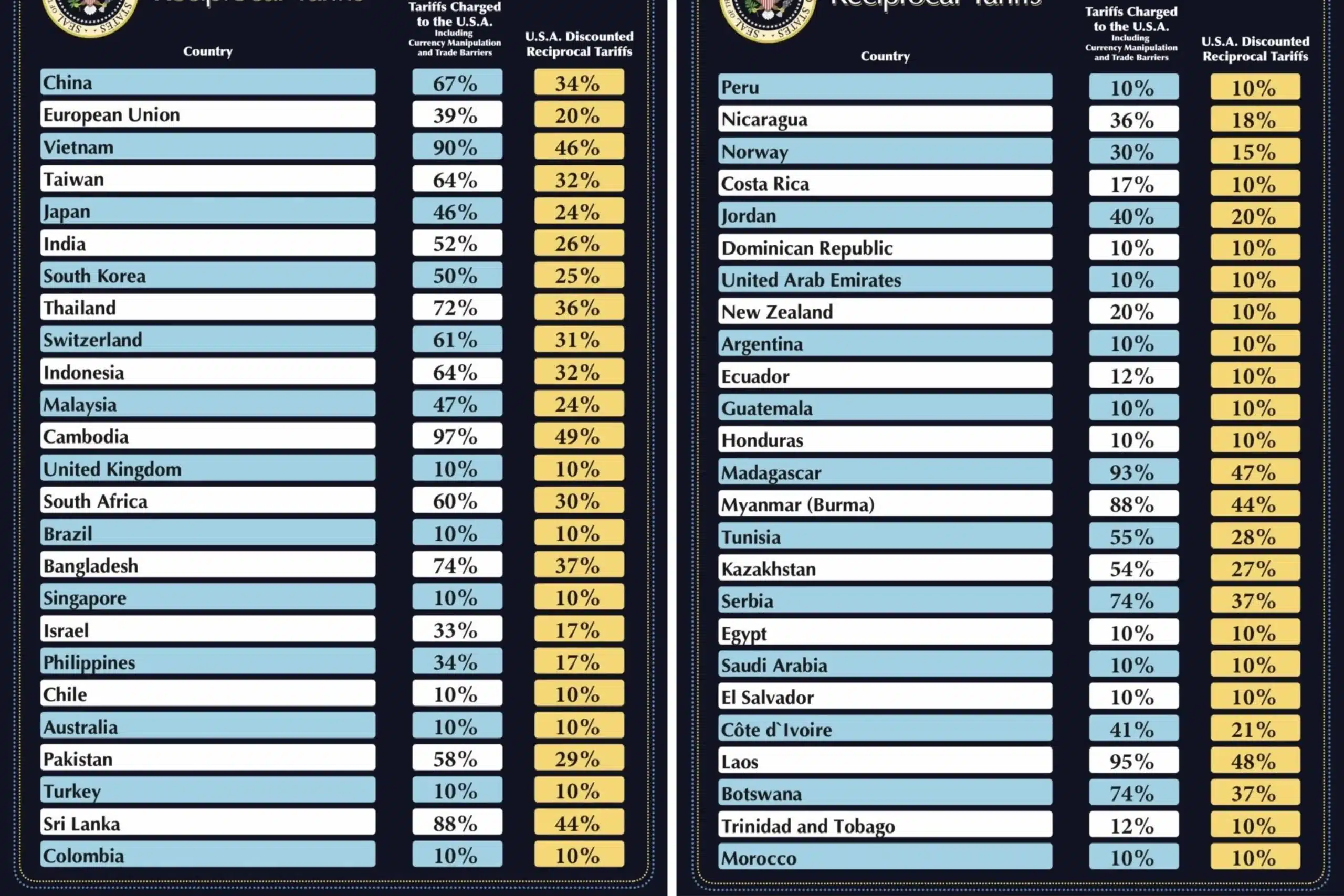
Trump’s announcement, made during a White House Rose Garden event dubbed “Liberation Day,” includes:
- A 10% baseline tariff on all imports
- Additional country-specific duties:
- China: 34%
- European Union: 20%
- Japan: 24%
- Cambodia: 49%
Investors had expected tough measures, but not this scale. Global equity futures plunged overnight, and major indexes across Asia and Europe posted sharp declines by Thursday morning.
Business Groups Warn of Backlash
The Business Roundtable, a coalition of top U.S. CEOs, issued a warning:
“Universal tariffs ranging from 10% to 50% run the risk of major harm to American manufacturers, workers, and families,” said CEO Joshua Bolten.
Fitch Ratings estimated the U.S. tariff rate will rise from 2.5% in 2024 to 22% this year — the highest since 1910, surpassing even the infamous Smoot-Hawley tariffs that deepened the Great Depression.
“This is a game changer,” said Olu Sonola, head of U.S. economic research at Fitch. “Many nations will likely plunge into recession.”
Global Ripples
From Tokyo to Frankfurt, analysts are cutting global growth projections.
- Japan’s Nikkei 225 fell 4.6% Thursday morning
- South Korea’s KOSPI Index opened nearly 3% lower
- Crude oil and Bitcoin both dropped sharply after the news
Economists predict a 1% drop in global GDP if retaliation escalates and Trump’s tariffs remain in place for an extended period.
Inflation, Jobs, and the Fed
Trump’s tariff move could:
- Increase core inflation to over 4%
- Reduce consumer spending due to higher prices
- Force the Federal Reserve to choose between fighting inflation and supporting growth
- Lead to a rise in unemployment, with JPMorgan predicting a significant slowdown by late 2025
Trump Defends Strategy
The White House says the tariffs are necessary to fix decades of trade imbalances and to “restore American manufacturing.” Trump declared a national economic emergency on April 2, calling for reciprocal tariffs on all major trading partners.
While praised by some domestic manufacturing groups and GOP lawmakers, critics warn the approach will backfire by triggering retaliatory measures and hurting U.S. consumers.
What’s Next?
Economists and business leaders are watching closely to see:
- Whether Congress or the courts challenge the executive order
- How quickly major trading partners respond with tariffs of their own
- Whether the administration offers carveouts or subsidies to offset the shock
The market’s immediate reaction is clear: Recession risks have skyrocketed, and the path forward looks increasingly uncertain.

This content is brought to you by the FingerLakes1.com Team. Support our mission by visiting www.patreon.com/fl1 or learn how you send us your local content here.