

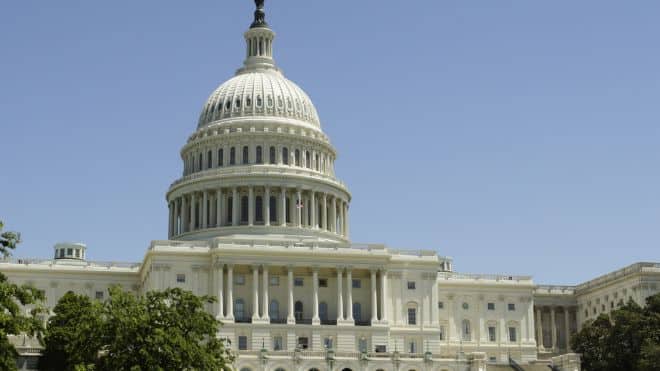
As voters across the United States prepare to cast their ballots on November 5, New York’s congressional races are pivotal in determining the balance of power in the U.S. House of Representatives. With all 435 House seats up for election, Democrats face the task of gaining a net of five seats to reclaim a majority, while Republicans look to hold onto their slim lead.
In the current Congress, Republicans hold 220 seats to Democrats’ 212, with three vacancies. New York, which sends 26 representatives to the House, is home to several competitive districts that could play a decisive role in the fight for control.
Redistricting and Its Impact
New York is one of the five states required to revise its congressional map after the 2022 elections. The court-ordered redistricting has created new dynamics as both parties work to maximize their chances in newly drawn districts. Nationwide, several states have faced similar redistricting challenges, which has led to uncertainty in key battlegrounds.

Battleground Districts in New York
New York’s congressional landscape is a microcosm of the national political battle. Several districts, including those represented by prominent incumbents and new challengers, are being closely watched.
- District 21 (North Country): Incumbent Republican Elise Stefanik is running for re-election against Democrat Paula Collins. Stefanik, a rising star in the Republican Party and a vocal supporter of former President Donald Trump, is expected to defend her seat strongly. Collins, endorsed by the Working Families Party, is positioning herself as a progressive alternative, advocating for economic fairness and environmental protections.
- District 22 (Central New York): Republican Brandon Williams faces Democratic challenger John Mannion in a district that has swung between parties in recent elections. Williams, who aligns with the Conservative and Libertarian parties, campaigns on a platform of economic growth and border security. Mannion, a state senator with the backing of the Working Families Party, emphasizes support for education and local economic development.
- District 23 (Western New York & Southern Tier): Republican incumbent Nick Langworthy is up against Democrat Thomas Carle. Langworthy, aligned with the Conservative Party, campaigns on conservative principles and economic policies aimed at revitalizing the region. Carle, on the other hand, emphasizes the need for affordable healthcare and economic reforms to help struggling families in the area.
- District 24 (Finger Lakes and Rochester Area): Republican Claudia Tenney is running for re-election, facing Democratic candidate David Wagenhauser. Tenney, who has secured endorsements from both the Republican and Conservative parties, is campaigning on a platform focused on national security and economic conservatism. Wagenhauser, a Democrat, advocates for expanding healthcare access and environmental protections.
- District 25 (Rochester Area): Incumbent Democrat Joseph Morelle is challenged by Republican Gregg Sadwick. Morelle, a moderate Democrat with a long history in local politics, has the backing of the Working Families Party and focuses on healthcare, infrastructure, and education. Sadwick seeks to appeal to fiscally conservative voters and highlights issues such as reducing taxes and addressing crime.

National Context and Stakes
With Republicans defending several battleground seats, including in New York, the outcome of the midterm elections could shift the balance of power in Congress. New York’s redistricting process, coupled with open seats and incumbents facing well-funded challengers, adds to the unpredictability.
Nationwide, 45 districts are open due to retirements and incumbents seeking other offices, adding more opportunities for both parties to gain ground. In total, 54 districts across the country, including several in New York, are being tracked as battlegrounds by election analysts.
As New York voters head to the polls, their choices will not only shape local representation but also contribute to the larger national picture as both parties vie for control of Congress. Whether Democrats can gain the net five seats needed for a majority or if Republicans hold their ground will be determined, in part, by the outcomes in New York’s closely contested races.

FingerLakes1.com is the region’s leading all-digital news publication. The company was founded in 1998 and has been keeping residents informed for more than two decades. Have a lead? Send it to news@fingerlakes1.com.