


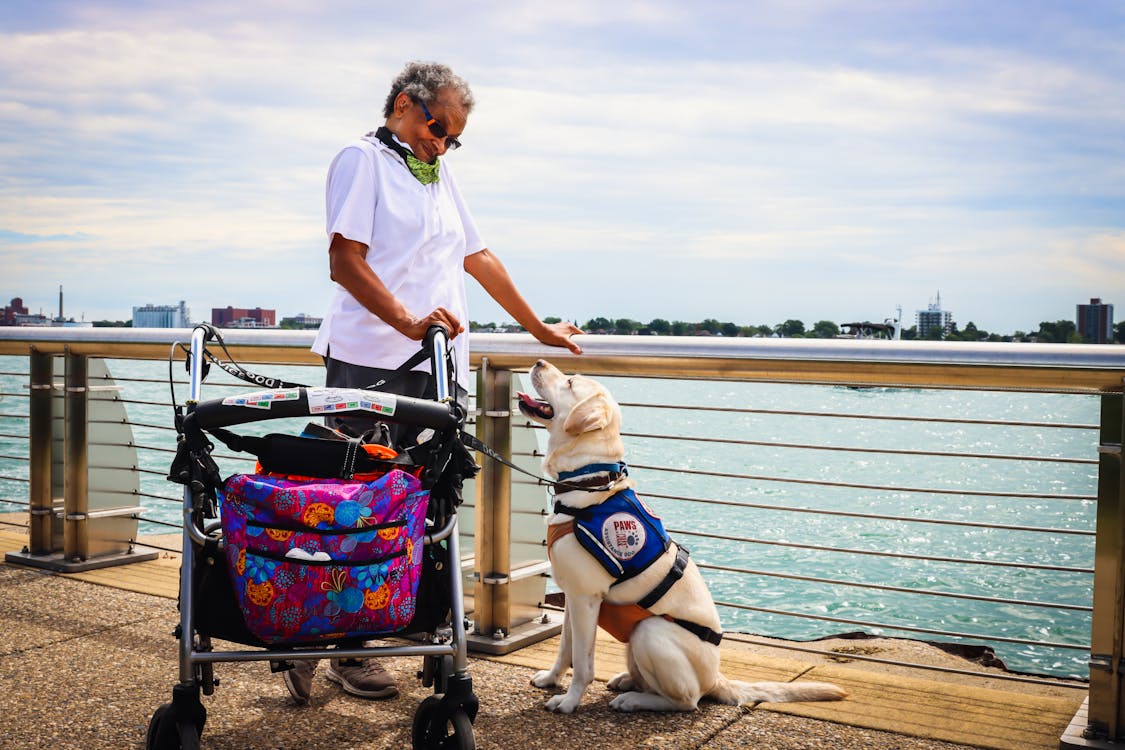
Service dogs are highly trained assistance animals that help individuals with disabilities in various ways. The tasks these dogs perform range from retrieving objects from the ground for the handler using a wheelchair to providing deep pressure therapy during panic attacks.
If you have a disability and are looking for guidance on making your dog a service dog, our article will provide you with everything to know. Read on to learn how to get your dog registered as a service dog.
The Definition of a Service Animal
Service animals are a type of assistance animals. According to the Americans With Disabilities Act, only dogs trained to perform tasks to help an individual with a disability are service animals. That means you can’t have a cat or any other animal – except for miniature horses in some cases – as your service animal.
Some common types of service dogs include psychiatric service dogs, mobility assistance dogs, wheelchair assistance dogs, and autism assistance dogs. Since all service dogs play a vital role in their handler’s life, they can enter anywhere the handler is allowed, including places that generally don’t allow pets, such as restaurants, schools, and hospitals.
Service dogs only need to receive training to help their handler with a disability to become service animals. They don’t need legal documentation or certification to prove they are service animals or have received adequate training.
That said, businesses can’t require the handler of a service animal to present documents to prove their status to let them in. For businesses, federal law only permits two questions to ask if a dog is a service animal. These are:
- Is the dog a service animal required because of a disability?
- What work or task has the dog been trained to perform?
Beyond these two questions, businesses and organizations cannot ask about the handler’s disability or require the service dog to demonstrate tasks to prove their status as a service animal.
Service Dog vs. ESA
Both service dogs and emotional support animals (ESAs) are assistance animals. However, emotional support animals are only for those with a psychiatric disability. They also require an ESA letter written by a licensed mental health professional, whereas service animals only need training. ESAs don’t require any training and can be any pet the individual is allowed to have.
Due to the differences in how they help their handler, emotional support animals don’t have the same public access rights as service dogs. They are subject to pet restrictions just like any other pet. Still, the Fair Housing Act protects emotional support animals to live with their owner even if the landlord or the building has a no-pet policy.
How to Make Your Dog a Service Dog
There isn’t a specific path you must follow to get your dog registered as a service dog. Service animals only require training, and a professional training program isn’t always necessary. If you have experience training dogs, you can train your dog to assist you.
Training can take anywhere from a few weeks to several months, depending on the type of tasks your dog wants to perform related to your disability. Therefore, it is crucial to set realistic expectations, particularly if you want your dog to perform complicated tasks.
Once training is complete, you will have your dog as your service animal. Registration or receiving any form of certification isn’t a legal requirement for service animals. However, getting your emotional support animal registration done with a reputable registry done with a reputable registry can have its benefits, such as getting an ID card for your service dog, vest kits, and 24/7 legal support.
Understand Service Animal Laws
Service dogs are remarkable animals that can assist their handlers with disabilities in various ways, but their handlers must have a good understanding of the law.
These dogs only need to receive proper training related to a disability in order to become a service animal. While registration has its benefits, it isn’t always a must. It is entirely up to the handler to decide if they choose to register their service animals. As long as your dog has received proper training to assist you or someone else with a disability, they will have everything needed to become a service animal.

This content is brought to you by the FingerLakes1.com Team. Support our mission by visiting www.patreon.com/fl1 or learn how you send us your local content here.