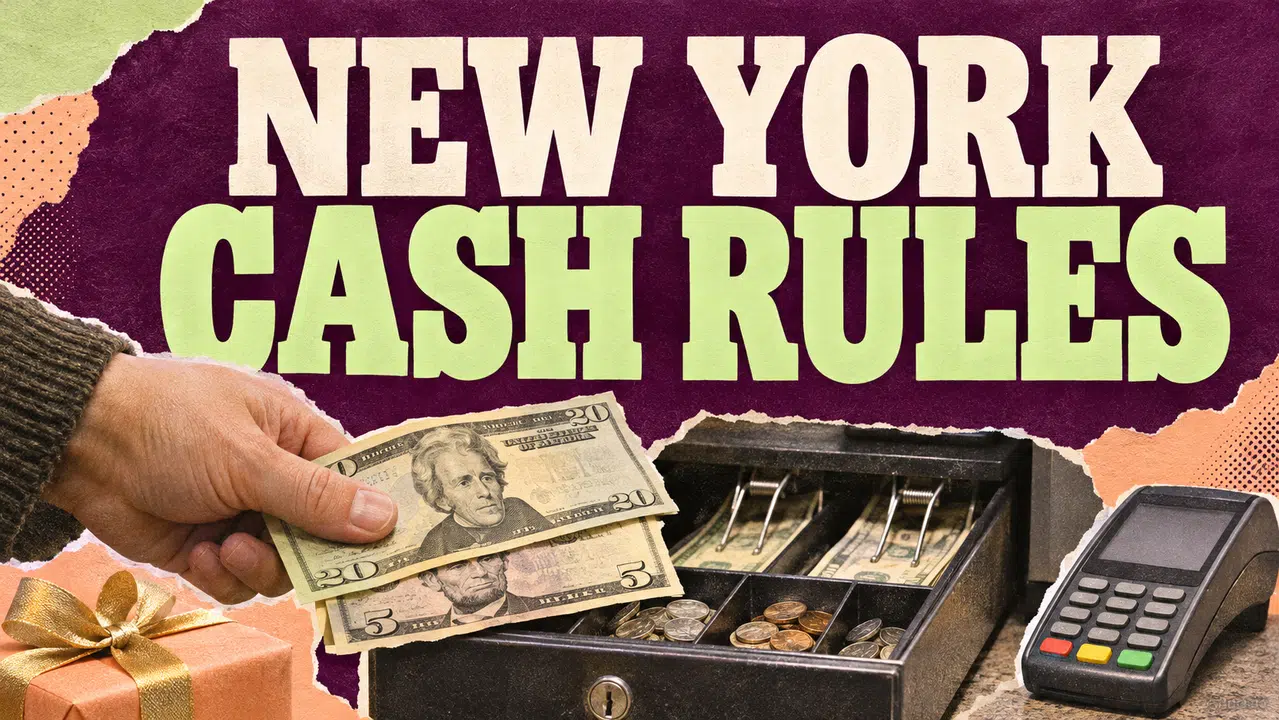
Holiday shoppers across the Finger Lakes have a protection that took effect earlier this year: New York food stores and retail establishments generally cannot refuse cash or charge customers more for using it.
The statewide requirement began March 21, extending cash-payment protections beyond New York City, where a local law has been in effect since 2020.
A Pew Research Center analysis released Nov. 17 places New York among at least 10 states requiring certain businesses to accept cash for in-person purchases. The finding comes as shoppers prepare for the holiday buying season, when payment policies can affect where people without credit cards or bank accounts can shop.
What New York’s law requires
Under New York’s cash-acceptance law, covered businesses must provide a way for customers to pay with U.S. currency and coins.
The law covers establishments selling food or beverages for consumption on or off the premises, along with businesses selling consumer goods or providing retail services. Banks and trust companies are excluded from the definition of a retail establishment.
Businesses can refuse bills larger than $20. They also generally do not have to accept cash for telephone, mail or internet purchases, unless payment takes place at the business.
Attorney General Letitia James has warned businesses against requiring customers to use cards or other cashless payment methods. Violations carry maximum civil penalties of $1,000 for a first offense and $1,500 for each subsequent offense.
“New Yorkers have a right to service no matter how they choose to pay,” James said when announcing the law’s implementation.
Cash-to-card machines come with conditions
A business can qualify for an exception by providing an on-site machine that converts cash into a prepaid card customers can use to complete their purchases.
But the machine cannot charge a conversion fee or require a minimum deposit greater than $1. Deposited funds cannot expire, and the card cannot limit the number of transactions.
Customers must be able to obtain a receipt showing their deposit upon request.
If the machine malfunctions, the business must accept cash while it is out of service. A conspicuous sign must explain that obligation and tell customers they can report violations to the state Division of Consumer Protection.
Cash discounts are still allowed
The cash-acceptance requirement does not prevent businesses from offering a lower price to customers paying cash.
Separate state credit card surcharge rules require businesses passing along processing costs to display the full credit card price before purchase, excluding sales tax. Businesses can display both cash and credit prices or post the higher credit price and advertise a cash discount.
Simply posting a sign announcing a percentage fee for card payments does not satisfy the state’s disclosure guidance.
Nationally, Pew found that cash-acceptance requirements vary by location and business type. Maryland’s statewide requirement also took effect this year, while an Illinois law is scheduled to take effect in January 2028.
For New York shoppers, the requirement is already in place. Anyone who believes a covered business improperly refused cash or charged more for using it can submit a complaint to the attorney general’s office or call 800-771-7755.
Make FL1 part of your day.
Local reporting. Useful updates. More ways to stay close to your community.
Go ad-free
Support independent local reporting and enjoy FL1 without display ads.
$4.99 / month
Become a member →Cancel anytime. Third-party media players may contain ads.Get the daily briefing
Start your morning with the headlines that matter across the Finger Lakes.
Find more FL1 on Google
Choose FingerLakes1.com as a preferred source to see more of our reporting in your Google news results.

FingerLakes1.com is the region’s leading all-digital news publication. The company was founded in 1998 and has been keeping residents informed for more than two decades. Have a lead? Send it to news@fingerlakes1.com.