

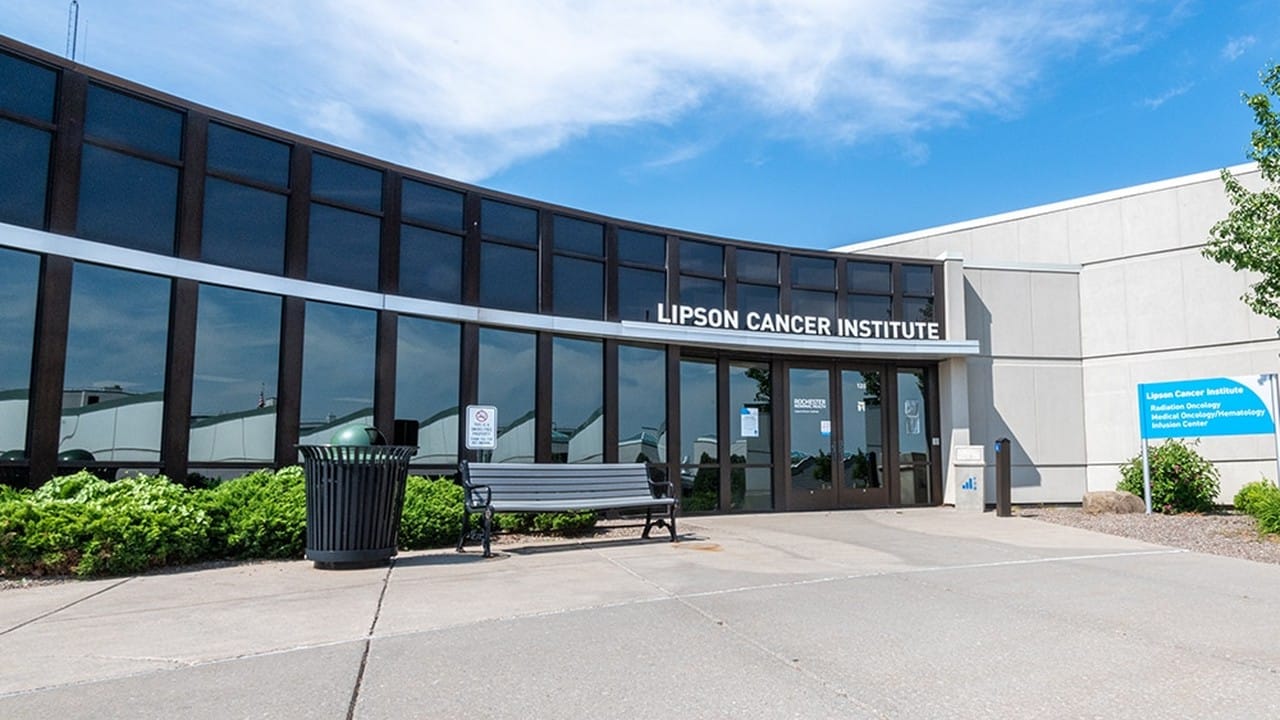
Two patients with the same type of cancer may have different treatment options because their tumors carry different genetic changes. At Rochester Regional Health’s Lipson Cancer Institute, doctors use those differences to help choose treatments for eligible patients, including some with non-small cell lung cancer.
The approach, called precision oncology, adds information about a tumor’s DNA and proteins to what doctors already know about where it started and how it looks under a microscope. In Rochester Regional Health’s explainer, Lipson oncologist and hematologist Rachel David describes how those clues, known as biomarkers, can help doctors classify a cancer and see whether a treatment is available for a particular tumor feature.

What a tumor sample can reveal
Doctors can test tissue from a biopsy in several ways. A lab technique called immunohistochemistry looks for specific proteins or other markers in the sample. Next-generation sequencing examines the tumor’s DNA for genetic changes that may help guide treatment and typically takes longer, according to the health system.
A test result can help the care team decide whether an available therapy is a match. David pointed to pembrolizumab, an immunotherapy that can be used for certain advanced cancers with a marker known as mismatch repair deficiency. For eligible patients, that marker can guide treatment across cancers that began in different organs.
Where testing has changed treatment options
David cited non-small cell lung cancer as an area where the approach has expanded treatment options. Some patients may qualify for drugs targeting changes involving EGFR, ALK or a specific alteration called KRAS G12C. David said targeted treatment can help some people with incurable lung cancer linked to an ALK rearrangement live for years while maintaining quality of life. She also cited advances in breast cancer and acute leukemia.
- Rochester General nursing chief earns second straight national honor
- RRH adds gastroenterologist at Clifton Springs and Newark offices
- Rochester heart failure trials test medication and nerve procedure
- Major employers say hospital workers will be terminated if they don’t get COVID vaccine by September 27
At Lipson, the decision to pursue a targeted treatment also depends on the type of cancer, how long a patient can safely wait for test results and whether insurance will cover the therapy, Rochester Regional Health said.
How Lipson matches patients to clinical trials
Lipson participates in MyeloMATCH, a national clinical trial program for people newly diagnosed with acute myeloid leukemia or myelodysplastic syndromes. Maria Sbenghe is the local principal investigator, according to Rochester Regional Health.
Through the program, doctors use biomarkers from a patient’s sample to look for a trial that fits the molecular features of the disease. The studies evaluate treatments matched to those features.
Make FL1 part of your day.
Local reporting. Useful updates. More ways to stay close to your community.
Go ad-free
Support independent local reporting and enjoy FL1 without display ads.
$4.99 / month
Become a member →Cancel anytime. Third-party media players may contain ads.Get the daily briefing
Start your morning with the headlines that matter across the Finger Lakes.
Find more FL1 on Google
Choose FingerLakes1.com as a preferred source to see more of our reporting in your Google news results.

FingerLakes1.com is the region’s leading all-digital news publication. The company was founded in 1998 and has been keeping residents informed for more than two decades. Have a lead? Send it to news@fingerlakes1.com.