


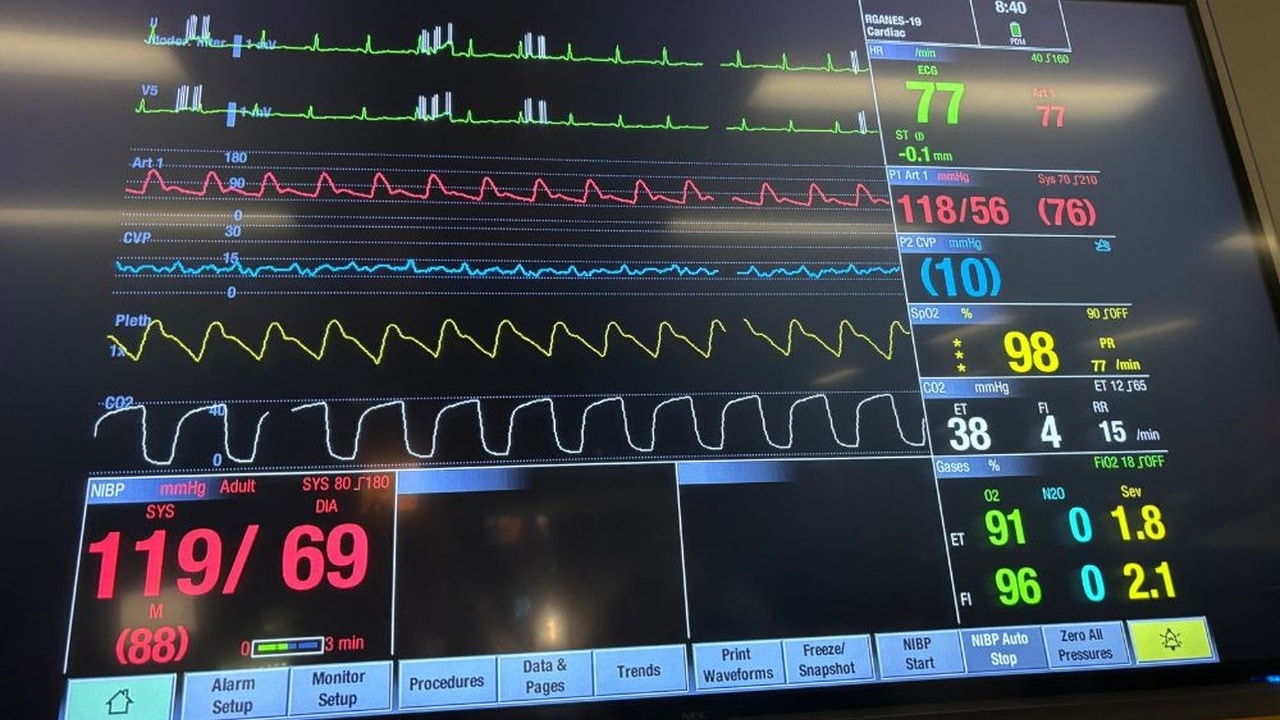
Rochester Regional Health is taking part in two national clinical trials investigating treatments for patients with heart failure with preserved ejection fraction, offering eligible patients access to research close to home.
The studies are evaluating an oral medication and a catheter-based nerve procedure, rather than offering treatments already established as effective for every patient, according to the health system's Nov. 5 report.

The work was described in the institution's report.
Specialists consider trials when symptoms persist
Heart failure with preserved ejection fraction, often abbreviated HFpEF, involves difficulty filling the heart effectively even when the proportion of blood pumped out with each beat is preserved.
It can contribute to fatigue, shortness of breath and fluid buildup.
Dr. Vishal Parikh, an advanced heart failure specialist at the Sands-Constellation Heart & Vascular Institute, directs its HFpEF and Pulmonary Hypertension Center.
He said specialists consider research options when patients continue to have symptoms despite appropriate, guideline-directed treatment.
Patients generally reach the specialty service through their primary care provider or cardiologist, and eligibility depends on the individual study's requirements.
LEVEL study tests oral levosimendan
LEVEL is a phase 3, randomized, double-blind, placebo-controlled trial of oral levosimendan for patients with HFpEF and pulmonary hypertension, or elevated pressure in the arteries carrying blood to the lungs.
Rochester Regional Health said approximately 20 to 30 eligible participants from the region joined a 12-week part of the study.
They received either the medication or a placebo and completed six-minute walking assessments before and after treatment, with researchers measuring distance and asking about symptoms.
After 12 weeks, participants initially assigned a placebo also received levosimendan, according to the health system.
Rochester Regional Health reported the country's second-highest enrollment in the first part and said the trial is enrolling for its second part.
The system projects completion in late 2028 and said preparation for possible FDA review could take another two years; those are estimates, and approval is not assured.
Rebalance HF examines nerve ablation
The Rebalance HF study is evaluating a procedure targeting the right greater splanchnic nerve to determine its safety and possible effect on congestion, symptoms and quality of life.
In the study's first phase, 90 participants were divided between a catheter-based ablation group and a sham-procedure group.
The sham involves a small puncture similar to the one used to begin the actual procedure, without the ablation itself, allowing researchers to compare outcomes.
Participants are assessed before and after the procedure and followed for two years.
Rochester Regional Health projects completion in mid-2029, followed by possible FDA review.
Screening and consent take place locally
Research staff at Rochester General Hospital's Center for Clinical Research work with specialists to screen patients and explain informed consent, the trial period and follow-up.
Patients whose symptoms remain difficult to manage should discuss possible eligibility with their cardiologist, the health system said.
The trials are available through a program serving the Rochester, Finger Lakes and St. Lawrence regions, though participation does not guarantee an individual benefit.

FingerLakes1.com is the region’s leading all-digital news publication. The company was founded in 1998 and has been keeping residents informed for more than two decades. Have a lead? Send it to news@fingerlakes1.com.