

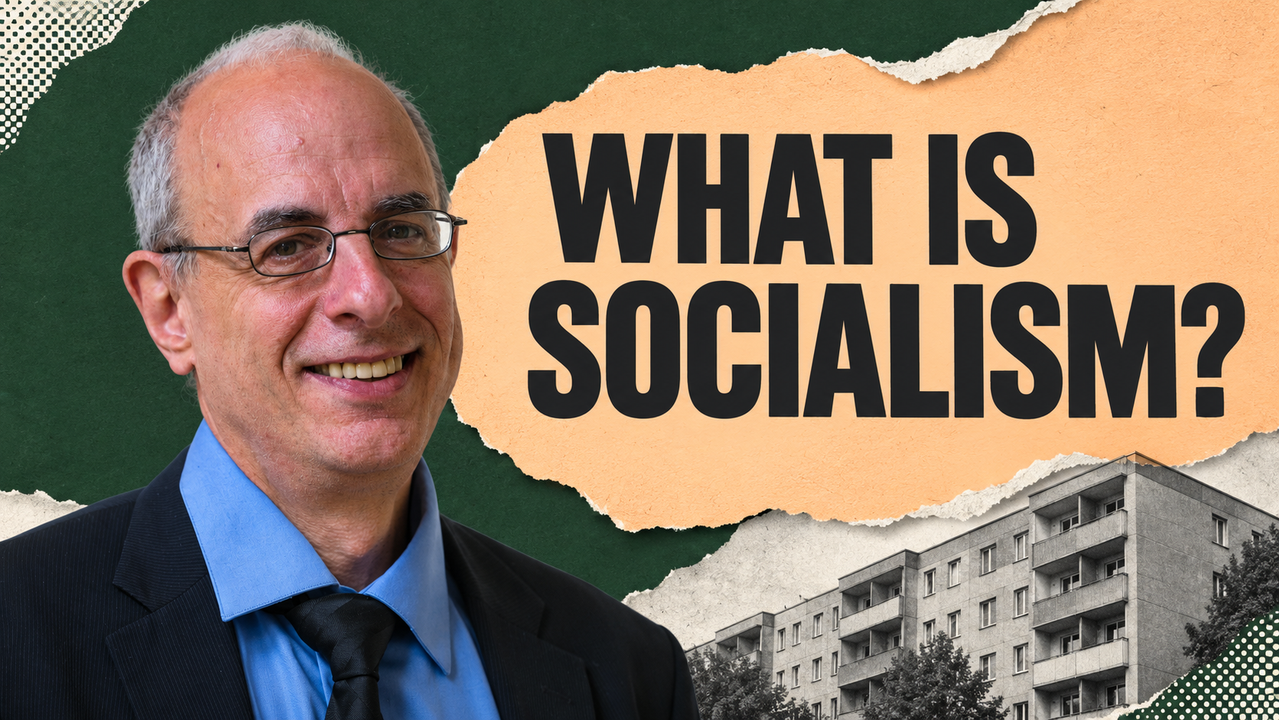
A rent freeze, free child care and a government-owned grocery store can all appear on a socialist candidate’s platform. But they do different things: One regulates a private business, another pays for a service and the third changes who owns the business.
That distinction helps explain the question following a growing group of American mayors into office: What makes their politics socialist?
For David Ost, professor emeritus of politics at Hobart and William Smith Colleges in Geneva, part of New York City Mayor Zohran Mamdani’s impact is changing what residents expect government to provide.
“He’s expanded the idea of what government can and ought to do,” Ost told the Los Angeles Times in an examination of democratic socialist mayors.
Understanding the label requires separating an economic philosophy, a political movement and the policies elected officials can actually deliver.
Socialism is about ownership and control
At its core, socialism concerns who controls the resources and businesses that produce goods and services.
The Stanford Encyclopedia of Philosophy describes socialism around social, democratic control of the economy’s productive resources, in contrast with their predominantly private ownership under capitalism.
That can involve public ownership, worker ownership or other forms of collective control. Socialist thinkers disagree over how much planning an economy needs and what role markets should retain. Some versions explicitly preserve markets.
The distinction matters when evaluating individual policies. A higher tax on a privately owned company changes how its earnings are distributed. Worker ownership changes who controls the company and receives its profits.
Public spending alone does not settle whether an economy is socialist. A capitalist economy can have extensive public services, regulation and income assistance while businesses remain largely privately owned.
Democratic socialism and social democracy overlap
The Democratic Socialists of America describes a goal that reaches beyond expanding government benefits.
In its explanation of democratic socialism, the organization calls for replacing capitalism and collectively owning major economic sectors, including energy production and transportation. It also rejects authoritarian versions of socialism and advocates giving ordinary people greater control over workplaces and communities.
Its immediate priorities include reforms such as single-payer health insurance and stronger labor power.

Those near-term goals can overlap with social democracy, which generally seeks a more equal society through public services, redistribution and regulation within a predominantly capitalist economy.
That overlap helps explain why candidates, supporters and critics sometimes use the terms differently.
John Mollenkopf, professor emeritus at the CUNY Graduate Center, told the Los Angeles Times that the typical Mamdani voter leaned more toward a regulated capitalist economy than toward replacing capitalism with public or worker ownership.
A voter can support a socialist candidate’s child care proposal without endorsing the candidate’s broader economic philosophy.
The policy details reveal the difference
New York City’s child care expansion offers a concrete example.
On Oct. 5, Mamdani’s administration announced plans to move more than 10,000 children off a child care assistance waitlist. Eligible families would receive vouchers covering care at a provider of their choice, with invitations rolling out over several months.
That approach uses public money to pay for care. It does not require the city to own every participating provider.
- Schumer, Gillibrand outline affordability agenda as Democrats prepare to take Senate control
- Hochul campaign credits affordability, Trump attacks and party unity for win
- Healthcare affordability is a big concern as open enrollment approaches
- O’Mara blasts Democrats over energy costs, affordability in weekly column
Likewise, a rent freeze regulates what covered landlords can charge while leaving ownership intact. A publicly owned housing development changes ownership as well as how housing is provided.
Those differences affect financing, accountability and the role of private businesses. The word “socialist” by itself does not explain them.
The agendas of today’s socialist mayors also face state approval requirements, council opposition and budget limits, making their governing records narrower than their long-term ambitions.
A socialist mayor still has to balance the budget
Seattle Mayor Katie Wilson’s first budget proposal illustrates those constraints.
Her administration’s 2027-28 spending proposal, released in September, included nearly $50 million in annual general fund spending reductions while maintaining investments in affordable housing and expanding shelter funding.
Wilson also continued to support a local capital gains tax, but her office said the state’s implementation timeline meant it could not close the immediate budget gap.
For residents evaluating any such agenda, the practical questions reach beyond the candidate’s label: Who owns the service? Who qualifies? Who pays? What approval is required?
In Seattle, the proposal would eliminate 128 full-time positions, including 15 occupied jobs, while funding nearly 1,000 additional shelter beds by the end of 2027.
Make FL1 part of your day.
Local reporting. Useful updates. More ways to stay close to your community.
Go ad-free
Support independent local reporting and enjoy FL1 without display ads.
$4.99 / month
Become a member →Cancel anytime. Third-party media players may contain ads.Get the daily briefing
Start your morning with the headlines that matter across the Finger Lakes.
Find more FL1 on Google
Choose FingerLakes1.com as a preferred source to see more of our reporting in your Google news results.

FingerLakes1.com is the region’s leading all-digital news publication. The company was founded in 1998 and has been keeping residents informed for more than two decades. Have a lead? Send it to news@fingerlakes1.com.