

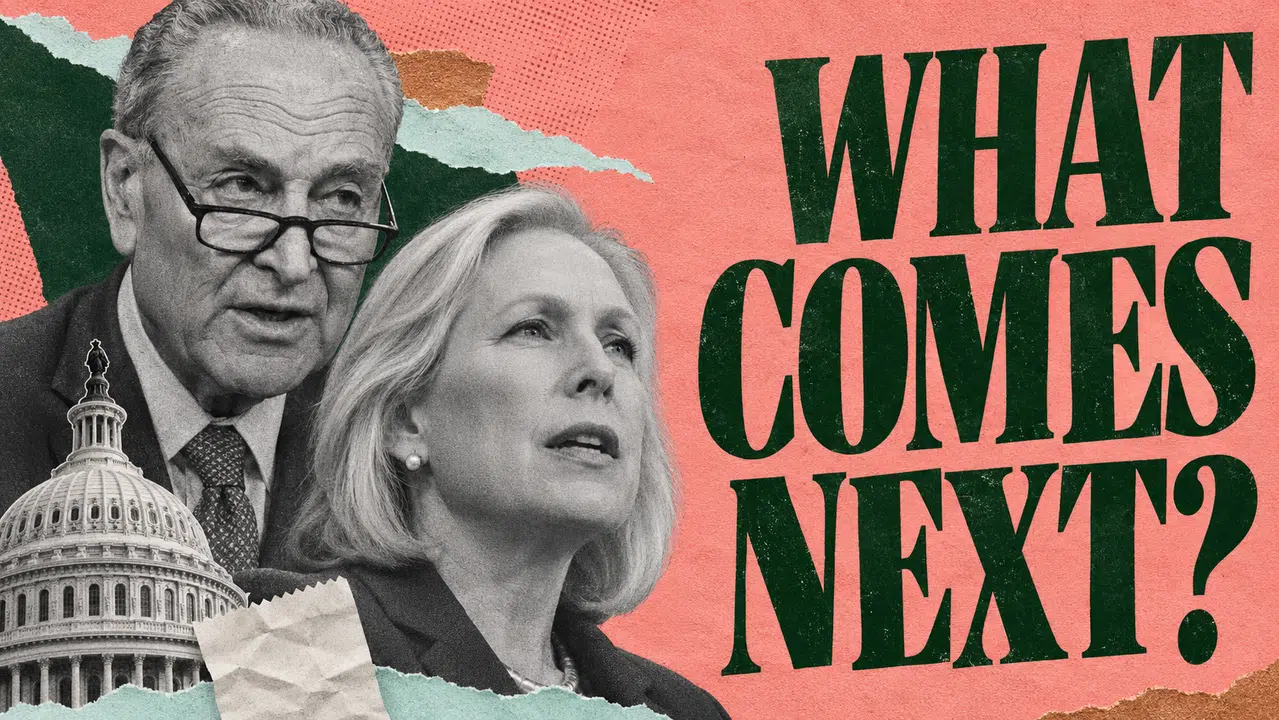
New York’s two U.S. senators are putting household costs, an end to the Iran war and scrutiny of the Trump administration at the center of their agenda following Democrats’ midterm victories, while facing questions about who should lead the party’s new Senate majority.
In separate appearances Tuesday, Nov. 10, Sens. Chuck Schumer and Kirsten Gillibrand described an agenda reaching from grocery prices and Canadian tariffs to health insurance, Social Security and restrictions on military artificial intelligence.
Gillibrand also delivered a forceful defense of Schumer’s leadership, crediting his campaign strategy and fundraising as reporters questioned whether dissatisfaction within the Democratic caucus could threaten his bid to become majority leader.
Their statements outlined priorities for the incoming majority. The proposals would still require congressional action before becoming law.
Lower costs lead the agenda
Gillibrand’s outline of her legislative priorities tied affordability to several policy changes, including ending the Iran war, reversing tariffs and expanding access to health coverage.
“Last week, voters across the country made clear that they are ready for change. But the real work is just beginning,” Gillibrand said.
For New York, one of her targets is President Donald Trump’s tariffs on Canada. Her Banning Antiquated Duties and Delivering Equitable American Levies Act, known as the BAD DEAL Act, would repeal tariffs imposed under Section 338 of the Tariff Act and refund duties paid under that authority. Her office said that includes the administration’s 50% tariffs on Canada.
On health care, Gillibrand supports restoring and permanently extending enhanced Affordable Care Act premium tax credits. She also wants to reverse Medicaid cuts enacted through Trump’s One Big Beautiful Bill Act, restore coverage under New York’s Essential Plan, expand Medicare eligibility to people younger than 65 and cap prescription drug costs.
Schumer made a similar affordability argument in Senate floor remarks about October inflation. He singled out food prices, including eggs, fish and beef, and blamed the administration’s tariffs, trade policies and conduct of the Iran war for putting additional pressure on families.
Those were Schumer’s assessments of the causes of rising prices. His remarks did not provide a detailed legislative package or a timetable for reducing them.
Energy policy is another part of the effort. At his weekly leadership news conference, Schumer said he would support moving debate forward on permitting reform, while seeking amendments to address provisions that still concerned him.
He argued that permitting delays have held back cleaner, less expensive energy and said legislation should require data centers to pay their fair share while protecting land, water and communities.
His support for advancing debate did not amount to an unqualified endorsement of the bill.
Iran war drives calls for accountability
Both senators connected the Iran war to financial pressures at home and risks to American service members.
Gillibrand’s office said New York gasoline prices were more than 40% higher than at the war’s start more than eight months earlier. It also said she had voted 14 times for war powers resolutions intended to end the conflict.
Schumer went further in remarks calling for Defense Secretary Pete Hegseth’s removal.
He called for a Senate trial, criticized Hegseth’s description of the conflict as a military victory and accused the administration of concealing American casualty figures. Schumer characterized the war as illegal and said responsibility rested with the administration’s leadership.
His statements were demands for action against Hegseth, rather than an announcement that a Senate trial had been scheduled.
Gillibrand’s broader oversight agenda includes her No Stock Act, which would prohibit senior federal officials from holding or trading covered financial assets. The restrictions would reach Congress, the president, vice president and Supreme Court justices, along with their spouses and dependents.
- Schumer, Gillibrand put lower costs and Trump oversight atop post-election agenda
- Gillibrand calls for ending AI-assisted Medicare pilot over concerns about access to care
- Gillibrand backs bill to expand breast and gynecological cancer screening access
- Schumer, Gillibrand join Senate Democrats in pressing USPS on mail-voting rule
She also highlighted the Secure and Accountable Military AI Act, which would restrict certain Pentagon uses of artificial intelligence, including prohibiting its use to launch nuclear weapons.
On Social Security, Gillibrand supports legislation that would raise additional payroll tax revenue from wealthy households. Her office said the Social Security Expansion Act would extend the program’s solvency by 75 years.
Gillibrand defends Schumer amid leadership questions
The policy rollout also exposed disagreement over Democratic leadership after the election.
At the weekly Democratic leadership news conference, a reporter asked Schumer about opposition from Sen. Bernie Sanders and reservations expressed by Sen. Elissa Slotkin.
Schumer said he was confident he would be elected majority leader and argued that the caucus was united around lowering costs, confronting corruption and ending the war.
Gillibrand, who chaired the Democratic Senatorial Campaign Committee during the election cycle, credited Schumer with keeping Democrats focused on a consistent message while recruiting candidates and directing campaign resources into competitive states.
She cited early investments in candidates and voter registration, arguing that the party’s gains reflected planning and experience.
Sens. Ruben Gallego and Sheldon Whitehouse also voiced support for Schumer at the news conference.
For New Yorkers, the senators’ agenda identifies several issues to watch as the new Congress approaches: whether tariff repeal advances, whether health insurance assistance is restored, how energy legislation treats data centers and whether Democrats can translate their election gains into action on costs and oversight.

FingerLakes1.com is the region’s leading all-digital news publication. The company was founded in 1998 and has been keeping residents informed for more than two decades. Have a lead? Send it to news@fingerlakes1.com.