


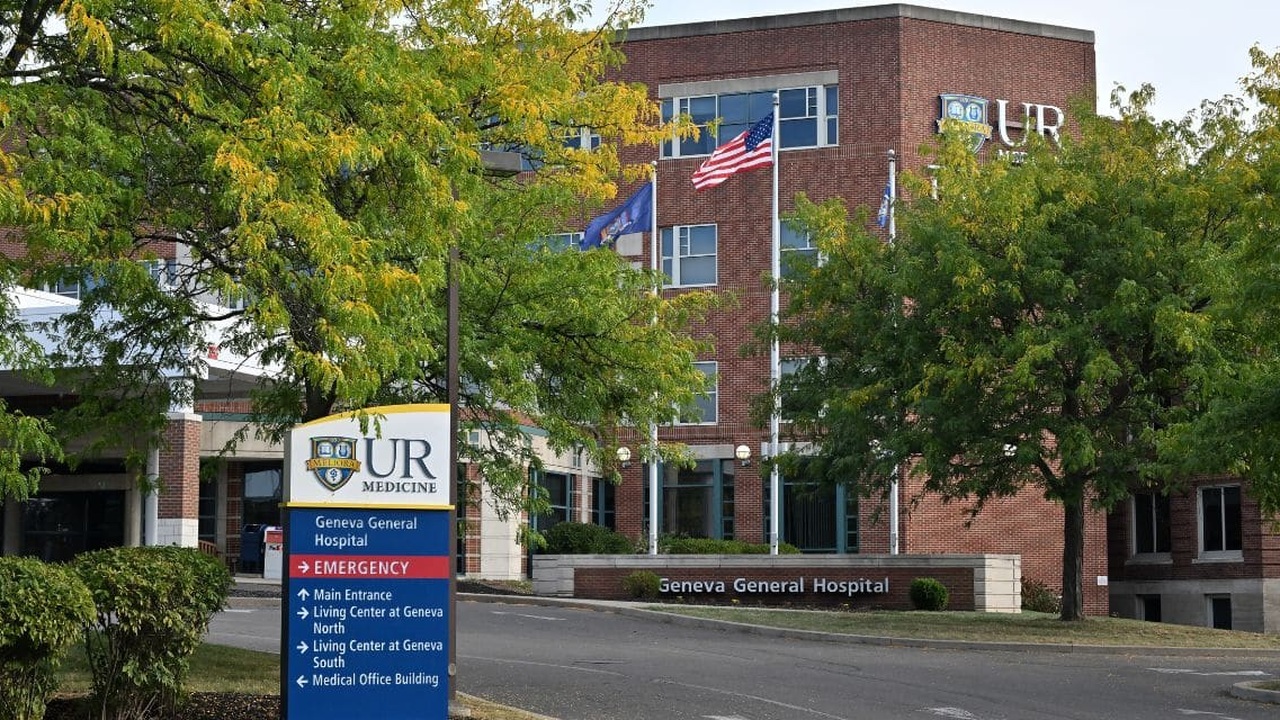
Geneva General Hospital will receive more than $3.5 million to replace aging heating and cooling equipment and improve energy efficiency, with projected annual cost savings of more than $230,000.
The award is part of nearly $28 million for six projects at eight New York hospitals, Gov. Kathy Hochul announced Monday. The New York State Energy Research and Development Authority administers the funding through its Empire Building Challenge: Hospitals program.

Geneva’s grant targets aging equipment
Finger Lakes Health’s project at Geneva General includes a new high-efficiency cooling plant, an update to the central building management system and replacement of two aging air-handling units with more efficient models. An existing chiller plant will also gain a heat-recovery chiller.
The state estimates that the work will reduce the hospital’s annual baseline energy use by nearly 40,500 million British thermal units, or MMBtu. It compares that reduction with the energy needed to power more than 490 homes.
Those savings are projections for the completed project, rather than energy or operating-cost reductions already achieved.
Lara Chatel Turbide, chief operating officer of University of Rochester Medicine Finger Lakes Health, said the grant will let Geneva General replace its aging HVAC system more quickly.
“We are thrilled to be able to make the capital investments in our health system to serve the community with greater efficiency and reinvest in our mission of exceptional care to the patients and families we serve,” Turbide said.
Five other projects receive funding
The other awards will support hospital equipment upgrades in Queens, the Bronx and Sleepy Hollow. The six projects cover eight hospitals because one Montefiore award encompasses three facilities.
Long Island Jewish Medical Center’s Katz Women’s Hospital in Queens was awarded nearly $4.3 million for a heat-recovery chiller, an exhaust-air heat-recovery system, conversion from steam distribution to low-temperature hot water and ventilation-system balancing. Projected annual savings are nearly $386,000 and nearly 31,000 MMBtu, equivalent to the energy needed for more than 375 homes.
Montefiore Medical Center’s Wakefield Hospital, Jack D. Weiler Hospital and Westchester Square in the Bronx will share nearly $4.9 million to install heat-recovery heat pumps that electrify heating. Across the three hospitals, the state projects annual savings of more than $14,000 and nearly 25,000 MMBtu, comparable to the energy needed for more than 300 homes.
Northwell Health’s Phelps Memorial Hospital in Sleepy Hollow was awarded more than $5 million for a heat-recovery chiller, heat pumps, thermal storage and conversion of steam distribution to low-temperature hot water. Expected annual savings are nearly $50,000 and nearly 30,000 MMBtu, equivalent to the energy needed for more than 360 homes.
Elmhurst Hospital Center in Queens will receive more than $5 million for heat-pump chillers, modernization of pneumatic controls and upgrades to its central building management system. Projected annual savings are nearly $947,000 and more than 33,700 MMBtu, comparable to the energy needed for 410 homes.
St. Barnabas Hospital in the Bronx was awarded more than $5 million to replace an existing steam chiller plant with an electric chiller plant. The state expects annual savings of more than $561,000 and nearly 53,300 MMBtu, equivalent to the energy needed for nearly 650 homes.
Hospitals will serve as models for future upgrades
Together, the projects are expected to cut annual energy use by more than 213,000 MMBtu, which the state compares with powering nearly 2,600 homes. The projected annual reduction of more than 11,000 tons of carbon emissions is comparable to removing 2,700 cars from the road.
Six participating hospitals are in areas the state designates as disadvantaged communities: Geneva General, the three Montefiore facilities, Elmhurst and St. Barnabas.
The competitive program supports projects intended to overcome financial and technical barriers to hospital energy upgrades while improving the resilience of health care facilities. NYSERDA intends the selected projects to demonstrate approaches other hospitals can replicate.
The hospital initiative extends the Empire Building Challenge’s work on economically feasible ways to retrofit large existing buildings with lower-carbon systems. The state said NYSERDA and utility programs have invested more than $5.6 billion in building decarbonization and high-efficiency electric heating and cooling technologies.
The new hospital awards are funded through the Regional Greenhouse Gas Initiative and the Clean Energy Fund.

FingerLakes1.com is the region’s leading all-digital news publication. The company was founded in 1998 and has been keeping residents informed for more than two decades. Have a lead? Send it to news@fingerlakes1.com.