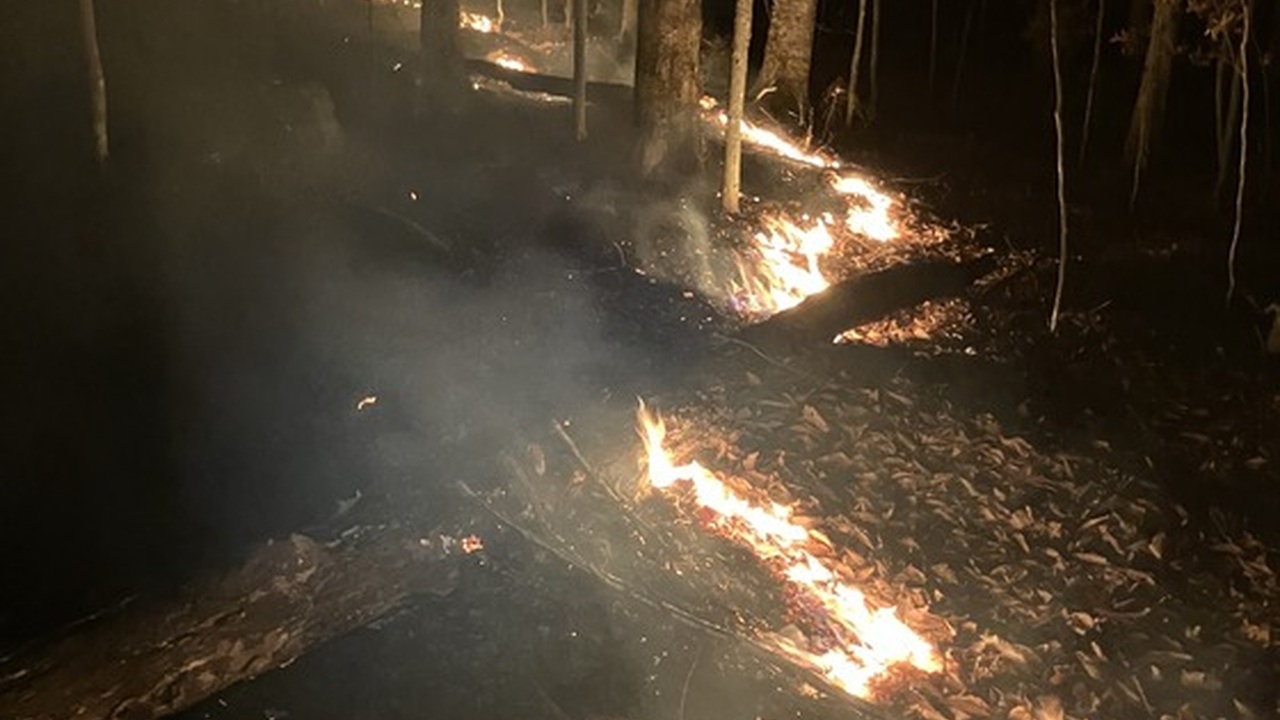
Dry conditions across much of New York have pushed fire danger above typical fall levels, prompting state officials to urge campers, hunters and other outdoor visitors to use extra caution with fires.
The Department of Environmental Conservation said Friday that forest rangers have recently responded to multiple wildfires caused by unattended or incompletely extinguished campfires. Embers can burn into dry ground and smolder for days or weeks before a wildfire becomes visible.

Keep fires contained and put them out completely
DEC discourages campfires outside established rings or pits during the extended dry conditions. Anyone who builds a fire should keep it small, remain with it and clear nearby vegetation and other flammable material.
Before leaving, pour plenty of water over the fire and stir the coals and ashes so the water reaches the entire fire bed. The remains should be cool enough to touch with the back of a hand. A fire that is still hot should not be left.
The department also offered these prevention steps:
- Do not discard ashes from campfires, grills, woodstoves or cigarettes on vegetation or the forest floor.
- Avoid smoking around flammable vegetation or organic soils, and carry cigarette waste out.
- Stay on established roads and avoid parking over vegetation, which can ignite when it touches hot exhaust components.
- Make sure chainsaws, generators and other power equipment have working mufflers and spark arrestors. Keep a shovel, water or fire extinguisher available.
- Check local fire restrictions before traveling.
Report a forest wildfire to 911 and be ready to describe its location. For unattended campfires on DEC land, call Forest Ranger Dispatch at 1-833-697-7264.
Smoke and autumn weather can affect air quality
DEC also warned of increased particulate pollution. Cool autumn nights can bring light winds and limited air movement, allowing emissions from chimneys, traffic and industry to accumulate near the ground.
Smoke from brushfires in the southern United States has also reached New York this week, the department said. Much of it remains aloft and is less intense than smoke from western wildfires, but some fine particles can settle toward the surface.
Fire danger ratings can change with the weather. DEC provides a daily fire danger map, campfire safety guidance, open-burning information and Firewise information for homeowners. Current conditions are available through the state's Air Quality Index and air monitoring resources.

FingerLakes1.com is the region’s leading all-digital news publication. The company was founded in 1998 and has been keeping residents informed for more than two decades. Have a lead? Send it to news@fingerlakes1.com.