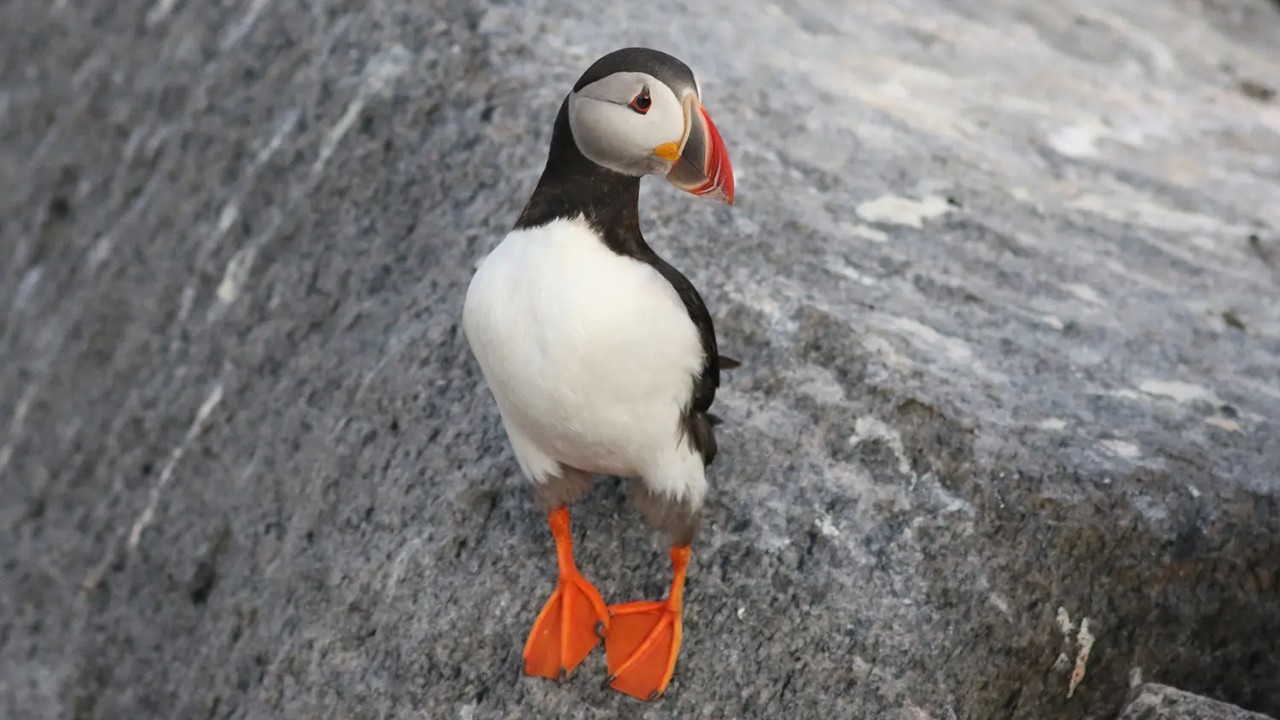
Hobart and William Smith students spent the summer monitoring seabirds on Maine islands through a conservation program that has restored Atlantic puffins to former nesting grounds and trained HWS students for more than two decades.
Liz Walker and Eden Reck, both members of the class of 2028, joined Project Puffin alongside 2025 graduate Victoria Smith. Their work extended across three of the project’s seven research islands, according to a Hobart and William Smith account.

Smith was part of the Eastern Egg Rock crew that confirmed the island’s first razorbill chick in late June. She said the find could extend the species’ breeding range south by 35 miles, a notable observation as environmental changes push many species’ breeding activity north.
The crew also found the largest number of active Atlantic puffin burrows recorded on Eastern Egg Rock in the project’s history, Smith said. She first interned with Project Puffin through HWS in 2025 and returned after graduation as an Audubon research assistant.
Measuring chicks and watching colonies
Walker worked on Matinicus Rock, where she monitored eight species. Her days often began before sunrise with weather observations, sea surface temperature measurements and counts of hundreds of birds from the island’s lighthouse.
During peak hatching season, mornings included watching Arctic and common terns, followed by afternoons measuring and banding chicks. Bands allow researchers to recognize individual birds and track survival, migration and population changes.
Walker learned several banding techniques and eventually banded her first Atlantic puffin chick independently. A session could take one to three hours, she said, and following the birds’ data helped connect the daily work to the larger research effort.
She also held and measured one of two known Manx shearwater chicks born on U.S. soil and helped monitor Leach’s storm-petrels during nighttime fieldwork.
Project Puffin began in 1973 under National Audubon Society biologist Stephen Kress to restore Atlantic puffin colonies to historic nesting islands in the Gulf of Maine. Walker’s internship contributed to continuing research more than 50 years after that work began.
Island life shapes career plans
Reck conducted similar work on Seal Island, but lived in a tent on a wooden platform under a tarp. Walker slept in the lighthouse on Matinicus Rock.
Matinicus Rock had no running water, and electricity was generally available from 11 a.m. to 9 p.m. Supplies arrived every three weeks. The researchers collected rainwater for dishes and laundry and swam in the ocean to wash.
Reck said the experience changed her plans from becoming a bird veterinarian to pursuing conservation fieldwork. Walker said island research taught her to be creative and flexible when solving problems.
Both students are taking a 300-level ornithology course this semester with biology professor Mark Deutschlander. Walker also leads the HWS Bird Club, an Audubon campus chapter, and the two students will remain on campus for two more years to support birding activities and encourage future internship applicants.
Over 21 years, 24 HWS students have participated in Project Puffin. Deutschlander described HWS as the program’s longest-running academic partner and said former interns have gone on to research and conservation careers.
Among them, Madison Sutton completed a doctorate in bird ecology at Marquette University and is doing postdoctoral work at the Smithsonian Migratory Bird Center. Kate Marthens earned a master’s degree at the University of Saskatchewan and works on snow geese in Canada. Penelope Murphy is a natural resources scientist with the Wisconsin Department of Natural Resources, and Stephen Mugel works in Atlanta as an epidemiologist and health data scientist.

FingerLakes1.com is the region’s leading all-digital news publication. The company was founded in 1998 and has been keeping residents informed for more than two decades. Have a lead? Send it to news@fingerlakes1.com.