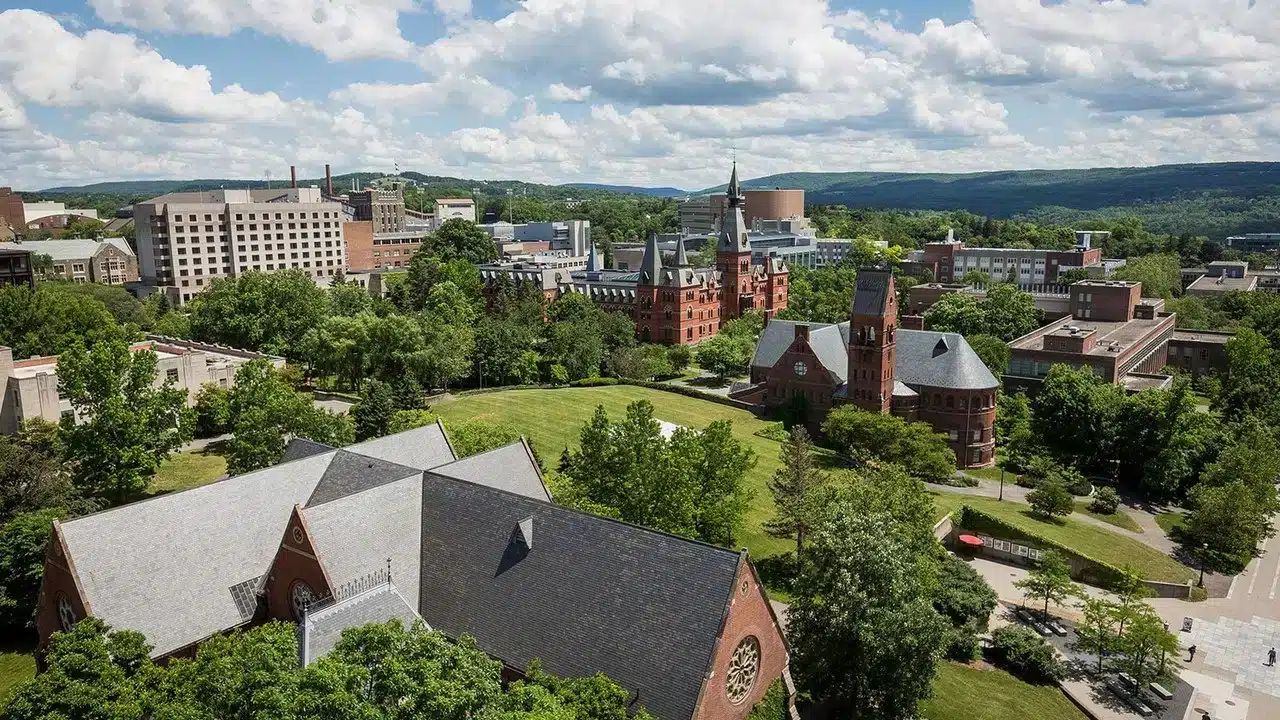
Cornell University will use a three-year, $750,000 grant to study how community work, international experiences and athletics can help students question their assumptions and work across cultural differences.
The award from Wake Forest University’s Educating Character Initiative will support a project led by Cornell’s Einhorn Center for Community Engagement, according to a university announcement. Cornell is one of 49 colleges and universities selected for long-term undergraduate character education projects.

The initiative is part of Wake Forest’s Program for Leadership and Character and is supported by Lilly Endowment Inc. Cornell’s award builds on a $50,000 capacity-building grant it received in 2025.
During that initial phase, faculty and staff worked with doctoral student Emma Herrighty to review research on cultural humility and character development and test approaches to instruction and assessment.
Courses, faculty training and research
Cornell defines cultural humility as an ongoing practice of self-reflection, awareness of power and a willingness to learn from others and reconsider assumptions. It is already a learning goal in the university’s community-engaged programs.
The new project will adapt an existing eCornell cultural humility course for students, launch a faculty institute on teaching and assessment, offer competitive internal grants and convene a university-wide working group to identify opportunities and barriers. A faculty research fellow will help measure student learning and outcomes.
Julie Ficarra, an associate teaching professor in Cornell’s Brooks School of Public Policy and a project team member, said the work will examine the reflection, dialogue, relationships and educational design that help students work responsibly across differences.
Rather than treating exposure to another culture as sufficient, the project will examine how students prepare for experiences and reflect on their relationships with the communities involved.
Global programs and athletics are early focus areas
Global learning programs and Cornell Athletics will be among the first settings studied. Nearly half of Cornell undergraduates take part in an international experience before graduation, while more than 1,200 students compete in varsity athletics each year, according to the university.
Kelly Whitaker, assistant director of the Engaged College Initiative and co-principal investigator, said assessment may need to vary by setting. Coursework, research, study abroad and athletics offer different kinds of preparation and opportunities to observe how students reflect and relate to other people.
Basil Safi, the Einhorn Center’s executive director and the project’s principal investigator, said Cornell’s range of colleges and student experiences will allow researchers to test the approach across disciplines. The work is intended to contribute findings that other universities can use.
Over the next three years, the team will implement the pilot’s findings and examine how structured preparation, dialogue and reciprocal relationships affect what students learn.

FingerLakes1.com is the region’s leading all-digital news publication. The company was founded in 1998 and has been keeping residents informed for more than two decades. Have a lead? Send it to news@fingerlakes1.com.