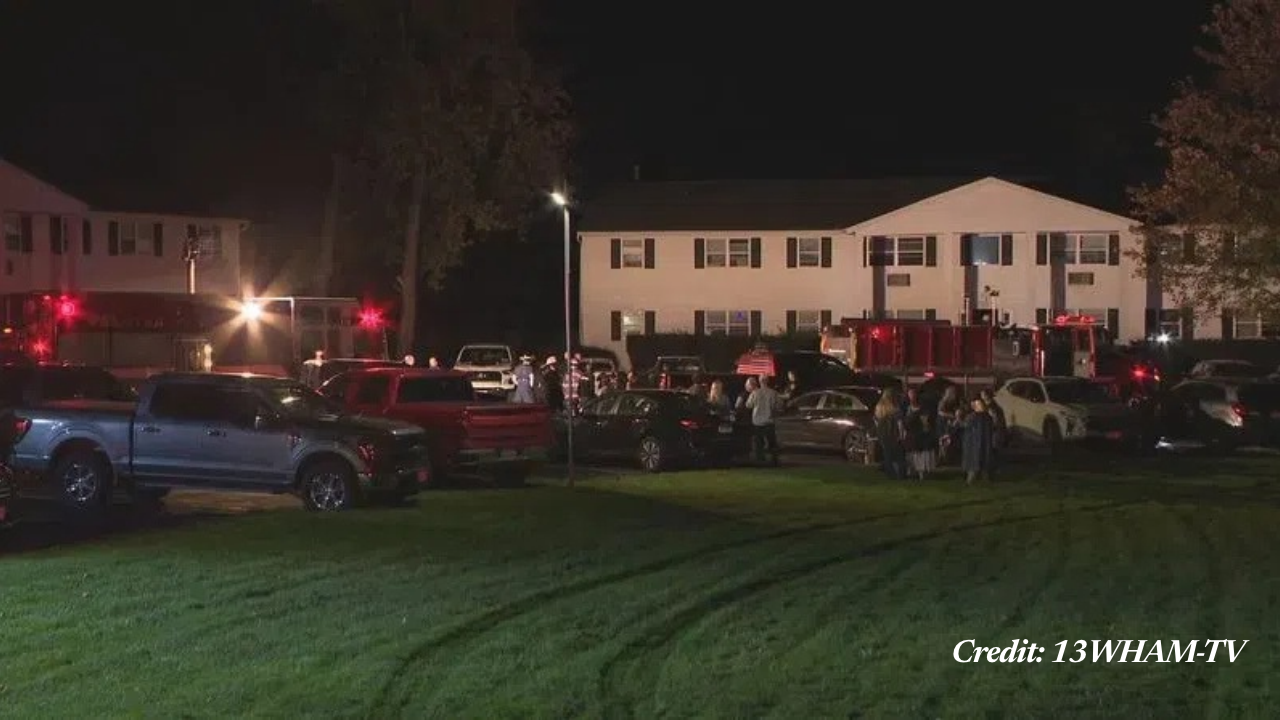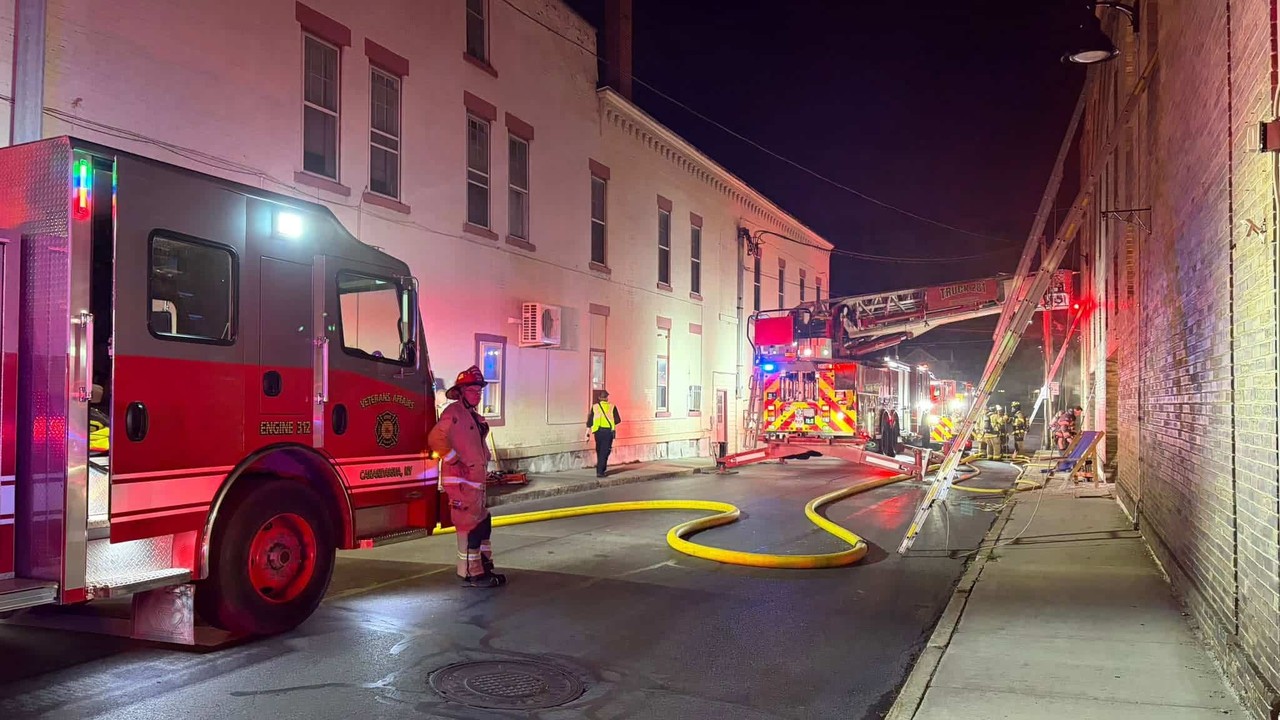
The City of Canandaigua defended its reliance on neighboring fire departments after the Oct. 11 fire at 5 Beeman St., saying no residents or responders were injured and crews kept the fire in its area of origin. In an Oct. 17 statement, the city rejected the firefighters union’s argument that the initial staffing left residents and crews inadequately protected.
The dispute is not simply whether mutual aid is useful. A 2025 city-commissioned fire, EMS and 911 study calls mutual aid essential, but also recommends raising Canandaigua’s minimum on-duty firefighter staffing from four to seven over the long term, with nine preferred. The city said it will review the study’s recommendations and weigh additional investment against taxpayers’ costs.
City calls the fire response a success
The fire department was dispatched at about 2:47 a.m. Oct. 11 after smoke was reported in an apartment in the four-story building, which has commercial space below apartments. Crews encountered heavy smoke, and the response escalated to three alarms. Several apartments were evacuated, but the fire department reported no injuries.
In its new statement, the city credited firefighters, police and neighboring departments with containing the fire. It said requesting additional alarms as conditions developed showed the regional response system working as intended, rather than a failure of planning.
The city identified assistance from the Veterans Affairs Fire Department and fire departments in Bristol, Cheshire, Crystal Beach, Farmington, Hopewell, Manchester and Victor. It said mutual aid is an integral part of protecting a city facing major commercial or multifamily fires that would exceed any one small department’s resources.
The city also said the incident caused no “significant loss of property.” Latitude 43, a restaurant in the building, remained closed days after the fire; owner Julie Bagley told 13WHAM that the business sustained extensive smoke and water damage. Residents were displaced from apartments above the commercial space.
Commenters challenge the city's account
Several people responding to the city's statement questioned whether the favorable outcome settled the staffing dispute. Brad Badali wrote that the union's concern was “about the initial response, not that of a mutual aid response.” He argued that four firefighters could not safely carry out an initial hose advance and search while also covering the other jobs needed at the scene.
Thomas Yockel called automatic mutual aid “an excellent idea,” but argued against relying on neighboring departments to fill the first crew's staffing needs because they might not be available in time. Lauren Bluett wrote, “Our firefighters deserve adequate staffing BEFORE the next emergency, not just slight praise afterward.”
Krista Stonewell suggested adding one paid firefighter to each of the city's two stations and questioned whether the budget gives enough priority to fire protection.
Union questions the initial staffing
Canandaigua Professional Firefighters IAFF Local 2098 said only four city firefighters initially responded. According to the union, they had to search occupied apartments, advance hoses and establish a water supply while no one remained outside to operate some equipment or direct the scene after all four were committed inside.
The union also said Veterans Affairs firefighters assigned to stand by as a rescue team were needed to help search for residents, leaving that function uncovered until later. It cited National Fire Protection Association Standard 1710 in arguing that a building of this type calls for an initial response of 28 firefighters. The city disputes the conclusion that calling for additional resources shows inadequate protection.
In a subsequent appeal to residents, Local 2098 urged people who live, work or own property in Canandaigua to ask City Council for more firefighter staffing. The union said city and union studies reached similar conclusions about the need for additional personnel.
The city countered that the National Fire Protection Association standard is guidance for evaluating a response, not a requirement that Canandaigua alone employ every firefighter who might be needed at a major incident. It said regional resources, community risk, operational capacity and cost all matter when setting staffing levels. The city also said it has more career firefighters on duty than any other municipality in Ontario County and has more than doubled its department staffing in recent years. The CPSM study counted 20 full-time firefighters, including the chief, in 2025, up from 10 in 2018, while recording four on duty at a time.
Study backs aid and more city staffing
The Center for Public Safety Management’s 2025 assessment gives a more detailed picture of that trade-off. It says mutual aid is essential for large, complex emergencies and recommends closer joint training and stronger relationships with neighboring departments, particularly the Veterans Affairs department. But it also says Canandaigua generally lacked formal written aid agreements and did not normally dispatch most automatic-aid resources with its initial response when the study was conducted.
The report notes that the Veterans Affairs department can help establish an effective initial response when available, but may not always be immediately available. It says VA firefighters should not be used to fill the municipal department’s own personnel needs. The study also describes staffing and training challenges among volunteer departments.
CPSM recommended phased hiring over several years: first increasing minimum on-duty staffing to five and then six, before reaching a long-term minimum of seven. It identified nine on duty as its preferred level. Even with nine city firefighters, the study says Canandaigua would still need automatic or mutual aid for nearly half the personnel needed to assemble an effective response force at a single-family house fire.
The study also recommends dispatching the Veterans Affairs department simultaneously with city crews to reported structure fires and considering federal SAFER grant funding to offset hiring costs.
The city said it will continue to evaluate the recommendations, establish priorities and develop a staffing plan it considers financially sustainable.

FingerLakes1.com is the region’s leading all-digital news publication. The company was founded in 1998 and has been keeping residents informed for more than two decades. Have a lead? Send it to news@fingerlakes1.com.