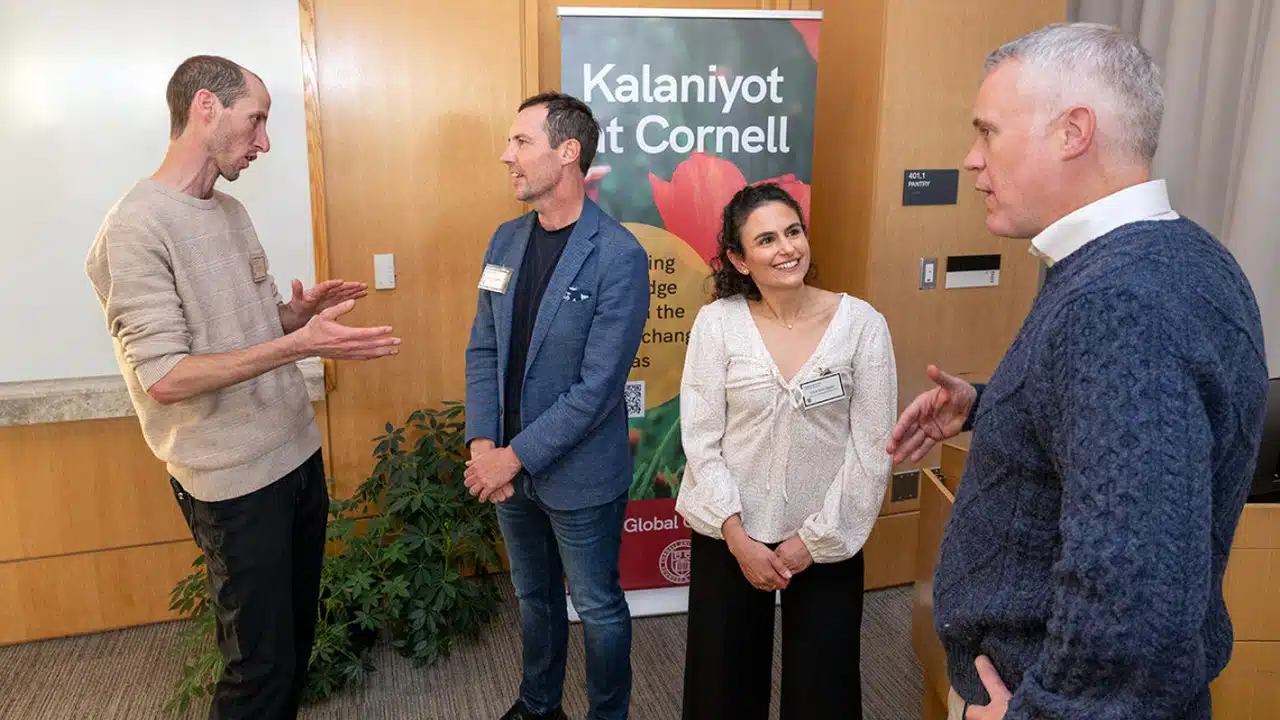
Six visiting researchers are studying subjects ranging from grape pests to quantum technology at Cornell through a new program connecting the university with scholars from Israeli universities.
Cornell's Kalaniyot chapter launched Oct. 19 at a reception in the Physical Sciences Building. Its first group, already on campus, includes three postdoctoral fellows and three sabbatical scholars from Jewish and Arab communities in Israel.

Anyone with a Ph.D. from an Israeli university, or a faculty position at one, can apply. Cornell said religion and ethnicity are not considered in selection.
Research spans food, ecosystems and quantum systems
Postdoctoral fellow Eden Eran Nagar will work with food scientist Elad Tako on how staple crops and functional foods could improve micronutrient absorption and gut health to address malnutrition. Eran Nagar also hopes to lead dialogue and mentoring efforts supporting longer-term scientific collaboration between the United States and Israel.
Hydrologist and postdoctoral fellow Ohad Shalom will work with ecologist Meredith Holgerson to study ponds, wetlands and their effects on ecosystems locally and globally.
Fellow Shachar Yerushalmi will study a hyperspectral imaging system developed in plant pathologist Katie Gold's laboratory. The work focuses on detecting plant disease before symptoms become visible.
Sabbatical scholar Loai Basheer will work with food scientist Gavin Sacks on the spotted lanternfly's effects on the chemical composition and sensory quality of products made from grapes.
Naomi Havron will collaborate with psychologist Nori Jacoby on infrastructure that could expand the scale of developmental science. She also hopes to engage students in discussions that allow her to share and challenge perspectives.
Ori Katz, another sabbatical scholar, will continue a collaboration with Cornell applied and engineering physicist Or Katz. Their work uses trapped ions — charged atoms held in electromagnetic fields — as components for quantum computers and highly sensitive sensors. They hope to move their project from a prototype to an operational system.
Faculty-led academic collaboration
Kalaniyot is a national faculty-led initiative intended to sustain international academic collaboration. The Cornell chapter joins six others at major universities and is part of Global Cornell.
Faculty at the Massachusetts Institute of Technology established the Kalaniyot Foundation after Oct. 7, 2023. Cornell said its chapter seeks to keep universities inclusive and welcoming to scholars and students of different backgrounds.
Alumni, Cornell and the foundation support the initiative. Its board includes faculty from Arts and Sciences, Agriculture and Life Sciences, the ILR School, Duffield College of Engineering, the Law School and Cornell Tech.
At the reception, Provost Kavita Bala connected the initiative with a recent university report calling for connected, human-centered communities and a global mission. Agriculture and Life Sciences Dean Benjamin Houlton emphasized the knowledge gained when Cornell scholars travel and visiting researchers come to campus.
Yuval Grossman, a physics professor who chairs the chapter's board, said the program aims to strengthen research through ties with Israeli scholars while building a supportive international campus community.
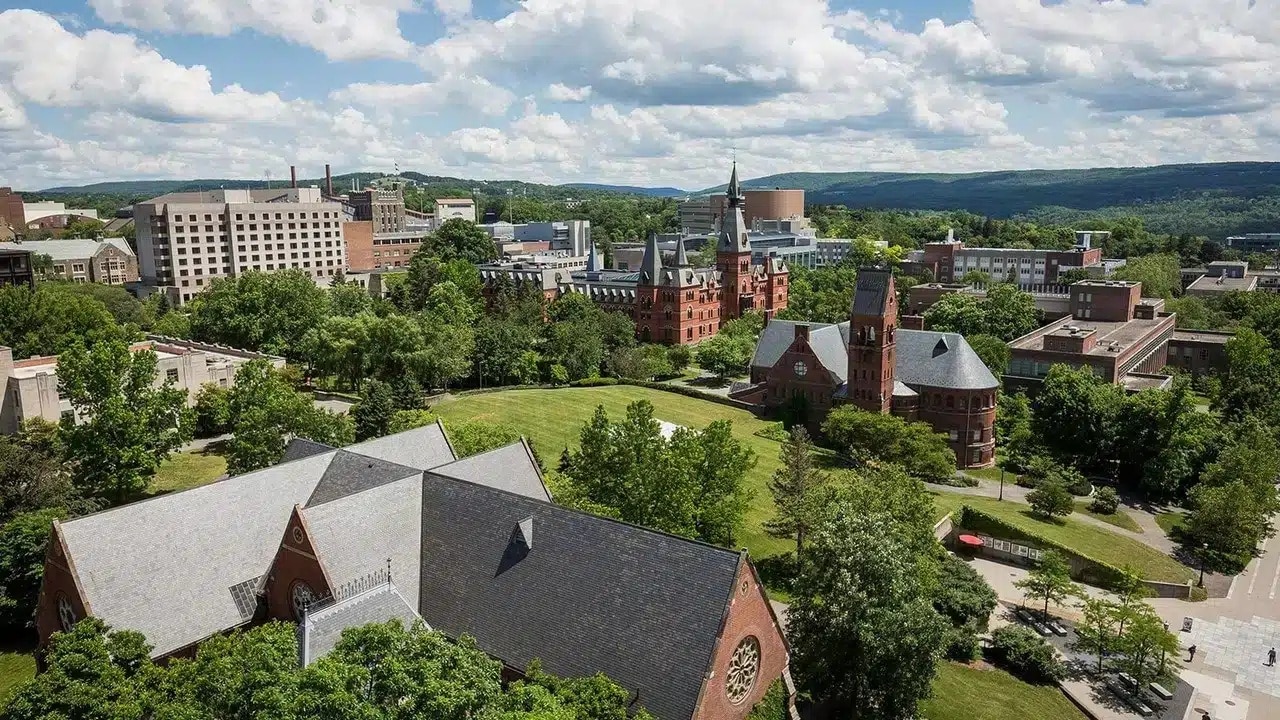
Photo: Simon Wheeler for Cornell University.

FingerLakes1.com is the region’s leading all-digital news publication. The company was founded in 1998 and has been keeping residents informed for more than two decades. Have a lead? Send it to news@fingerlakes1.com.