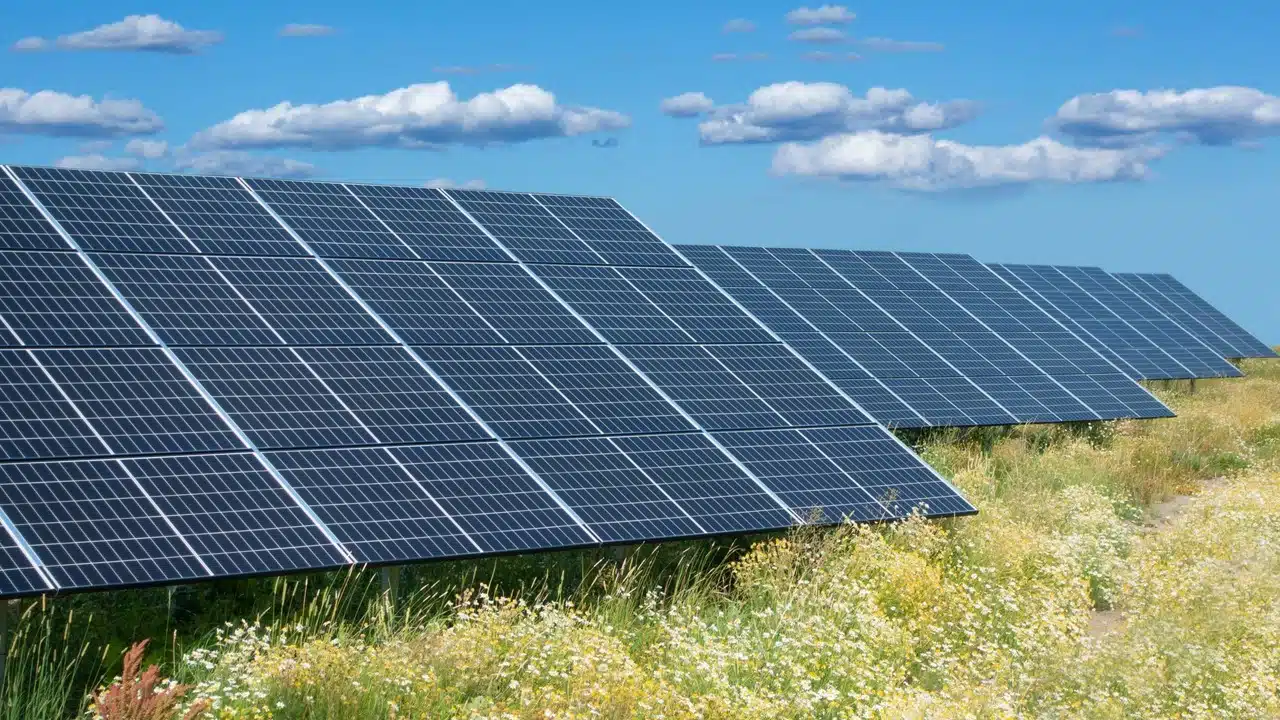
State Sen. Thomas O’Mara is calling for closer scrutiny of renewable energy projects on productive farmland and renewed action on recycling worn-out equipment, arguing that New York’s permitting system gives communities too little control over development near their homes and farms.
The Republican senator raises those concerns in his latest weekly column after joining colleagues and stakeholders at a Syracuse roundtable. The state’s Office of Renewable Energy Siting and Electric Transmission, which reviews large renewable energy projects, says its process includes environmental safeguards and local participation.

Farmland and local authority
O’Mara says the placement of solar facilities on prime upstate agricultural land remains a central concern. He argues that faster state approvals should not come at the expense of natural resources, neighboring residents or local land-use decisions.
In April, he and Senate Republican colleagues sought information from ORES about wind, solar, battery storage and other renewable energy projects under review, awaiting approval or anticipated for approval, particularly those affecting protected land, sensitive habitats and agricultural resources.
The request followed similar questions from Assembly Republicans. O’Mara says lawmakers have also raised the issues in committee meetings, hearings and floor debates.
“It is essential that its actions reflect a high standard of transparency, consistency, and adherence to established environmental protections and home rule doctrines,” the senators wrote in the April letter quoted in his column.
ORES was created in 2020. The 2024 Renewable Action through Project Interconnection and Deployment Act, known as the RAPID Act, expanded its responsibilities to include electric transmission permitting, according to the agency.
ORES says developers can seek waivers of local requirements that are unreasonably burdensome. Those requests require supporting evidence and agency review, ORES says.
O’Mara argues that the state’s authority undermines local control. He also says Republicans opposed the RAPID Act over concerns about eminent domain, farmland and environmental protections.
What the state requires
In its published explanation of the process, ORES says developers must minimize impacts on highly productive agricultural soils and follow agricultural construction safeguards. Measures can include combining farming with energy production or payments into a farmland protection fund, along with restoring farmland when a project ends.
ORES also requires meetings with local leaders and the public, and offers developer-funded expert-review assistance to municipalities and qualified community groups.
Recycling equipment after its useful life
O’Mara is also renewing his push to make manufacturers responsible for collecting and recycling renewable energy equipment once it is taken out of service.
He says the Senate unanimously passed his Solar Panel Collection Act in 2018, but the Assembly did not pass it. He attributes the lack of progress to industry opposition and subsequent inaction by the Senate’s Democratic majority.
The current amended proposal, S1502A, the Responsible Renewable Energy Recycling Act, covers wind turbines and batteries used in bulk energy storage systems as well as solar panels. It would require manufacturer collection and recycling programs, educational outreach and reporting. It remains in the Senate Environmental Conservation Committee.
Separately, ORES says its permits require decommissioning plans and financial security to pay for removing facilities and restoring land. O’Mara’s recycling proposal would address collection and handling of the equipment itself.
O’Mara says the lawmakers’ requests are not intended to oppose energy development. Their position, he writes, is that diversifying the state’s energy supply must be compatible with environmental protection and the interests of people living beside projects.

FingerLakes1.com is the region’s leading all-digital news publication. The company was founded in 1998 and has been keeping residents informed for more than two decades. Have a lead? Send it to news@fingerlakes1.com.