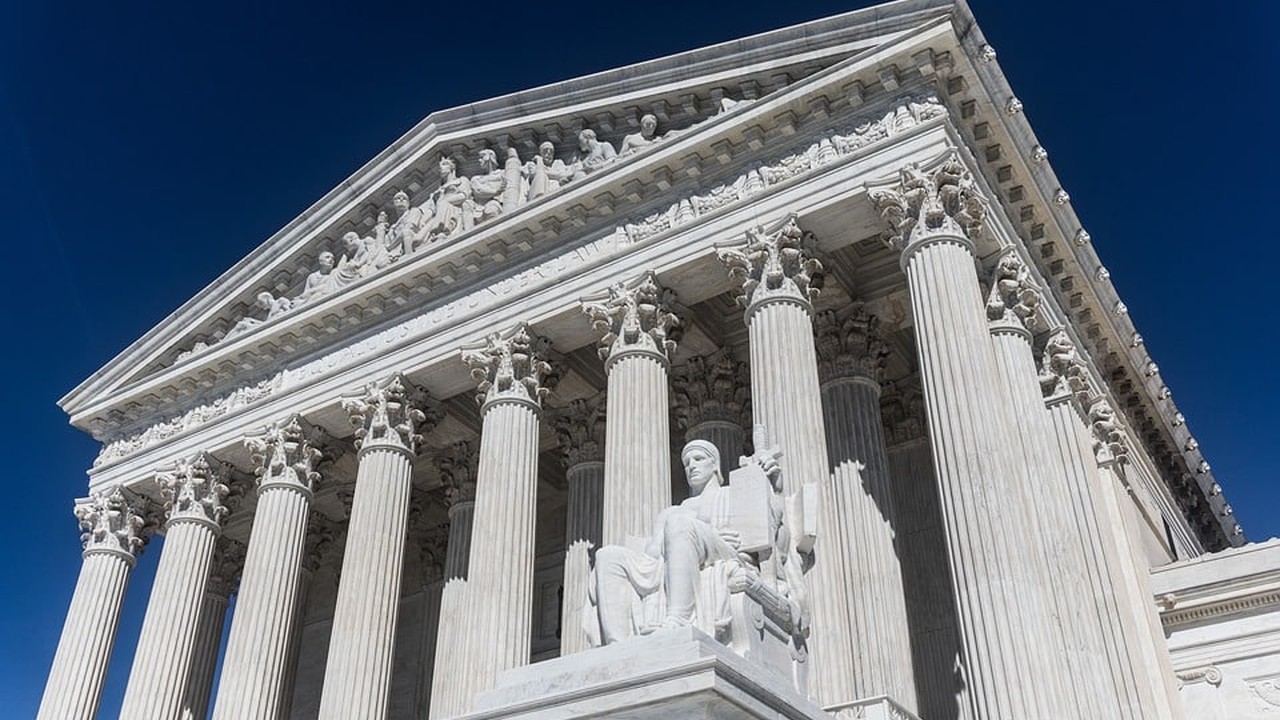
President Donald Trump had appointed 55 federal judges through Oct. 15 of his second term, below the 83 confirmed by the same point in his first term, according to a new Pew Research Center analysis.
The Oct. 21 analysis of Federal Judicial Center records compares presidents at the same point: Oct. 15 of their second year in office. Trump’s second-term total also trails Joe Biden’s 81 and Barack Obama’s 105 at that stage of Obama’s second term.

Pew counted a judge as appointed when the Senate voted to confirm the nominee by its cutoff. Its figures cover the main Article III federal courts, whose judges hold lifetime appointments.
Ten appeals judges and 45 district judges
Trump’s second-term appointments in the analysis include 45 district judges, who handle federal criminal and civil cases, and 10 appeals judges, who review lower-court decisions. He had made no Supreme Court appointment during this term through the cutoff.
The appeals-court total is below Biden’s 25, Trump’s own first-term 29 and Obama’s second-term 23 at the same point. Appeals courts sit one level below the Supreme Court and often make the final decision in disputes that do not reach the high court.
Trump appointed three Supreme Court justices during his full first term. Two of those appointments had occurred by the comparable pre-midterm cutoff used in Pew’s table.
Among the 13 presidential terms in the comparison, which begins with Jimmy Carter, only Obama’s first term, with 43 judges, and George W. Bush’s second term, with 52, had lower totals than Trump’s current 55. The highest was Ronald Reagan’s second-term total of 130. Carter’s was 60.
Vacancies and the confirmation process
Presidents need an open judgeship before they can fill it. Pew identified the availability of vacancies, White House vetting and nomination timelines, Senate consideration and party control as factors affecting appointment pace.
The analysis cited Brookings Institution research showing that just three appeals judges left active service or announced plans to do so between the 2024 election and the end of Trump’s first year back in office. The comparable number after the 2020 election and during Biden’s first year was 30.
Trump announced his first judicial nominee of the second term nearly four months after taking office, and the Senate confirmed her more than two months later, Pew reported.
The Senate has a narrow Republican majority. Pew said Democratic opposition and the outcome of November’s elections could affect later confirmations. A change in party control would give Democrats control over the chamber’s consideration of nominees.
At the time of Pew’s Oct. 21 analysis, three Trump nominees were awaiting full Senate votes and 13 were awaiting votes in the Judiciary Committee. Those pending nominees are separate from the judges already counted as confirmed.
How the comparison counts judges
Pew used the Federal Judicial Center’s Biographical Directory of Article III Federal Judges. Its analysis includes the 91 Article III district courts, 13 appeals courts and Supreme Court, while excluding specialized courts such as the Court of International Trade and non-Article III territorial courts in Guam, the Northern Mariana Islands and the U.S. Virgin Islands.
Each judge counts once in a president’s overall total, even if that president appoints the person to more than one court. Ketanji Brown Jackson, for example, counts once in Biden’s total despite her appointments to an appeals court and then the Supreme Court. Court-level counts can therefore add up to more than the number of individual judges appointed.

FingerLakes1.com is the region’s leading all-digital news publication. The company was founded in 1998 and has been keeping residents informed for more than two decades. Have a lead? Send it to news@fingerlakes1.com.