Rochester’s West Main Gateway initiative is advancing 22 property and business projects through a $10 million program supporting renovations, equipment and public spaces along a downtown corridor.
New York and the Ralph C. Wilson Jr. Foundation are each providing $5 million for the West Main Gateway program detailed in Wednesday’s state announcement. OneROC administers the funding along West Main Street from West Genesee Street to South Plymouth Avenue.

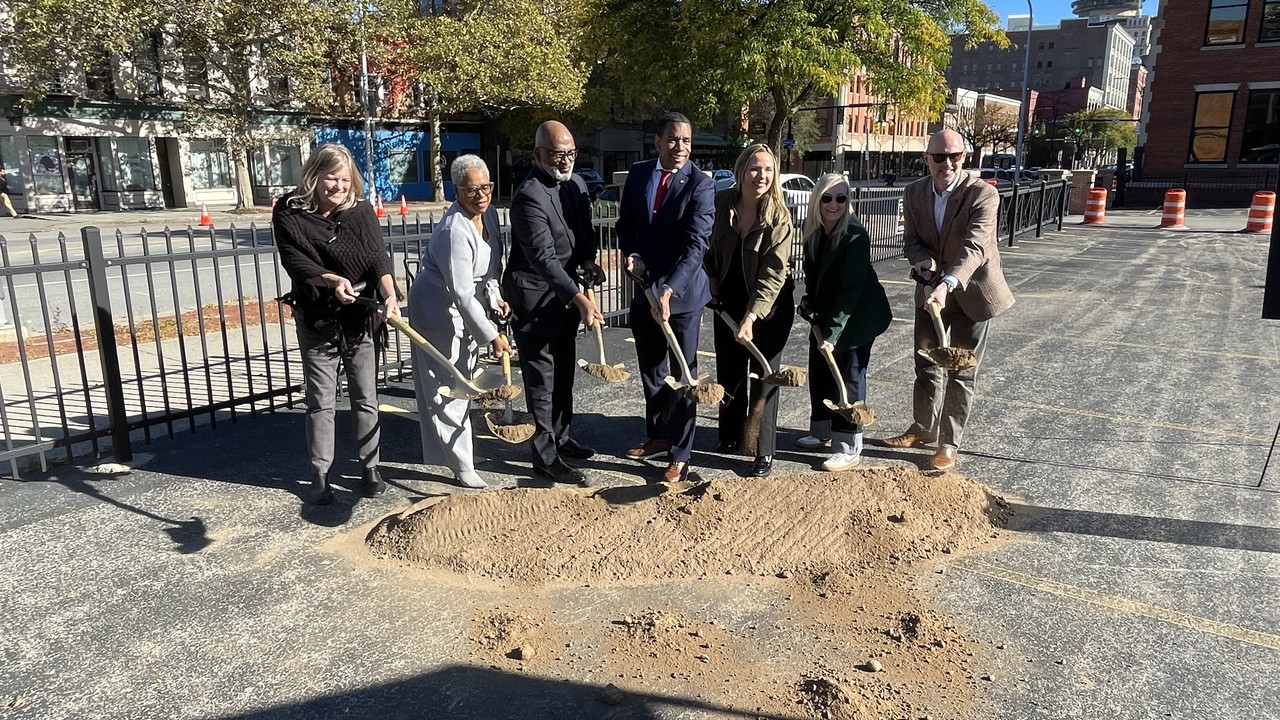
A ceremonial groundbreaking was held outside Rochester Jewels, a nonprofit mentoring organization serving girls in grades four through 12. Roof and window repairs there are planned ahead of winter.
Grants and building improvements
Building renovation awards range from $25,000 to $250,000 and can cover up to 90% of eligible project investments over three years. The program also provides small-business assistance for machinery and equipment and supports improvements to public spaces.
The project’s current website says its application period has closed and the first funding round has been awarded. Questions can be directed to Lauryn at ldacosta@labellapc.com.
The current project list identifies roofing and window work at 174-178 W. Main St., home to Rochester Jewels. Separate investment is preparing upper floors for future housing, outside the grant-funded work.
At 128 W. Main St., funding is preparing space for a café, including electrical and plumbing work, roofing, windows, doors and permanent equipment. Busy Bee Restaurant at 124 W. Main St. is receiving storefront and awning improvements, along with façade, masonry, window and drainage work. Housing planned on that building’s upper floors also falls outside the grant-funded project.
SewGreen Rochester at 556-560 W. Main St. is receiving signage and first-floor improvements, with windows, doors, masonry and security upgrades for the building. Morse Lumber’s headquarters at 340 W. Main St. is slated for façade, siding, window, roofing, painting and signage work.
Other projects include an accessible ramp and exterior restoration for the future Williams-Hall Funeral Home at 712 W. Main St.; roof, structural, masonry and equipment work after a fire at 701 W. Main St.; and building and parking improvements for Vaegorstein Insurance Agency at 747 W. Main St. The state also identified support for an auto shop and an arts organization among the corridor projects.
The program’s selection criteria weigh economic impact most heavily, alongside visual improvements, accessibility, health and energy efficiency, small-business development and readiness to begin work.
Public spaces and wider Rochester investment
The Susan B. Anthony Neighborhood Association, Community Design Center of Rochester and LaBella Associates are helping plan improvements to public spaces. The work includes public art and amenities, with connections to projects extending west toward Bull’s Head.
The governor’s office expects the corridor projects to attract more than $3.3 million in additional public and private investment.
The West Main funding is part of the broader Regional Revitalization Partnership, described by the state as a $300 million public-private strategy for Rochester, Buffalo’s East Side and Niagara Falls. Rochester’s combined share is $80 million, covering waterfront improvements, High Falls State Park, workforce training and assistance along commercial corridors.
New York has committed more than $100 million to the separate, ongoing ROC the Riverway collaboration, according to the state. Completed work includes the Brewery Line Trail extension and Pont de Rennes Bridge renovation. Groundbreaking on the planned 40-acre High Falls State Park is expected later this fall.
Rochester also received a $10 million Downtown Revitalization Initiative award in 2021, with five projects selected in 2022. The state announced completion in May of the $12.8 million Harper’s Corner redevelopment, which converted four distressed commercial buildings into workforce housing and affordable commercial space.

FingerLakes1.com is the region’s leading all-digital news publication. The company was founded in 1998 and has been keeping residents informed for more than two decades. Have a lead? Send it to news@fingerlakes1.com.