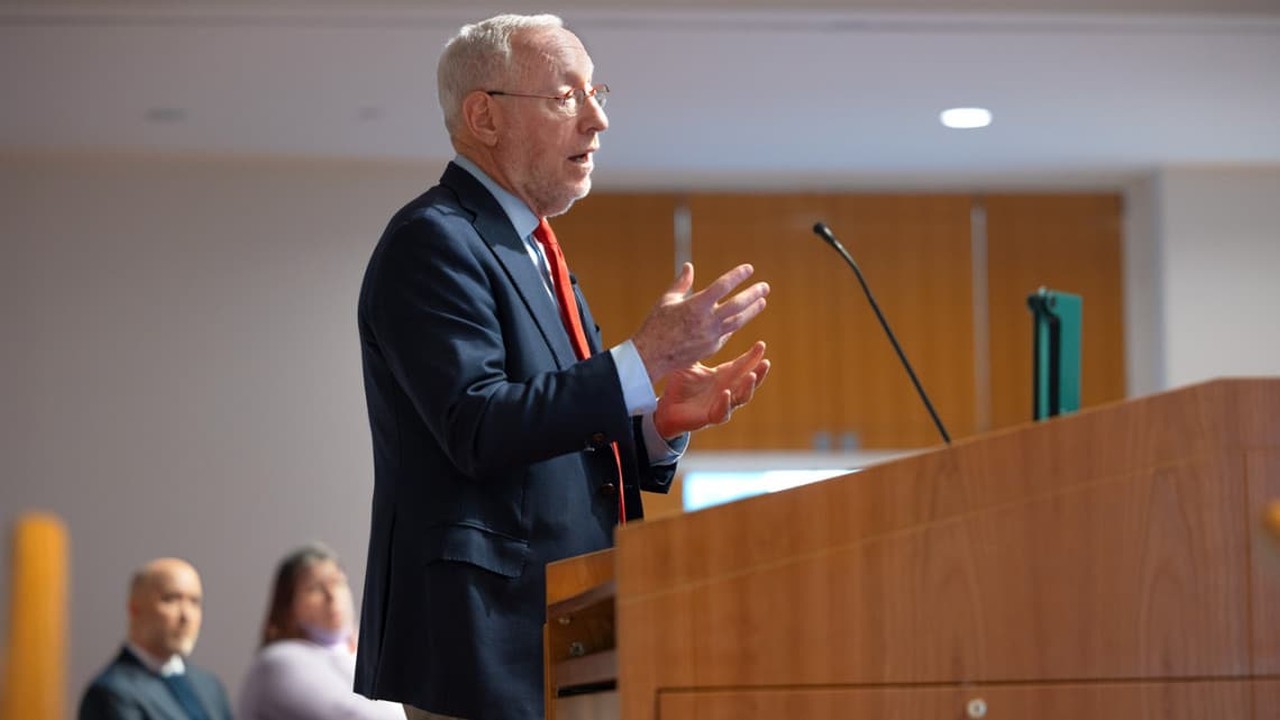
Cornell President Michael Kotlikoff set aside much of his planned State of the University address Thursday to focus on campus sexual assault, saying the university's response will define the rest of his presidency as it confronts allegations involving former students and its fraternity system.
Speaking Oct. 15 at Meinig Fieldhouse in Ithaca, Kotlikoff again apologized to a former student identified in court papers as Jane Doe and to other women who have described sexual assaults. His published address called for listening to students and examining Cornell's culture, but announced no additional disciplinary finding or new specific policy beyond measures disclosed earlier in the week.

Address shifts from university achievements
Kotlikoff said he had expected to discuss research, a restored federal funding agreement, a rebuilt operating model and work at Weill Cornell Medicine. He instead told the annual meeting of Cornell trustees and the University Council that the campus was reeling from the allegations and the response to them.
The speech centered on an October 2024 incident at the Chi Phi fraternity house. Doe alleges in a pending civil lawsuit that she was drugged and sexually assaulted by seven then-Cornell students. The men have denied the allegations, saying the sexual activity was consensual or that they were not involved. The allegations have not been resolved in court, and no criminal charges have been announced.
Kotlikoff apologized for ways Doe and other women said they had been failed. He described work on sexual assault prevention and response as a defining effort of his remaining tenure and said he had been speaking with students, faculty, alumni, families and staff. Some of what he heard was difficult, he said, but he also praised community members' willingness to confront the problem.
The president argued that Cornell must examine both individual behavior and the institutions and social settings in which it occurs. He warned against simple narratives and quick fixes, while acknowledging that the university must communicate more clearly about its response.
Greek life remains under scrutiny
Kotlikoff singled out some fraternities, saying a disturbing culture had emerged in parts of the system. About one-third of Cornell undergraduates participate in Greek life across more than 50 fraternities and sororities, according to the speech. He said the university and its alumni needed to reset expectations, improve safety and allow time to understand the causes of the problems.
That broader message followed Kotlikoff's Oct. 13 announcement suspending parties and social events in Interfraternity Council houses for the rest of the 2026-27 academic year. The directive concerns those houses, not all campus gatherings. Cornell also announced expanded victim-advocate support, a new case manager, prevention programming and an accelerated sexual-assault task force.
Former U.S. Deputy Attorney General Sally Yates is leading an outside review of Cornell's handling of the matter, according to earlier university statements. That review has not issued findings. Kotlikoff's Thursday remarks did not resolve the separate civil litigation or the criminal investigation led by the New York attorney general's office.
Larger challenges remain
The president returned to themes from his original speech plan, describing federal funding uncertainty, artificial intelligence, social media and eroding public trust as challenges facing higher education. He said Cornell had spent the past year planning through its Committee on the Future of the American University.
He framed the university's educational mission as teaching students judgment, civic responsibility and care for others. In the immediate term, however, he said Cornell leaders needed to listen to people reporting harm and examine how the institution responds.
The address was delivered during a joint annual meeting at the new Meinig Fieldhouse, which Kotlikoff also cited as an example of alumni support for campus life. The focus of his remarks underscored how the pending case has shifted the university's public agenda; the speech itself did not announce a new adjudication or investigative result.

FingerLakes1.com is the region’s leading all-digital news publication. The company was founded in 1998 and has been keeping residents informed for more than two decades. Have a lead? Send it to news@fingerlakes1.com.