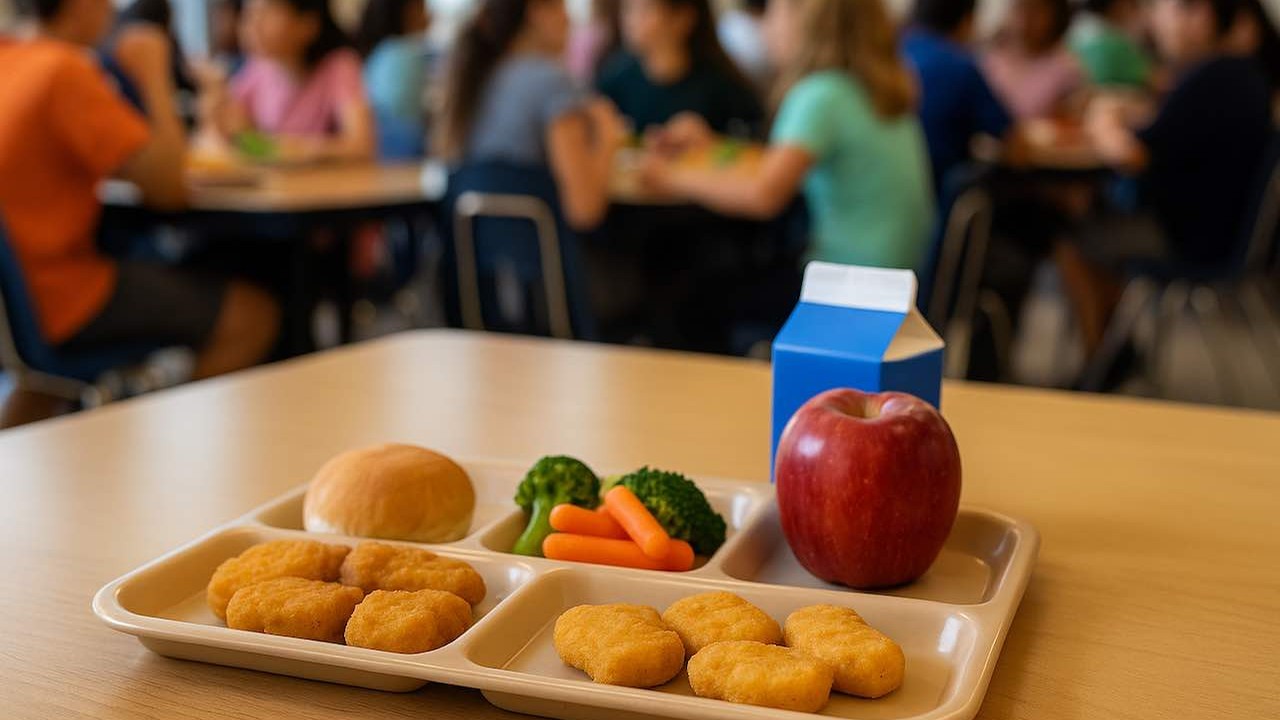
New York's school lunch program reached an estimated 1.923 million students in May 2026, ranking third nationally behind California and Texas.
The scale of the program reflects years of expanded access backed by federal reimbursements and state subsidies, including an additional $160 million in the state budget to extend free lunches to all students at participating schools. A new report from State Comptroller Thomas DiNapoli traces that expansion and explains how New York's share of the cost could grow as federal benefit eligibility changes.

California's school lunch participation stood at about 3.144 million students and Texas' at 3.121 million in the same month. The preliminary U.S. Department of Agriculture estimates use average daily meals adjusted by an attendance factor of 0.927 and are subject to revision.
New York received more than $1.1 billion in federal school meal funding in federal fiscal year 2025. Its own subsidies fill gaps between federal reimbursement categories, helping schools serve lunch without charging students.
State investments widened access
The expansion developed in stages. New York schools became eligible for the federal Community Eligibility Provision, known as CEP, in the 2012-13 school year. The program lets qualifying schools, groups of schools and districts serve free meals to every student using a reimbursement formula based on the share of students identified through public assistance programs and other qualifying circumstances.
New York City joined CEP in 2017-18, more than doubling the number of participating schools statewide. By that school year, a majority of New York students attended schools offering universal meals.
State legislation in 2018 required breakfast at public schools where more than 70% of students qualified for free or reduced-price meals. It also prohibited policies that shamed or publicly identified students unable to pay for meals. Another subsidy encouraged schools to purchase at least 30% of the total cost of their lunch products from New York farmers, growers, producers or processors.
In 2019, New York began covering the charge for students receiving reduced-price meals. During the pandemic, temporary federal waivers allowed schools nationwide to offer universal meals and distribute food outside school buildings, with higher reimbursements for school food authorities. The pre-pandemic payment system returned in 2022-23.
The next major expansion paired a federal eligibility change with new state money. In 2023, the federal government lowered the identified-student threshold for entering CEP from 40% to 25%. New York's fiscal 2024 budget expanded its subsidy so that each lunch served in a CEP school would receive reimbursement matching the free-meal rate.
The number of New York schools in CEP rose from 3,051 in 2022-23 to 4,200 in 2023-24 and 4,325 in 2024-25. Enrollment in those schools reached 2.413 million students in 2024-25, according to Food Research & Action Center figures compiled in the comptroller's report.
Free meals were available to 90% of New York students as the state moved toward its 2025-26 expansion. The fiscal 2026 budget added $160 million and required schools participating in the federal meal program to provide free lunches to all students. Eligible schools also had to enter CEP to maximize federal reimbursements and reduce the amount the state must contribute.
New York became the ninth state to establish universal free school meals. The program is administered by school food authorities, generally district food-service departments responsible for one or more schools.
The state pays more when the federal share is smaller
The federal government pays a subsidy for each meal served. Its traditional income categories provide the highest reimbursement for students in households below 130% of the federal poverty level, a reduced-price rate for households between 130% and 185%, and a smaller payment above that range. Federal rates are adjusted annually using the Consumer Price Index for Food Away From Home.
New York supplements those payments so students can receive lunch without a charge. The difference between the federal categories has a large effect on the state's contribution.
For 2026-27 programs where fewer than 60% of lunches were free or reduced-price in the second preceding school year, the report lists a federal base payment of $4.76 for a free lunch and a state contribution of $0.0599. For a reduced-price lunch, the federal payment is $4.36 and the state share is $0.4599. In the paid category, the federal government provides 45 cents and New York contributes $4.3699.
Each combination totals $4.8199 per lunch. Programs at or above the 60% free-or-reduced-price threshold receive another 2 cents in federal reimbursement. School food authorities certified as meeting specified meal-pattern and nutrition standards can receive an additional 9 cents per lunch.
CEP uses a different calculation to determine the mix of federal payments. A school's identified-student percentage is multiplied by 1.6, up to 100%, to determine the share of meals reimbursed at the free rate. A school with an identified-student percentage of at least 62.5% qualifies for the full federal free-meal reimbursement for all students; schools below that point receive a blended rate.
That makes enrollment in programs used for direct certification important to the school meal budget. The report identifies SNAP and Medicaid among those programs.
Federal changes could shift more expense to New York
Public Law 119-21, enacted in July 2025, restricted SNAP and Medicaid eligibility for certain legally present immigrants, expanded work requirements and increased how frequently some Medicaid recipients must renew their coverage.
The comptroller's report projects that participation declines resulting from those changes could reduce the share of students identified for CEP. A smaller identified share would mean a lower federal reimbursement mix and a larger state subsidy to maintain universal meals.
New York's SNAP caseload fell by nearly 273,000 people of all ages between July 2025 and July 2026, according to state Office of Temporary and Disability Assistance data cited in the report. Separately, the Center on Budget and Policy Priorities estimated that 28 states had 1.5 million fewer children receiving SNAP in June 2026 than in July 2025.
The report also examines an unadopted proposal to raise the CEP entry threshold from 25% to 60%. Included in a list of possible federal savings measures before Public Law 119-21 passed, that proposal was estimated to save the federal government $3 billion over 10 years. DiNapoli's office said it could leave many New York schools outside CEP and increase the state cost of continuing free meals.
The October analysis draws on federal meal-participation and reimbursement data, state budget bills, school enrollment figures and public-assistance caseloads. Its financial concern is the division of costs between Washington and Albany as New York maintains its universal program.
In his Oct. 15 announcement, DiNapoli called for continued federal-state support, saying tighter benefit rules could make the program more expensive for New York to sustain.

FingerLakes1.com is the region’s leading all-digital news publication. The company was founded in 1998 and has been keeping residents informed for more than two decades. Have a lead? Send it to news@fingerlakes1.com.