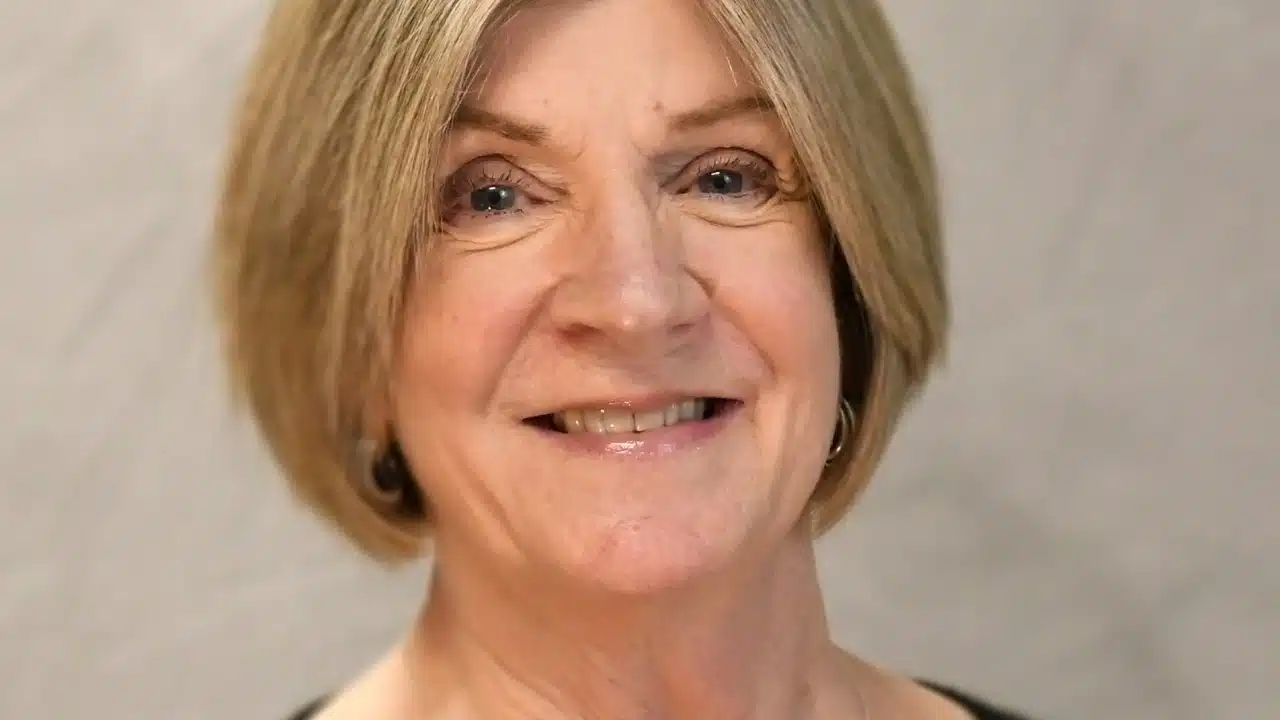
A Canandaigua forum on Parkinson’s disease paired a physician’s account of living with the condition with a neurologist’s call to reduce exposure to chemicals he says may contribute to it. The Oct. 11 discussion at the Fort Hill Performing Arts Center featured Sara Whittingham and Ray Dorsey.
The George M. Ewing Canandaigua Forum said its program, “Facing Parkinson’s: New Science, New Strategies, Real Lives,” examined both prevention and life after diagnosis. Maggie Kuhl, head of patient engagement at the Michael J. Fox Foundation for Parkinson’s Research, moderated the discussion.

Living beyond a diagnosis
Whittingham, a physician, military veteran and athlete who has Parkinson’s, described the emotional difficulty of her diagnosis and said it took nearly a year to come to terms with what it meant for her future. She urged people not to let a diagnosis define their identity or limit what they pursue, according to the forum’s account of the event.
She discussed the roles exercise, gratitude and outlook have played in her life. The forum said she completed marathons and the Ironman World Championship in Kona, Hawaii, after her diagnosis. Those experiences were part of her personal account, not a claim that exercise can cure Parkinson’s.
Whittingham also spoke about serving at a military base later found to be contaminated with toxic chemicals. She raised the possibility of environmental contributors to her disease, but the forum’s account did not establish that the exposure caused her Parkinson’s.
Her new book, “Oh Crap! It’s Parkinson’s: A Rebel’s Guide,” focuses on living a full life with the disease rather than allowing it to become a person’s defining feature.
Research and policy questions
Dorsey, a neurologist, researcher and co-author of “The Parkinson’s Plan,” argued that Parkinson’s is not simply an inevitable result of aging. He told the audience that reducing exposure to environmental toxins could prevent some cases, according to the forum.
He discussed research associating Parkinson’s with certain pesticides and industrial chemicals, including substances used in agriculture and on golf courses. Dorsey pointed to efforts in Vermont and New York to restrict chemicals linked to increased risk, and he urged audience members to contact state legislators about limiting exposure. The forum’s release did not identify the specific chemicals or proposals discussed.
Dorsey compared U.S. policy with stricter restrictions in some European countries and argued that government action could reduce the disease’s burden. His presentation was a policy argument; the forum’s account did not provide evidence that any particular restriction has prevented a measured number of cases.
Kuhl brought questions and perspectives from the foundation’s work on research, treatment and patient engagement. The forum said the conversation drew a standing ovation. It was the second program in the organization’s 15th season.
The forum’s next announced program is scheduled for March 7, 2027. Former National Security Agency Director and U.S. Cyber Command commander Tim Haugh is slated to discuss cyber risks, with Michael O’Hanlon of the Brookings Institution moderating.

FingerLakes1.com is the region’s leading all-digital news publication. The company was founded in 1998 and has been keeping residents informed for more than two decades. Have a lead? Send it to news@fingerlakes1.com.