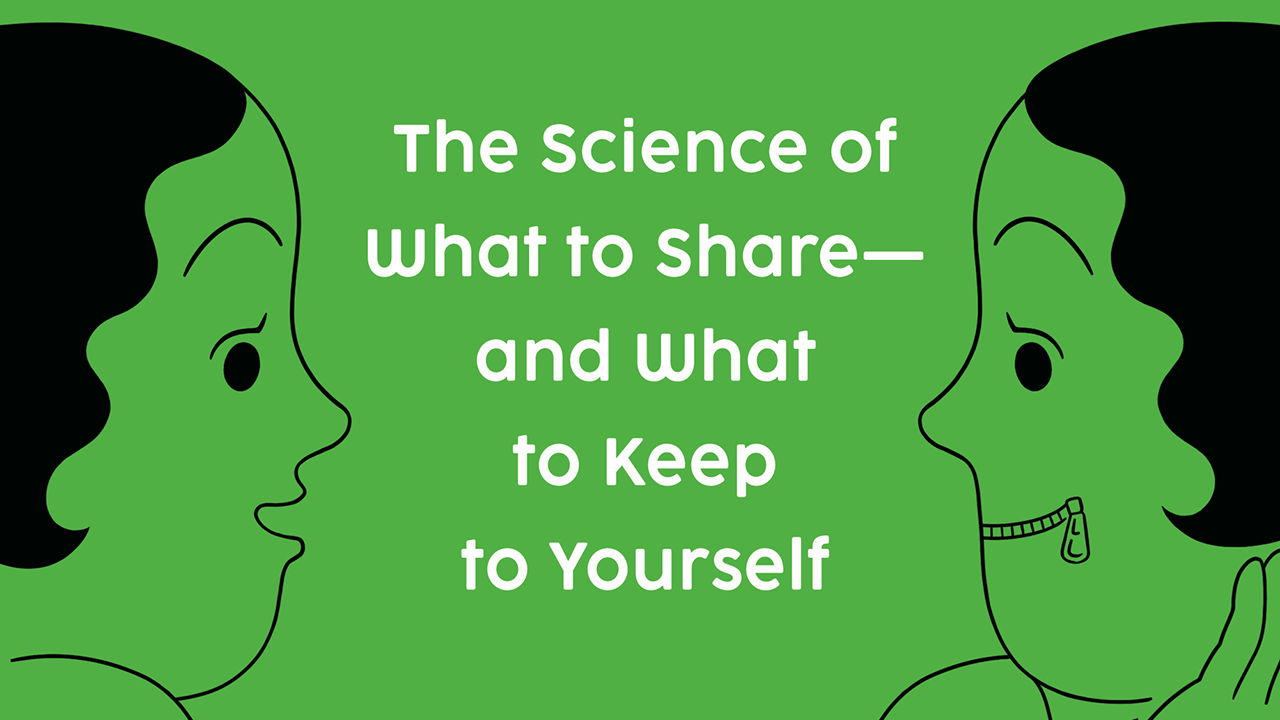
Deciding whether to share difficult news, offer feedback or say nothing can feel like a choice between honesty and preserving a relationship. Cornell social psychologist Vanessa Bohns argues the decision is often less stark.
In a Cornell Chronicle interview about her new book, “Should I Say Something? The Science of What to Share — And What to Keep to Yourself,” Bohns said people can consider both the immediate discomfort and the longer-term consequences of speaking or staying quiet.

Bohns is the Braunstein Family Professor and chair of organizational behavior in Cornell University's ILR School in Ithaca. Her 2026 book draws on her research and the work of others to examine everyday conversations as well as more consequential disclosures.
“What are the long-term costs and benefits of saying something? Also, what are the long-term costs and benefits of not saying something?” she asked in the interview.
Make room for a response
Before raising a sensitive issue, Bohns recommends asking whether the other person is open to hearing it. The question needs to leave room for a genuine “no,” she said, so the person can defer the conversation without feeling pressured.
She also cautioned against treating feedback as a choice between blunt criticism and an untruthful compliment. Someone can ask what kind of feedback would help, take time before answering or offer specific suggestions for future improvement, she said.
Bohns described using that approach in her teaching. Rather than focusing only on why a student lost points on an assignment, she said she tries to explain what the student could do differently on the next one.
Weigh the cost of silence
People may overestimate the risk of sharing good news, apologies, personal struggles or feedback while underestimating the chance of a useful connection, Bohns said. But her advice does not mean every thought should be spoken immediately; timing and the other person's willingness to talk remain part of the decision.
The book uses personal examples, including her father-in-law's regret after staying silent when a stranger cried in an elevator and Bohns' own decision to preserve hope while speaking with her father near the end of his life. She presents those as different situations, not a single rule for every conversation.

FingerLakes1.com is the region’s leading all-digital news publication. The company was founded in 1998 and has been keeping residents informed for more than two decades. Have a lead? Send it to news@fingerlakes1.com.