From Morocco to the Global Markets: How a 24-Year-Old Self-Taught Trader Is Building a Career in Portfolio Management
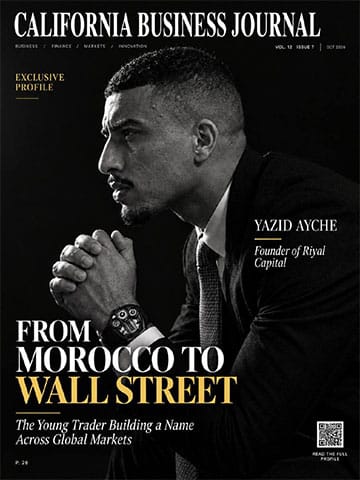
There was no trading floor. No family office. No Wall Street mentor. And no inherited financial network waiting for Yazid Ayche when he first began studying the markets. There was Morocco, an engineering student trying to find his direction, and a young man increasingly convinced that if he wanted to understand financial markets, he would have to teach himself.
Today, at 24, Ayche says that journey has taken him from studying charts on his own to working in portfolio management and managing capital for high-net-worth individuals. The distance between those two worlds is what makes his story interesting.
The Beginning Was Anything But Wall Street
Ayche’s earliest experience with business came through his family. Before financial markets became his focus, he helped his father with his furniture business. It was a humble beginning, far removed from the image most people associate with professional investing.
At the same time, Ayche was studying engineering in Morocco. But outside the classroom, his attention was increasingly somewhere else.
Markets.
He began teaching himself how financial markets moved—studying price action, risk, market psychology and the behavior of different assets. The more he learned, the more time he wanted to spend learning.
Eventually, the conventional academic path began competing directly with the education he was pursuing for himself. Ayche made a difficult decision: he began prioritizing the markets, even when that meant stepping away from parts of the traditional school routine.
It was a risky choice. But he believed the opportunity cost of not pursuing his curiosity would be greater.
Learning Without a Safety Net
What distinguishes Ayche’s account of his early trading career is the absence of an established financial support system. He says he did not have parents financing his trading career or a professional mentor teaching him how markets worked. He had to figure it out himself.
That meant making mistakes. It meant losing money. It meant discovering that being right about a market was very different from consistently managing risk.
And perhaps most importantly, it meant developing an understanding of his own psychology.
Trading can expose weaknesses quickly. Impatience becomes expensive. Overconfidence becomes expensive. Refusing to take a loss becomes expensive.
For Ayche, those experiences became part of the education. The market became his teacher—and it did not give easy lessons.
When the Internet Started Paying Attention
As Ayche continued trading and sharing aspects of his market activity online, his work began attracting attention. What started as an individual attempting to understand markets gradually became a public record of his development as a trader.
That visibility created opportunities that extended beyond retail trading. Ayche says his trading activity and results brought attention from people operating within the broader investment industry, including hedge funds and portfolio-management firms.
The significance wasn’t simply that people were noticing a young trader. It was that the conversations began shifting toward something much bigger: capital management.
From Trading His Own Capital to Managing Other People’s
There is an important psychological difference between trading your own money and managing someone else’s.
When the capital belongs to you, the consequences are personal. When someone entrusts you with their portfolio, the responsibility becomes fiduciary in nature.
Risk management becomes inseparable from performance.

Ayche says that today he works in portfolio management, including managing portfolios for high-net-worth individuals. For a 24-year-old who began without a traditional finance background, that represents a significant evolution.
But Ayche’s ambition is not simply to become known as a successful young trader.
He wants to build something more durable.
A career.
A track record.
And eventually, a reputation based not on one successful trade, but on the ability to manage capital through different market environments.
The Real Education Was Risk
The most valuable lesson Ayche says he has taken from trading is not how to find a winning position.
It is how to control the downside.
Markets can reward confidence, but they punish the absence of discipline.
A trader can be right about direction and still lose money because of poor sizing. A strong thesis can fail because timing was wrong. A profitable position can turn into a loss when emotion takes over.
For Ayche, those experiences reinforced an increasingly professional approach to markets.
The objective isn’t to win every trade. It is to construct a process capable of surviving the trades that go wrong.
That philosophy becomes even more important when managing high-net-worth portfolios.
Morocco Was the Starting Point
There is a bigger story underneath Ayche’s personal journey.
It is about access.
A young person sitting in Morocco can now study markets that operate thousands of miles away. Information once reserved for professional financial institutions is available online.
Trading technology has compressed geography.
And ambition no longer has to originate in New York, London or Dubai.
Ayche’s story began in Morocco—with his family, his father’s furniture business and an engineering education—but his ambitions were always global.
The market did not care where he was from.
Neither did the charts.
The Next Challenge
At 24, Ayche’s story is still being written.
That may be the most important point.
There is a temptation to measure young financial professionals by their biggest trade, their most impressive return or the attention they receive online. But professional investing is ultimately measured over time.
Can a strategy survive changing conditions?
Can risk be controlled when markets become hostile?
Can capital be protected as successfully as it is grown?
And can early success develop into a repeatable investment process?
Those are the questions Ayche now faces as he continues moving deeper into portfolio management.
From Zero to the Global Markets
Yazid Ayche did not begin with a Wall Street address.
He began in Morocco.
He helped his father build a furniture business. He studied engineering. He taught himself financial markets. He stepped away from parts of the conventional educational path to pursue an unconventional one.
He made mistakes. He experienced losses. He kept studying.
And eventually, according to Ayche, the attention surrounding his trading opened doors into the professional investment world.
Now, at 24, he is managing portfolios for high-net-worth individuals and looking toward a much larger objective.
Not simply becoming a trader.
Becoming a money manager.
The journey from a Moroccan engineering student to the world of professional portfolio management is still in its early chapters.
But the direction is clear.
Yazid Ayche started without a financial legacy.
He is attempting to build one.

This content is brought to you by the FingerLakes1.com Team. Support our mission by visiting www.patreon.com/fl1 or learn how you send us your local content here.