

Four unvaccinated Ontario County residents have contracted measles, county health officials announced Monday, the same day Gov. Kathy Hochul declared a statewide disaster emergency to expand vaccination and testing capacity.
Ontario County Public Health said it has investigated all four cases and contacted people who may have been exposed. The county said the risk to the general public remains low, particularly for people who are fully vaccinated. It did not identify the residents or specify where they may have been exposed.

The local announcement gives Ontario County residents a clearer picture of the outbreak than the state figures released earlier Monday. Those figures showed 108 confirmed New York cases this year as of Oct. 3: seven in New York City and 101 elsewhere. The state said 92 cases had been reported since July 15 among under-immunized rural communities in 18 counties.
What the emergency order changes
Executive Order 65 took effect Monday and is scheduled to remain in force through Nov. 4. It allows more health professionals to give measles, mumps and rubella vaccines and gives registered nurses authority to order certain tests for suspected measles.
Certified paramedics and advanced emergency medical services providers may administer MMR vaccines under a standing order, including outside emergency settings, after meeting conditions set by the state health commissioner. The order also permits midwives to give the vaccine under specified conditions and allows pharmacists to vaccinate children as young as 2 under a standing order.
Registered nurses may order testing of throat or nasal swabs, urine and blood specimens for suspected measles. The order also requires providers to report MMR vaccinations to the appropriate state or New York City immunization registry within 72 hours. It removes a separate consent requirement for reporting adult vaccinations but explicitly does not allow vaccination without the consent of the patient or someone legally authorized to provide it.
The declaration gives state agencies temporary flexibility to assist local governments and obtain supplies and services for the response. Ontario County Public Health Director Kate Ott said it does not change how the county is responding, but strengthens its ability to expand testing, contact tracing and vaccine availability.
The county said it continues to work with the state Department of Health and local health care providers to identify cases and trace potential exposures. MMR vaccinations are being offered to people who are unvaccinated.
What residents should do
Ontario County health officials urged residents to check their vaccination status. Children routinely receive a first MMR dose at 12 to 15 months and a second at ages 4 to 6. The county says adults born in 1957 or later should have at least one dose unless they have documented immunity; anyone unsure of their status should ask a health care provider.
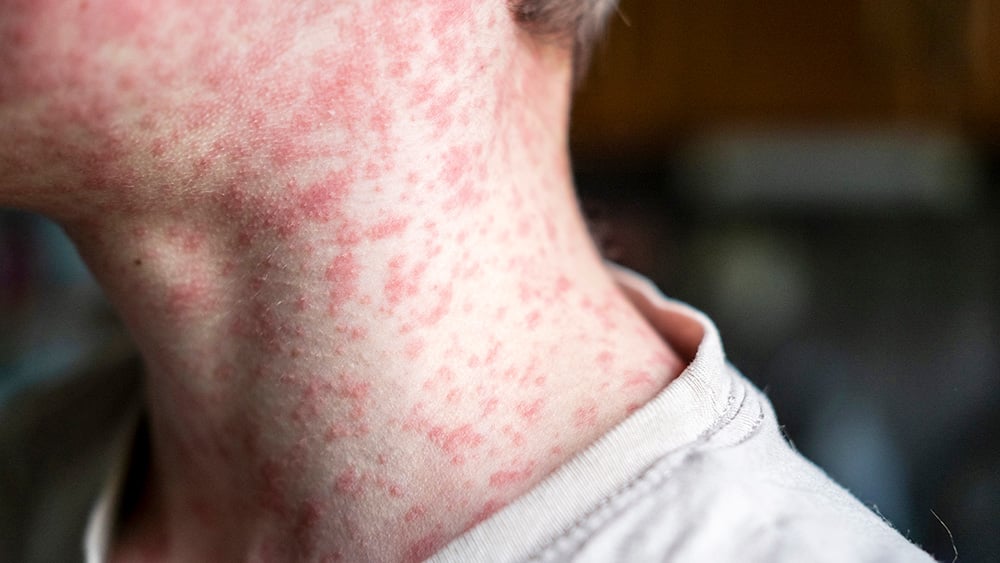
Measles commonly begins with fever, cough, a runny nose and red or watery eyes. A rash typically follows, starting near the hairline and spreading downward. People with symptoms should isolate and contact a health care provider before going in for care so staff can take precautions to prevent further exposure, the county advised.
The state says an early MMR dose may be appropriate for infants 6 to 11 months old before travel or when they are otherwise at risk of exposure. That dose does not replace the two doses on the routine childhood schedule.
Ontario County residents with questions about measles or vaccination can call Ontario County Public Health at 585-396-4343.

FingerLakes1.com is the region’s leading all-digital news publication. The company was founded in 1998 and has been keeping residents informed for more than two decades. Have a lead? Send it to news@fingerlakes1.com.