


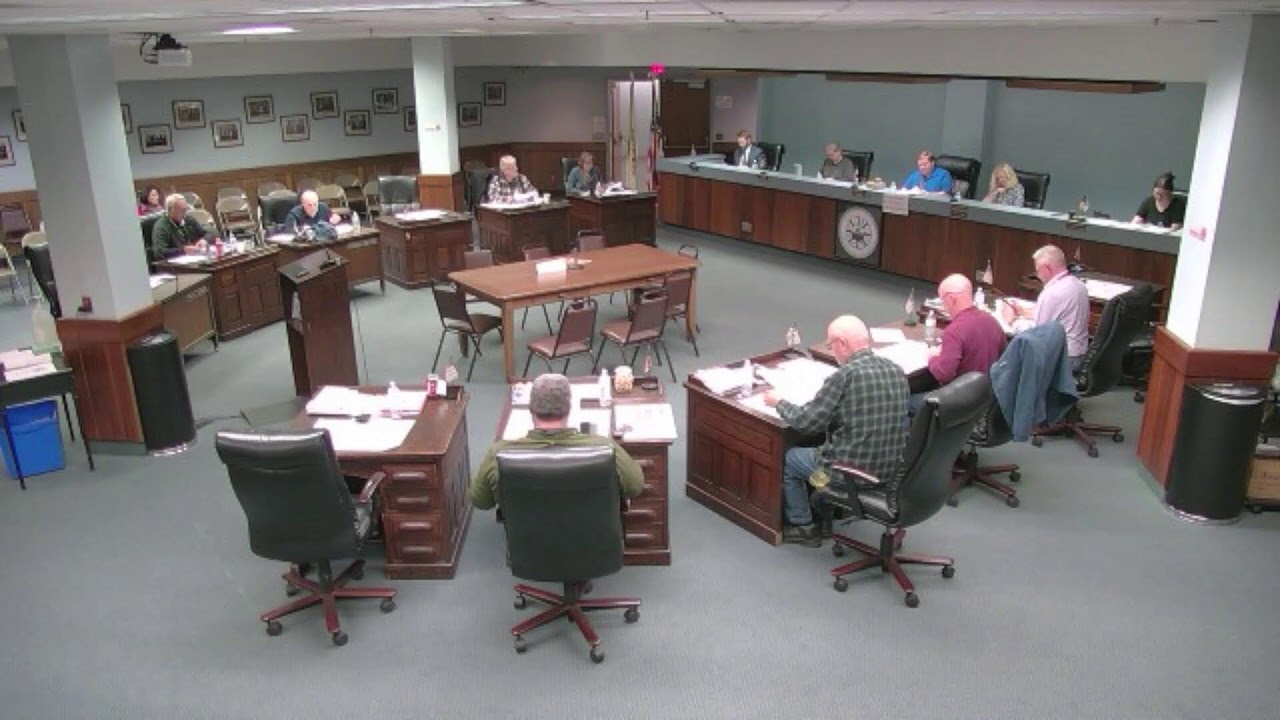
Seneca County supervisors moved several major projects forward Tuesday night, including nearly $190,000 in airport improvements, a new psychiatric nurse practitioner position and a $2.8 million federal mental health grant, while also setting an October public hearing on higher sewer rates and receiving an update on a measles outbreak that has doubled to 10 confirmed or epidemiologically linked cases.
The Sept. 22 session included the Board of Supervisors’ regular committee meetings followed by a special board meeting, where several items that cleared committees earlier in the evening received immediate final approval.

County redirects ARPA money to airport taxilane
One of the most significant actions involved the Finger Lakes Regional Airport, where the county is moving ahead with construction of a new taxilane serving a recently completed 6,000-square-foot hangar.
Supervisors approved using $189,718.30 in American Rescue Plan Act funding for the project, including $175,768.30 for construction work by City Hill Excavating and $13,950 for design and construction observation services by McFarland Johnson.
The money had originally been set aside for redevelopment work at the state-owned Willard campus.
Public Works Chair Michael Shipley explained that the county can’t use those funds at Willard because New York state still owns the property and hasn’t provided a timetable for transferring it to Seneca County. With ARPA money required to be spent by the end of 2026, supervisors agreed it made more sense to redirect a portion to an eligible project rather than risk losing the money.
One supervisor stressed that the shift shouldn’t be interpreted as abandoning Willard or shortchanging the southern end of the county, but as a consequence of the state not yet transferring the property.
The airport project has an economic development component as well.
County documents say a jet management company has expressed interest in basing a corporate aircraft at the airport and leasing the entire new hangar if access can be improved quickly enough. County officials said that could generate additional hangar rent and fuel sales.
The special board later gave the project final approval without additional debate.
Sewer rate changes head to October public hearing
Supervisors also advanced proposed changes to Sewer Districts 3 and 4 after county officials said current rates no longer accurately reflect treatment and operating costs.
The proposal would leave the two lower usage tiers unchanged but increase the rate for customers using 30,001 to 100,000 cubic feet from 5.4 cents to 5.52 cents per cubic foot.
The biggest change would affect usage above 100,001 cubic feet, where the rate would rise from 0.75 cents to 5.52 cents per cubic foot.
Operations and maintenance costs would also increase substantially.
For Sewer District 3, annual O&M costs would rise from $99,037 to $177,337. Sewer District 4 would increase from $62,559 to $74,023. Customer O&M charges are calculated quarterly based on each user’s share of total flow.
County staff said many existing figures trace back to projections developed around 2019 and that the county now has better actual data after taking over customer billing.
The special board scheduled a public hearing for 6 p.m. Oct. 13 at the Papa Bear building in the Three Bears Complex in Ovid.
Measles cases double as county shifts to dashboard
Public Health Director Scott King told supervisors the county’s measles outbreak has continued to grow and remains unpredictable.
Seneca County now has 10 official cases, up from five when he last updated the board roughly two weeks earlier. Those include laboratory-confirmed and epidemiologically linked cases.
King cautioned that the official count likely understates the outbreak because measles is highly contagious and additional cases may exist behind each confirmed infection.
The outbreak is also no longer confined to Seneca County. King said it is part of a larger regional pattern affecting portions of the Finger Lakes, Southern Tier and Western New York.
Three of Seneca County’s 10 official cases have required hospitalization, although no patients were hospitalized at the time of Tuesday’s meeting.
Public Health has seen a sharp increase in demand for the measles, mumps and rubella vaccine.
From June 1 through Sept. 15, the department administered MMR vaccine to roughly 100 people — 83 children and 17 adults — compared with about 19 during a similar period last year.
King described occasions when the department must rapidly shift nearly its entire workforce into outbreak response. One recent exposure at a health care facility required approximately 120 phone calls to potentially exposed people, which staff completed in less than two hours.
The department is now moving away from issuing a press release for every new case.
Instead, King said Seneca County expects to launch a public-facing measles dashboard within days, providing current local information along with a link to the state Department of Health’s dashboard.
He warned that the response could continue for weeks or months.
Federal grant could bring nearly $2.84 million for mobile crisis services
The county also accepted the first year of a federal grant that could provide nearly $2.84 million through 2030 for Seneca County’s Mobile Crisis Partnership.
The county was awarded $750,000 for the first year through the Substance Abuse and Mental Health Services Administration.
Mental Health Director Margaret Morse said Seneca County was one of only 17 programs nationwide selected and the only one in New York state.
The four-year award anticipates $731,557 in the second year, $671,702 in year three and $685,651 in year four, bringing total recommended federal support to $2,838,910.
Morse said the funding will strengthen a 24/7 mobile crisis program the county initially launched in 2023.
The new award is expected to expand staffing, clinical capacity, peer support, specialized training and community education, with particular attention to increasing behavioral health needs among young people and older adults.
The county also advanced $190,259 in contracts with three school districts for mental health and substance abuse prevention services during the 2026-27 school year.
Waterloo Central School District accounts for $89,500, South Seneca for $76,009 and Seneca Falls for $24,750. The contracts require no county match.
Morse said the county operates licensed mental health satellite clinics in nearly every school in Seneca County and also provides prevention and mental health support services that aren’t otherwise billable.
New psychiatric provider approved
Supervisors approved creating and filling a full-time psychiatric nurse practitioner position in the Mental Health Department.
The resolution says the county is seeing growing demand for psychiatric services and needs additional provider hours. The department expects additional billable services to generate revenue to support the position.
The position was approved by the Human Resources Committee and then received final authorization during the special board meeting.
Other staffing actions included approval to refill two Social Welfare Examiner positions, two part-time maintenance positions at the airport and vacancies in the Facilities Department.
Supervisors also approved reclassifying a Staff Resources Assistant in Probation to a Probation Assistant, giving that employee additional responsibilities involving pretrial services, community service, financial records, drug and alcohol screenings and DNA collection.
Probation officials said supervision caseloads have climbed above 100 and the change is intended to free probation officers to spend more time directly supervising clients.
Supervisors debate county financing role for Varick project
A proposal involving a $1.23 million Bridge NY culvert project in the town of Varick generated one of the evening’s sharper debates.
Under the arrangement, Seneca County would act only as a financial pass-through, advancing money to Varick while the town manages the project and seeks reimbursement from the state.
The project involves replacement of a culvert on McDuffie Town Line Road over a tributary to Cayuga Lake.
County officials said the arrangement could save Varick from having to borrow large amounts of money while waiting for reimbursement.
One supervisor objected, however, citing previous disputes with Varick over water charges and questioning why the county should provide financial assistance without addressing those concerns.
The intermunicipal agreement includes protections for the county, including a requirement that Varick reimburse money already advanced before additional county funds are released.
The measure passed the Public Works Committee 3-1.
The discussion also prompted officials from the town of Lodi to ask whether a similar arrangement could potentially be used for their roughly $1.4 million Cat’s Elbow culvert project, which recently received FEMA approval.
Human Services building project gets another detailed review
Supervisors also spent roughly 20 minutes questioning Barton & Loguidice about the proposed buildout of the county’s Health and Human Services building.
Much of the discussion centered on what the firm’s approximately $900,000 professional services fee covers.
Architect Tim Bivens said the fixed fee includes full design, bidding documents, contractor vetting, contract preparation assistance and construction administration through project closeout.
It does not include a full-time construction manager stationed at the project site.
Bivens estimated that type of construction management service could cost another $125,000 to $150,000, depending on how much on-site coverage the county wants.
Several supervisors said they favored having an independent person monitoring the job, particularly after concerns with past county projects.
The county’s anticipated construction cost wasn’t publicly discussed because supervisors said disclosing the estimate before bidding could undermine the procurement process. Members discussed reviewing that information separately so they understand the county’s potential bonding needs before making later decisions.
Bivens said the project would likely take about a year from the current point — roughly four to six months for design and another six months for construction — although the schedule could change as plans and approvals move forward.
No final construction authorization was issued Tuesday.
Other actions
The Health and Human Services Committee also approved a $5,800 child passenger safety grant that will help purchase car seats for eligible families and fund safety-seat training. Public Health officials said roughly 50 seats have been distributed during the current grant year.
A $37,600 lead poisoning prevention grant was advanced as well. King said Seneca County averages roughly one new childhood lead poisoning case per month, with deteriorating lead-based paint in older homes remaining the primary source of exposure.
The committee also approved a $28,158 Early Intervention administration grant and $90,825 in state aid for youth programs.
An Office for the Aging annual plan update was tabled for two weeks after supervisors asked to see year-over-year comparisons for proposed vendor contracts before moving it forward.
The county also authorized preparation of a request for proposals for a new electronic health record system at the Seneca County Correctional Facility. Acting Sheriff Melinda Marquart told supervisors the current system will become obsolete when the existing contract expires at the end of December, leaving the county little choice but to seek a replacement.

FingerLakes1.com is the region’s leading all-digital news publication. The company was founded in 1998 and has been keeping residents informed for more than two decades. Have a lead? Send it to news@fingerlakes1.com.