


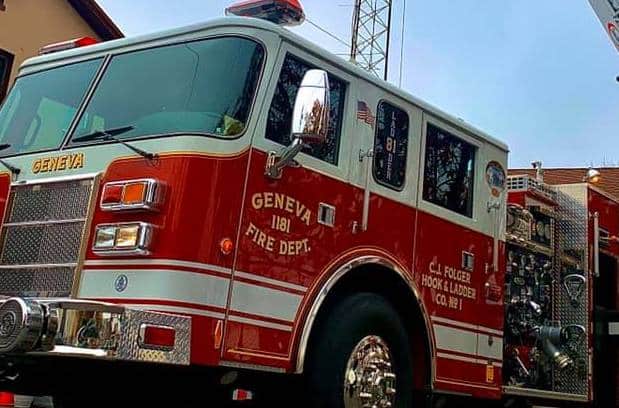
Geneva's proposed 2027 fire budget would maintain round-the-clock coverage and current services with an increase of about $17,000, while leaving three additional firefighter positions, supervisory stipends and two fire-engine replacements unfunded for now.
Fire Chief Del Parrotta described the roughly $3.1 million proposal as a maintenance budget during City Council's Sept. 28 fire-department workshop. He said it would preserve the city's combination of career firefighters and volunteers, but would not expand what the department can do. Council made no budget changes or formal decisions at the work session, which the mayor said lacked a quorum.

The session followed council's review of police staffing and spending as members work through the city's proposed 2027 budget. The broader plan calls for a 3% increase in the property tax levy, but remains subject to council review before the Oct. 31 adoption deadline.
A small increase leaves little room to expand
Parrotta said the fire proposal is about 0.6% higher than the current budget despite rising salary and health care costs. Most spending is tied to wages and other obligations set outside his office. He said the line items he directly manages total about $213,000, or 7% of the department budget.
The proposal maintains career staffing, the agreements with Geneva's three volunteer fire companies, existing training and facilities, and replacement of some worn equipment. It includes a replacement command vehicle for the deputy chief; Parrotta said the current vehicle is nearly a decade old, has more than 100,000 miles and has been breaking down regularly. The department also plans to replace some self-contained breathing apparatus.
To hold down costs, the department proposed reducing its overtime allocation by 56%. Parrotta said it typically spends about $20,000 a year on overtime, though academy training, illness, injuries or major incidents can push the total higher. He acknowledged the line could need an adjustment during 2027 because emergency-service overtime is difficult to predict.
The budget also scales back some training spending, fire-prevention materials and other operating lines. Parrotta said mandated training would continue, but fewer members could be sent to outside courses. He distinguished the training budget, which covers expenses for career and volunteer members, from a separate salary line that pays career staff attending training or colleagues covering their shifts.
The department has been replacing turnout gear on a recurring schedule after falling roughly 100 sets behind several years ago. Parrotta said it now expects to buy about five sets next year, rather than the larger batches purchased in recent years. The gear has a 10-year replacement standard, and the department holds about 130 sets, he said.
More firefighters and rescue capacity remain unfunded
Parrotta requested three additional career firefighters, which he said would allow one more firefighter on each of the department's three shifts. Geneva now has 18 career firefighters assigned across those shifts and maintains a guaranteed minimum of four on duty at a time. Volunteers can reinforce an incident, but their availability is not guaranteed, especially in the first minutes of an emergency.
Additional staff would also help with inspections, code work, fire-prevention visits, station and apparatus upkeep, and training, Parrotta said. The three positions are not included in the current proposal. He also sought stipends and civil-service promotions for shift lieutenants who could make day-to-day supervisory decisions; that request was left unfunded. Parrotta said no retirements are projected for 2027, though council's questions identified four possible retirements in 2028 that could put pressure on a later budget.
Other requests not funded for 2027 include a specialized rescue program, enhanced medical screening for firefighters, more conference training, and a water-rescue craft. Parrotta said he continues to favor some type of boat or other platform for incidents on Seneca Lake. These were requests to expand capability, not services he said the department is currently ending.
Two larger apparatus replacements were deferred: a front-line engine and the smaller Engine 1151. Parrotta clarified that 1151 has not been taken completely out of service, but its pump has been unusable for about 11 months because of an unresolved electronic interface problem. The vehicle can still handle calls that do not require water. Using larger, more expensive engines for calls it would otherwise handle increases wear and operating costs, he said. A separate replacement for a 2006 engine is already in development and is expected in November 2027.
In response to a council question, Parrotta also rejected the idea that every fire truck responds to every 911 call. The department uses a risk-based response guide: a single vehicle may investigate an ordinary carbon monoxide alarm, while a structure fire or alarm at a large building can bring several companies. He said the department now uses a pickup rather than its heavy rescue truck for standard medical calls, reducing wear on a more expensive vehicle.
Volunteer force and future costs draw council questions
Parrotta reported 144 active volunteers across Nester Hose, Hydrant Hose and C.J. Folger Hook and Ladder, including 37 qualified interior firefighters. The three companies have broader lifetime or nonactive membership rolls, but he said the 144 figure better represents people currently participating in training and department activities. He reported 57 new members over the past five years, while noting the department does not keep a centralized record of why volunteers leave.
The companies, rather than the city fire chief, recruit their own members under contracts with Geneva. Parrotta said a proposed junior firefighter program is close to being sent for legal review. Mayor Jim Cecere urged a deeper city review of recruitment and retention in 2027, including what incentives or other support could strengthen the combination department.
Geneva does not have a length-of-service award program for volunteers. Parrotta estimated such a program could require roughly $40,000 to $90,000 annually for a department of Geneva's size, before accounting for potentially costly credit for prior service. He described those figures as preliminary research, not a city proposal or approved cost.
Council members also asked about training requirements and whether more shared fire services could help control long-term costs. Parrotta said the department recorded more than 10,000 training hours last year and is pursuing an improved fire-protection rating that he believes could benefit commercial insurance costs if an inspection confirms it. He said mutual-aid agreements already help Geneva obtain additional equipment and personnel when needed, while the city also responds to neighboring departments.
The chief said the city is awaiting decisions on about $600,000 in federal fire-grant applications. He argued that a citywide grant writer could help Geneva pursue more outside funding, but no such position was approved at the workshop.
Cecere said he had no immediate changes to recommend for the fire proposal, but wanted the city to examine what its fire service should look like over the next five to 10 years. Councilor John Brennan raised the possibility of a more regional department as a subject for future study, not a plan before council. The city's next scheduled departmental budget workshop is Oct. 5 and will focus on public works.

FingerLakes1.com is the region’s leading all-digital news publication. The company was founded in 1998 and has been keeping residents informed for more than two decades. Have a lead? Send it to news@fingerlakes1.com.