

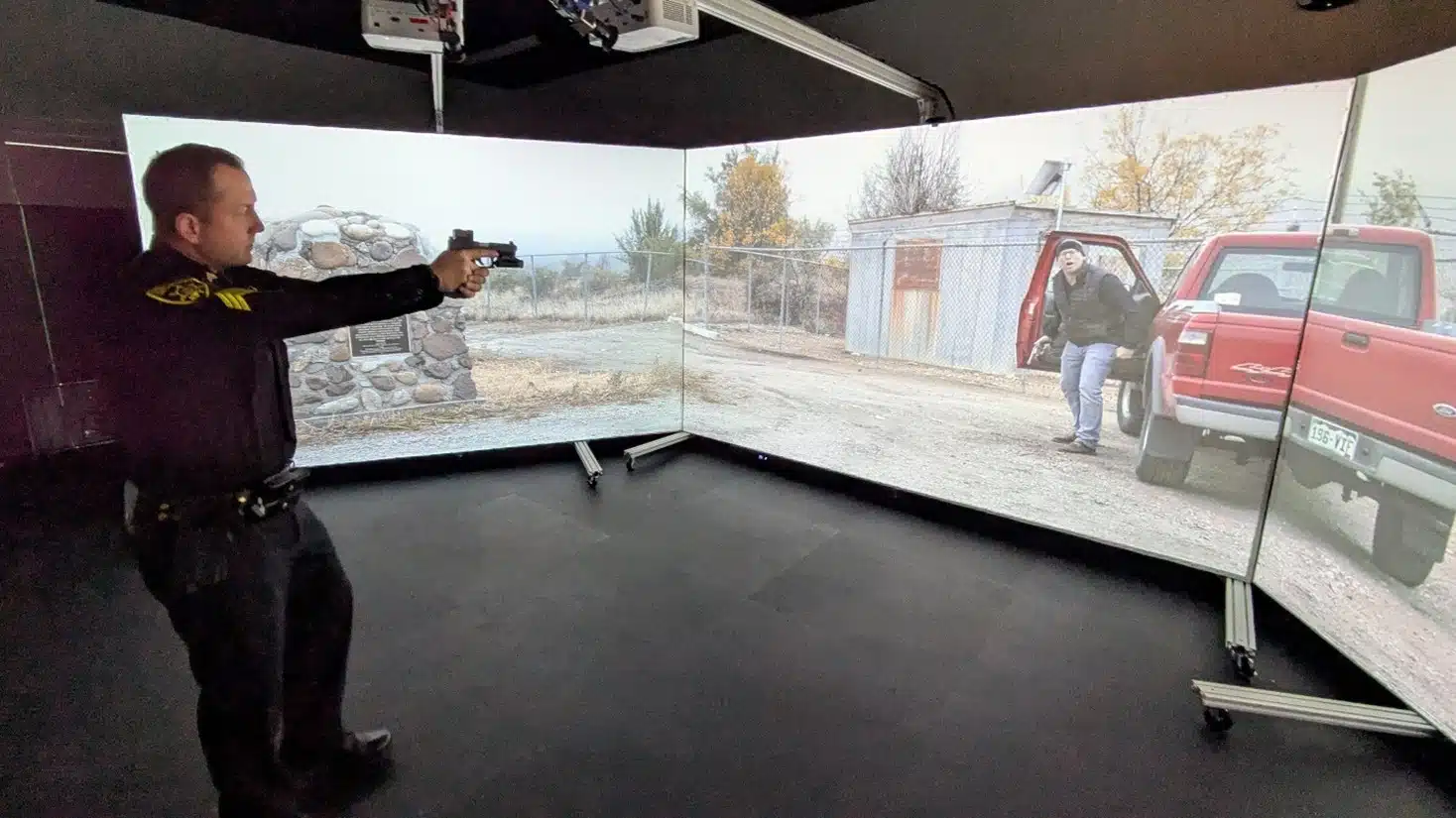
Livingston County sheriff’s deputies will use a new $150,000 simulator to practice de-escalation and use-of-force decisions in filmed scenarios that can change based on their responses.
The Sheriff’s Office bought the TI Training RECON 180 system with a Bureau of Justice Assistance grant, according to a Sept. 29 county release. Its three eight-foot screens and synchronized high-definition projectors surround trainees with a 180-degree scene.

The department demonstrated the equipment with a simulated late-night traffic stop in which a driver emerged with a gun, then complied with a deputy’s commands. The encounter was a training scenario, not an actual stop.
Facilitators can select from thousands of filmed situations, including domestic disturbances, mental health crises and active-shooter incidents. They control how a scenario branches in response to a trainee’s actions and can give immediate feedback, the county said.
The office says its primary focus for the system is helping more than 200 members practice de-escalation and appropriate use of force, even though the simulator also offers high-intensity scenarios.
After each exercise, trainers review the threat level and the techniques a deputy used. The system displays relevant U.S. Supreme Court cases and sections of the Sheriff’s Office use-of-force policy as part of that review.
Administrative Sgt. Scott Patterson, who helps train deputies and has worked in law enforcement for 15 years, said repetition gives them practice with situations they might not otherwise encounter during field training. He described the simulator as the most immersive training system he has used with the department.
Sheriff Thomas Dougherty said the filmed encounters are intended to make deputies practice decisions under pressure. The department did not provide data showing whether simulator use has changed outcomes in the field.
All Sheriff’s Office members are expected to receive at least eight hours of simulator training each year, with more time for those in special operations and training roles. The office also plans to make the equipment available to neighboring law enforcement agencies for regional sessions.
Trainees can use carbon-dioxide-powered pistols and rifles that simulate recoil, along with training versions of Tasers and pepper spray. The office says repeated firearms and Taser exercises could reduce ammunition and cartridge costs, though it did not provide a savings estimate.
Patterson said the room lets deputies practice before using live ammunition. The office plans to use the simulator as a shared training resource while it builds its annual schedule.

FingerLakes1.com is the region’s leading all-digital news publication. The company was founded in 1998 and has been keeping residents informed for more than two decades. Have a lead? Send it to news@fingerlakes1.com.