

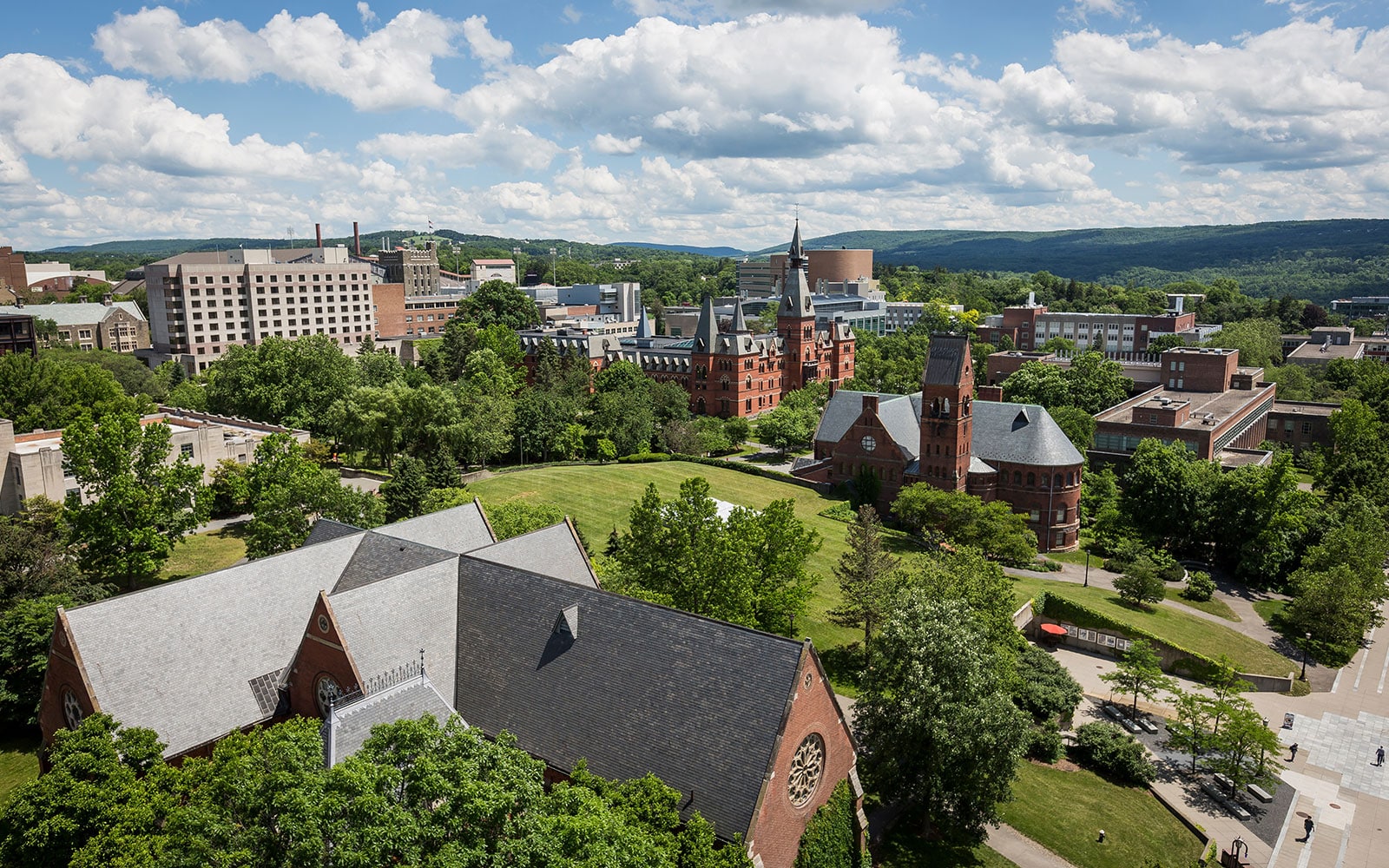
Cornell’s Society for the Humanities is collecting records and oral histories from former fellows after marking its 60th anniversary with two days of events in Ithaca.
Nearly 100 former fellows returned for the Sept. 18-19 celebration, which included discussions, receptions and a formal dinner, according to the College of Arts and Sciences account.

Founded in 1966, the society has hosted more than 800 fellows, about 600 of whom are living. It brings together scholars from Cornell and other institutions and is based in the College of Arts and Sciences.
The anniversary effort sought books, papers, emails and event posters for Cornell’s archives. Fellows were also invited to record oral histories describing their research and experiences at the university.
Saturday’s discussions were recorded and will be archived. Society Director Durba Ghosh, a Cornell history professor, said she hopes the collected material becomes a resource showing how humanities scholarship changes as researchers study more languages and parts of the world.
Fellows describe work beyond Cornell
Saturday’s program opened with three former directors: Jonathan Culler, professor emeritus of literatures in English; Brett de Bary, professor emerita of Asian studies; and Timothy Murray, professor emeritus of comparative literature and literatures in English. Former fellows then discussed the society’s influence on their work.
Culler, who directed the society from 1984 to 1993, said daily contact with scholars from other fields helped fellows broaden their research and pursue new topics. He said many later worked to create similar interdisciplinary opportunities at their own institutions.
He cited Yomaira Figueroa-Vásquez, a fellow during the 2021-22 “Afterlives” year who is now at Hunter College, City University of New York. Culler said her Cornell experience helped inspire her to rethink the Center for Puerto Rican Studies at Hunter with support from a Mellon grant.
Mary Jacobus, Cornell professor emerita of literatures in English, later established the Center for Research in the Arts, Humanities, and Social Sciences at the University of Cambridge. She was a faculty fellow in 1986-87 and 1997-98 and returned as an external fellow in 2009-10.
Nasrin Olla, a University of Virginia assistant professor of English and African and African American studies, said her fellowship during the 2017-18 “Corruption” year influenced both her writing and teaching. She described contact with poets, philosophers and theorists and concepts learned in visiting fellows’ classes as lasting influences.
Changing themes and research programs
This year, 18 scholars are working on the theme “Survival.” They include outside Society Fellows, Cornell Faculty Fellows, Mellon Postdoctoral Fellows, Cornell Graduate Student Fellows and Humanities Scholars Postdoctoral Associates.
In its early years, the society invited leading humanities scholars for one-year terms to collaborate with Cornell faculty. Ghosh said it has since expanded its categories of fellows while retaining its research and learning environment.
Shawkat Toorawa, a Yale professor of Near Eastern languages and civilizations and comparative literature, said the annual themes connect the society’s work to the wider world. He cited “Occupation” in 2013-14, “Energy” in 2019-20 and the current theme. Toorawa was a Cornell faculty member from 2000 to 2016, a faculty fellow in 2001 and now serves on the society’s external advisory board.
De Bary, director from 2003 to 2008 and in 2013-14, said successive directors shaped its work. She credited Paul Fleming, director from 2017 to 2024, with maintaining its critical-theory work and opening the Rural Humanities field.
Susan Buck-Morss, Cornell professor emerita of government, described collaboration and reflection on the human implications of scientific research as especially necessary amid political and financial pressures.

FingerLakes1.com is the region’s leading all-digital news publication. The company was founded in 1998 and has been keeping residents informed for more than two decades. Have a lead? Send it to news@fingerlakes1.com.