

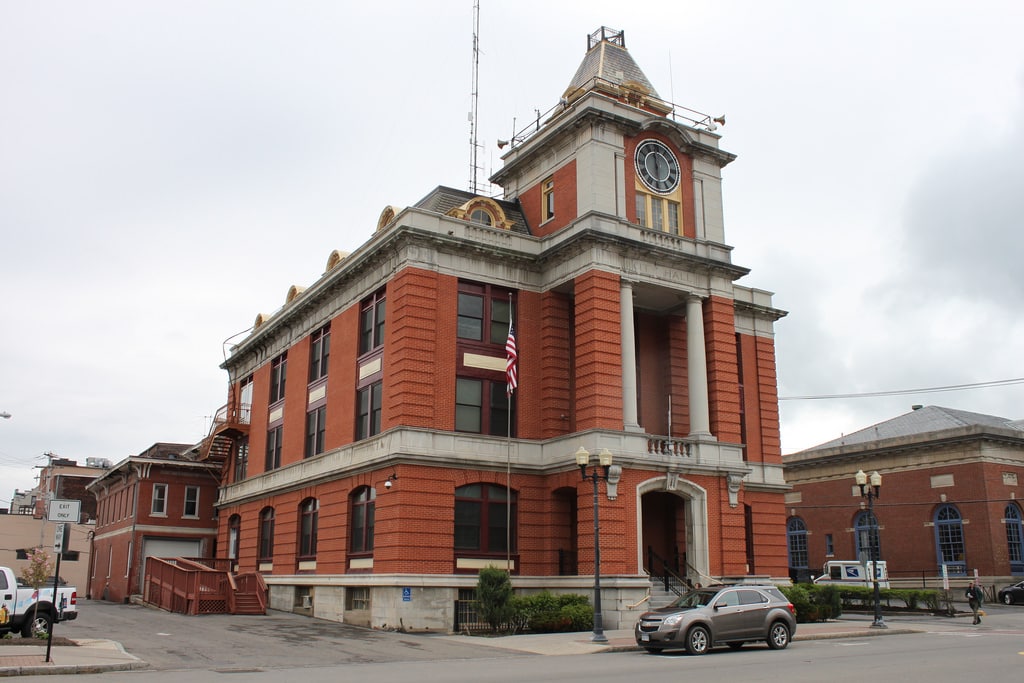
Geneva City Council signaled support Monday for further study of a long-unbuilt section of Idlewood Drive that could unlock additional housing, while also advancing a proposed expansion of the city’s room occupancy tax to short-term rentals and taking several steps tied to infrastructure and the 2027 budget process.
The Idlewood discussion centered on two privately owned lots where the owner wants to build houses but lacks a developed roadway needed for access and utility service. Council directed staff to develop preliminary cost estimates and examine legal options that could allow development to move forward without immediately requiring construction of a full city-standard street.

Idlewood Drive could open land for housing
Idlewood Drive exists as a city right-of-way, but part of it was never developed into a street. A sanitary sewer runs through the corridor, but the undeveloped section lacks a roadway, storm sewer and a complete water main.
The owner of two lots told council he wants to build two houses and is willing to construct roughly 200 feet of 20-foot-wide crusher-run access. He said his properties can connect to existing water and sewer infrastructure, but electrical service cannot move forward without suitable access.
City staff said allowing that arrangement would raise legal and maintenance questions because the proposed driveway would sit within a city right-of-way. Among the issues are whether the city would become responsible for plowing or maintaining it and whether an agreement could place those responsibilities on the property owner.
The city has previously taken a different position with another potential development in the same area, requiring that a full road and associated infrastructure be constructed rather than permitting a more limited access road. Staff cautioned that any new approach would need to be applied consistently.
A full buildout could involve extending a city-standard road to Ada Street, adding storm drainage and extending the water main so the system could be looped rather than ending in a dead end.
Council members also discussed the broader development potential along the corridor. Several additional parcels could potentially accommodate housing, although some lots are currently used as rear yards by owners of nearby properties.
No construction project was approved. Staff will instead prepare preliminary cost information and investigate possible legal structures for a more limited access arrangement.
Council members repeatedly tied the discussion to Geneva’s need for additional housing, but said they want a clearer picture of the cost before deciding whether the city should invest in the roadway or utilities.
Comprehensive plan and housing study moving toward consultant selection
Council also received an update on two planning efforts expected to shape housing and development decisions over the next several years.
Requests for proposals for a new comprehensive plan and a separate housing readiness study were released Sept. 3, with consultant proposals due Oct. 1.
The comprehensive plan will update Geneva’s 2016 plan and is expected to take about 18 months. It will address subjects including housing, land use, infrastructure, economic development, climate resilience and future investment priorities.
The housing readiness study is expected to take about eight months and will focus more narrowly on city-owned property that could support housing. Consultants will evaluate redevelopment potential, identify obstacles such as zoning or infrastructure constraints, and select three to five priority properties for more detailed development concepts.
City officials said the projects are intentionally being coordinated rather than conducted separately. Findings from the housing work are expected to feed into the broader comprehensive plan.
The city has received $75,000 in state funding for the comprehensive plan and $250,000 for the housing readiness study.
Consultant proposals are expected to be reviewed in October, with the city targeting a Nov. 9 kickoff.
Short-term rentals could be added to occupancy tax
Council also advanced the first reading of a local law that would broaden Geneva’s existing room occupancy tax to cover short-term rentals.
The city currently imposes a 3% occupancy tax, but existing language applies to properties renting three or more rooms. The proposed amendment would remove that threshold and bring smaller short-term rental properties within the tax.
The proposal would not increase the tax rate above 3%. Officials said any effort to pursue a higher rate would require a separate process involving state authorization.
Council moved the local law forward and approved setting a public hearing before further action.
FEMA-funded retaining wall project advances
Council unanimously approved designating the city as lead agency for environmental review of repairs to a gabion basket retaining wall damaged during storms in July 2023.
The project is part of the city’s continuing work with the Federal Emergency Management Agency on storm damage repairs.
Officials said the retaining wall is near Geneva Street, behind the firehouse area, and that FEMA is expected to fully fund the work.
The action does not authorize construction itself. It allows the city to proceed with the environmental review required before the project can move into its next stages.
Council sets hearing on possible tax cap override
Council also scheduled a public hearing on a local law that would allow the city to override New York’s property tax cap while developing its 2027 budget.
Officials stressed that setting the hearing does not mean council has decided to exceed the cap.
The override has routinely been adopted as a safeguard during the budget process because final calculations can change and municipalities can face consequences if they unintentionally exceed the state limit.
City officials said the current budget is close enough to the tax cap that the difference could be roughly $30,000, making the issue particularly relevant this year.
At least one council member indicated support for holding the hearing while expressing reservations about ultimately voting for an override.
The city’s budget review is now moving into departmental work sessions. The first workshop is scheduled for Sept. 21 and will focus on the proposed 2027 Police Department budget. A public hearing on the overall proposed budget is scheduled for Sept. 23.

FingerLakes1.com is the region’s leading all-digital news publication. The company was founded in 1998 and has been keeping residents informed for more than two decades. Have a lead? Send it to news@fingerlakes1.com.