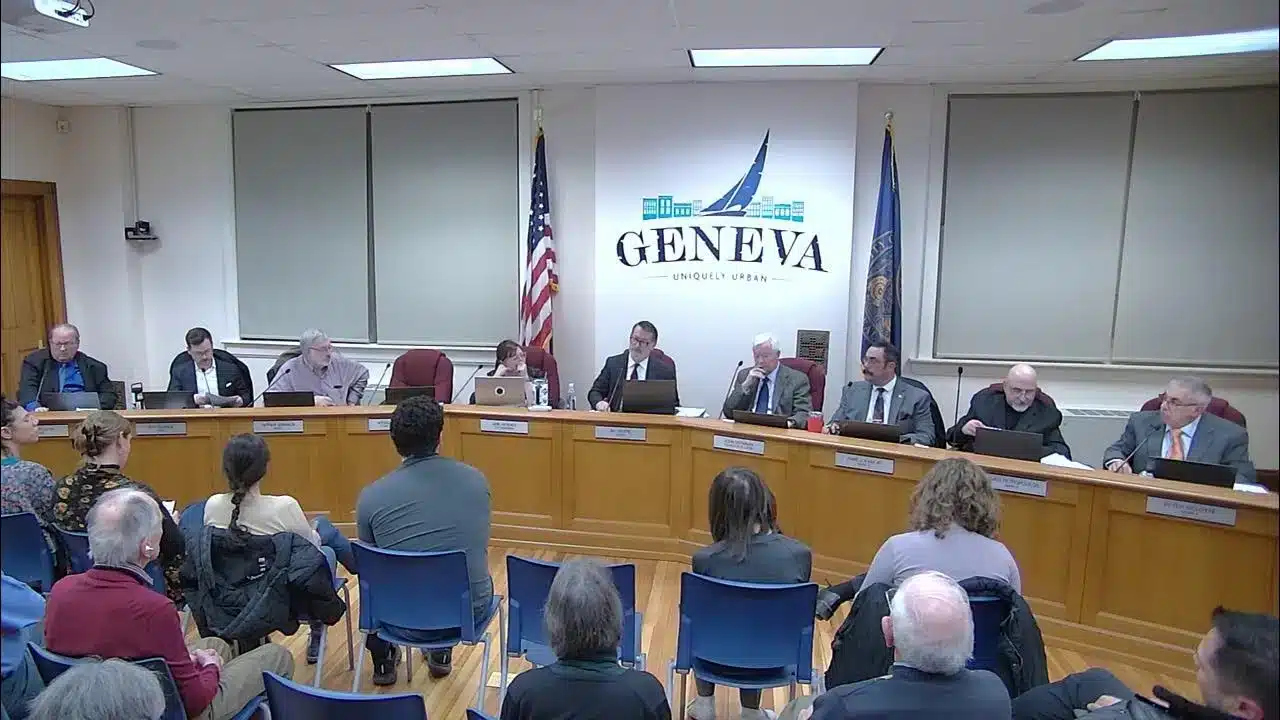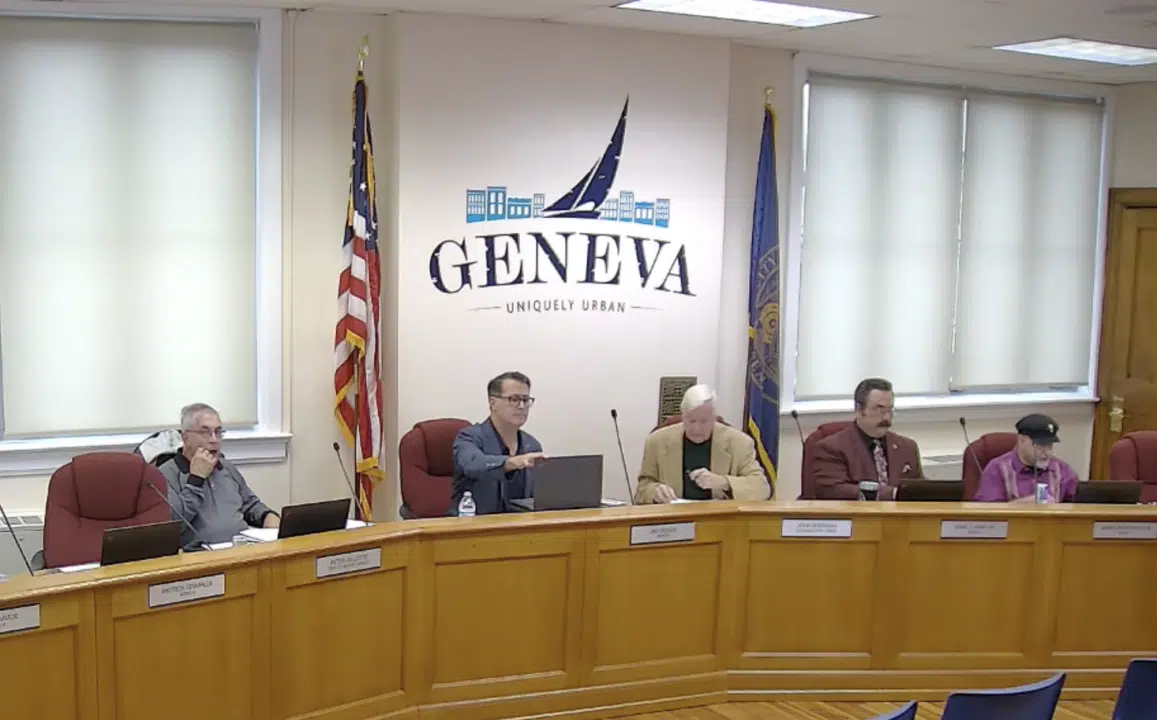
Geneva City Council backed away from two major parking changes Wednesday night, unanimously rejecting a proposal to eliminate dozens of spaces along South Main Street and voting down a broader rewrite of the city’s winter parking rules after a lengthy debate over snow removal, enforcement and the growing number of residents who rely on street parking.
At the same meeting, council moved forward with a 25 mph speed limit for South Main Street, approved a three-part strategy aimed at eventually collecting occupancy taxes from short-term rentals, authorized the sale of three city-owned Maryland Street parcels and opened the door to additional grant funding for housing rehabilitation and the city’s lead service line replacement project. The Sept. 2 meeting stretched beyond two hours and included some of council’s most extensive debate yet over how Geneva manages parking and traffic. (City of Geneva)

The clearest decision came on South Main Street, where a proposal to prohibit parking on the east side between roughly 645 and 715 South Main St. collapsed before reaching a public hearing.
The restriction had been developed as a safety measure intended to improve sight distance for motorists and pedestrians around crosswalks. But several councilors who had previously been open to the idea said they no longer believed removing approximately 44 spaces was the best solution.
Councilor John Brennan, who had helped develop the proposal with Councilor Christopher Lavin, said he had reconsidered after looking at the relationship between road width and vehicle speeds. Brennan said removing parked cars could effectively widen the travel lane and potentially encourage drivers to move faster.
Other councilors pointed to the value of the parking spaces for residents and visitors who stop along South Main Street to view Seneca Lake.
Councilor Ben Gummoe argued that council had become too focused on one solution instead of the underlying objective: making pedestrian crossings safer. He suggested curb extensions or pedestrian bumpouts, including less expensive versions using bollards and pavement markings, that could improve visibility without eliminating an entire stretch of parking.
Councilor Frank Gaglianese — identified in the transcript as Grimaldi — also questioned whether all of the crosswalk improvements council expected had actually been completed and suggested revisiting the crossings before removing parking.
When the first reading came to a vote, every council member present voted against it. Because the ordinance failed at first reading, council did not proceed with the accompanying resolution to schedule a public hearing.
South Main speed reduction continues
Council took a different approach to the speed limit.
The proposed ordinance would reduce the maximum speed on South Main Street, New York State Route 14, to 25 mph between Seneca Street and Kings Lane. Council advanced the first reading and approved a resolution scheduling a public hearing.
The proposal stems from months of discussion about speeding, pedestrian safety and crosswalk visibility along one of Geneva’s principal gateways.
Residents who have spoken about South Main Street have repeatedly urged the city to focus more heavily on speed enforcement. During Wednesday’s meeting, Jerry Buckley again argued that reducing the speed limit and enforcing it would do more for safety than eliminating parking.
The public hearing is scheduled for Sept. 15. The speed-limit ordinance has not yet been finally adopted.
Winter parking rewrite fails after long debate
The most complicated discussion of the night centered on Councilor Jamie Kaim Jr.’s proposed overhaul of Geneva’s winter parking regulations.
Kaim said he had spent months reviewing a city code that contains restrictions that no longer match signage or the way rules are actually enforced.
His proposal attempted to reconcile those inconsistencies while changing parking requirements in different parts of Geneva.
Among the changes, the proposal would have limited certain downtown overnight parking restrictions to Dec. 1 through April 1 rather than leaving language on the books that technically applies year-round. It also would have removed year-round alternate-side parking language for South Main Street and allowed parking on both sides except during declared winter weather events.
Kaim repeatedly emphasized that the proposal was not simply a return to the city’s old parking system.
But residents and several councilors remained concerned about imposing more regular winter restrictions, particularly downtown.
Dave Linger, a Castle Street resident and former Downtown Business Improvement District president, said downtown has changed substantially as more people have chosen to live there. He argued that on-street parking has become an important residential amenity and said the current weather-event system has worked without requiring people to move vehicles dozens of times during winters with relatively little snow.
Wendy Marsh said the city already has the ability to ticket and tow vehicles that remain on streets during snow emergencies and argued stronger enforcement could address problem vehicles without expanding restrictions.
Buckley made a similar argument, saying the city’s text, email and online notification system gives residents and visitors a workable way to know when cars need to be moved.
The discussion exposed a more fundamental problem: the written city code, signs posted around Geneva and actual enforcement practices don’t always line up.
Police Chief Matthew Eveland confirmed that officers currently enforce winter restrictions during declared weather events rather than enforcing some of the broader language that remains in the code.
Eveland said communication is one of the biggest problems under the current system. When a winter weather event is declared, police can issue 100 to 150 tickets in a night, and one event last winter resulted in roughly 200 tickets.
He said the department routinely hears from people who didn’t know a restriction was in effect, while city courts have also raised concerns about whether signage adequately communicates the rules.
Eveland said he generally likes the current event-based approach but would like a clearer way to notify the public.
Public Works Director Joe Venuti offered a different operational perspective.
Venuti said parked vehicles significantly complicate snow removal and force crews to return to streets multiple times. Once snow mixed with salt hardens around parked vehicles, he said, it can remain along streets for days.
Downtown’s newer curb extensions and recessed parking areas have made plowing more complicated as well. Venuti said snow-removal runs downtown have increased by roughly two and a half hours because crews must maneuver around redesigned streets and parked vehicles.
The department needs about 14 workers for a full plowing and salting operation, Venuti said, requiring Public Works to pull employees from water, sewer or buildings and grounds because the highway division has 10 full-time employees.
Venuti said predictable parking restrictions make snow removal easier and safer, though he acknowledged the impact on residents who lack off-street parking.
Brennan eventually moved to table the ordinance, saying council needed a more comprehensive review of parking regulations, signage, public feedback, police enforcement and Public Works needs.
The motion to table failed on a 4-4 tie.
Council then continued debating the proposal before voting on the first reading itself. Only Kaim and one other council member supported moving it forward; the proposal failed.
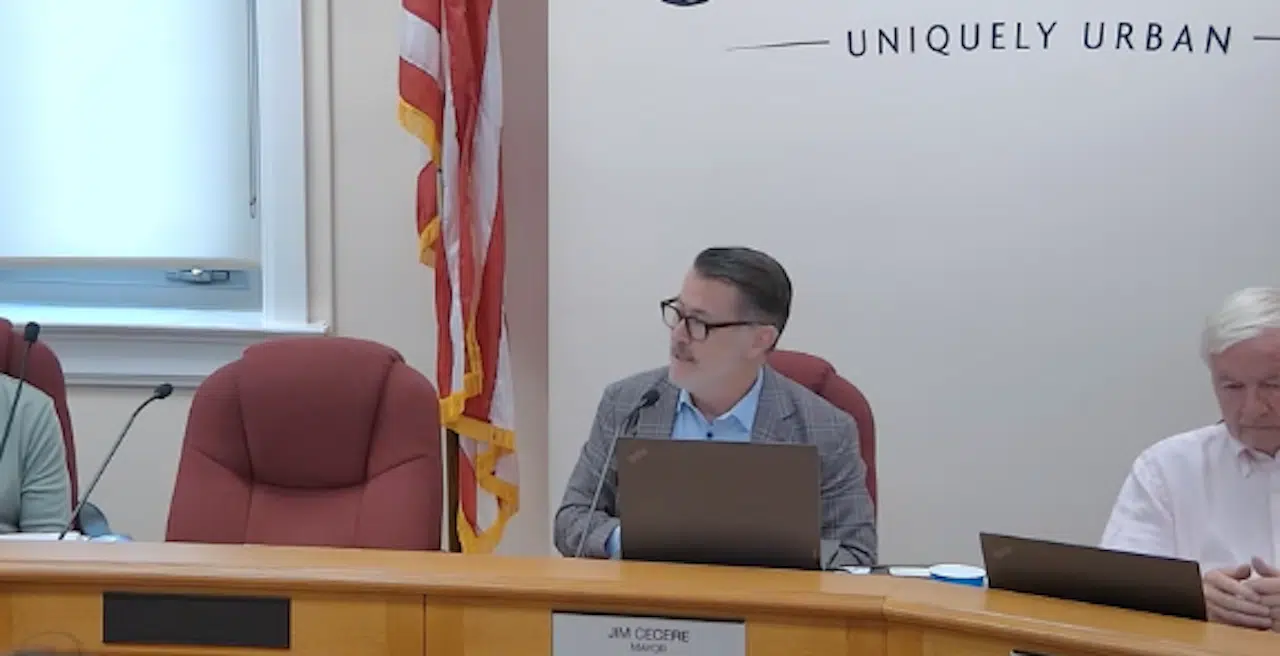
Mayor Jim Cecere said afterward that the issue should return in another form after additional work.
City advances short-term rental occupancy tax strategy
While the parking proposals struggled, council showed broad agreement on a new approach to short-term rentals.
Council approved three related resolutions as a block.
The first directs city staff and Corporation Counsel to modernize Geneva’s existing short-term rental registry and prepare a local law that could extend the city’s existing 3% occupancy tax to short-term rentals.
The changes to the registry are expected to incorporate elements of New York’s newer state framework, including registration numbers, booking-service verification, insurance and safety requirements.
The resolution does not itself impose the tax. Any local law would return to council for separate consideration and any legally required hearing.
Geneva currently has roughly 109 known short-term rentals, according to Cecere.
The mayor framed the proposal partly as an issue of parity between hotels, which already collect the city occupancy tax, and short-term rentals, which currently do not.
The second resolution asks Ontario County to reverse its decision to opt out of New York’s short-term rental registration system.
Geneva is also asking the county to adopt a “municipality of source” formula if it begins collecting occupancy taxes from short-term rentals. Under the city’s request, 50% of net county short-term rental occupancy tax revenue would return to the municipality where the rental activity occurred.
Cecere said Geneva bears significant costs associated with the visitor economy, including streets, public safety and lakefront infrastructure. The city has estimated recent storm damage along the lakefront at about $7.2 million.
The third resolution asks state lawmakers to increase Geneva’s maximum authorized occupancy tax rate from 3% to 5%.
That request also does not raise the tax. It would give a future council the authority to consider a rate as high as 5% through a separate action.
Geneva’s adopted budget documents similarly describe occupancy-tax changes as requiring additional legislative and local steps before any revised tax can take effect. (City of Geneva)
City-owned Maryland Street parcels will be sold
Council also approved the sale of three vacant city-owned parcels on Maryland Street for $4,000 to Flint Hall.
The buyer has proposed developing the property as a small hobby farm with a commercial greenhouse, garden space, native plantings and accessory structures, with a potential single-family caretaker residence later.
Plans submitted to the city include a roughly 1,500-square-foot greenhouse, workshop space, agricultural growing areas and future residential and studio structures.
Most council members supported the sale as a way to return unused property to productive use and eliminate city maintenance responsibility.
One council member opposed the sale, arguing that Geneva should retain the three lots because they could eventually be more valuable for housing, particularly as Habitat for Humanity development moves ahead nearby on Crystal Street.
More housing and lead-pipe grant funding could be pursued
Council also scheduled a Sept. 15 public hearing tied to potential 2026 Community Development Block Grant applications.
The city is considering applications in two areas.
One would seek additional funding for Geneva’s existing housing rehabilitation program, which provides assistance for eligible owner-occupied homes. Acting City Manager Taylor Youngs said the current program has developed an extensive waiting list.
The second could help reduce local borrowing for the city’s lead service line replacement project.
Geneva has already secured an $8 million grant and approval for up to $3.7 million in no-interest financing for that project. City staff are now searching for additional grants that could reduce the amount that ultimately has to be financed.
Council modernization, old laws also under review
Two other discussions could shape how Geneva government operates in the future, although neither produced immediate action Wednesday.
Cecere outlined an effort to examine the structure of City Council and its relationship with other parts of city government.
Among the ideas being explored are having the city comptroller report directly to council, creating standing advisory committees focused on areas such as housing, finance and economic development, and establishing a more formal system for reviewing city boards and commissions, including appointments, staffing and training.
Cecere said formal proposals could begin appearing next month.
Gummoe, meanwhile, outlined an effort to remove obsolete provisions from the City Code.
His initial list includes Geneva’s old Empire Zone provisions for a state economic development program that ended years ago; regulations requiring permits for large satellite dishes that have since been preempted by federal rules; railroad-crossing provisions superseded by federal law; and portions of a decades-old bicycle licensing system that once required riders to obtain plates for 25 cents.
Gummoe said he intends to begin with obvious outdated provisions and continue reviewing the code over time.
Councilor Kaim urged caution on eliminating bicycle licensing language without considering whether Geneva may eventually need regulations governing commercial bicycle-sharing operations.
No repeal legislation was introduced Wednesday.
The next significant round of decisions is expected Sept. 15, when council is scheduled to hold public hearings on the South Main Street speed reduction and potential CDBG housing applications. The rejected South Main parking restriction and winter parking rewrite will require new proposals if council decides to revisit them.

FingerLakes1.com is the region’s leading all-digital news publication. The company was founded in 1998 and has been keeping residents informed for more than two decades. Have a lead? Send it to news@fingerlakes1.com.