Cornell University has closed its five-year “To Do the Greatest Good” campaign with nearly $6.8 billion in gifts and commitments, surpassing its $5 billion fundraising goal while directing major investments toward student affordability, research, academic programs and campus facilities.
The campaign, which began in October 2021 and ended June 30, drew support from more than 500,000 donors and engaged more than 220,630 alumni worldwide. Cornell said it raised a record $1.1 billion during the campaign’s final year.

Student affordability was one of the campaign’s central priorities. Donors created or expanded more than 1,000 endowed funds supporting students at Cornell’s Ithaca and Cornell Tech campuses, while the university’s Undergraduate Affordability Initiative raised more than $544 million, exceeding its $500 million goal.
More than 29,000 donors contributed to that initiative, with gifts ranging from $5 to $50 million. Cornell said the effort created 541 new undergraduate scholarships.
Another 200 scholarships and fellowships were created for graduate and professional students.
President Michael I. Kotlikoff said the campaign strengthened the university’s ability to use its endowment to support financial aid and expand access for students.
The campaign also included significant support for Weill Cornell Medicine, where donors gave more than $200 million toward a debt-free scholarship program for medical students with demonstrated financial need. The program is designed to cover tuition, housing and other living expenses for eligible students.
A $260 million student residence backed by the Feil Family and Weill Family was another major investment connected to student experience at Weill Cornell Medicine.
Research and academics receive majority of campaign funding
About 64% of all campaign giving was designated for research, academic programs, faculty and facilities, according to Cornell.
Artificial intelligence, climate and sustainability research, public policy, medicine and biomedical research were among the university’s major areas of focus.
Cornell Tech raised $330 million during the campaign to support AI and computing research, startup creation and other campus initiatives tied to technology and economic development in New York City.
Several of Cornell’s colleges, schools and academic units also received naming gifts during the campaign.
Those included the Cornell Ann S. Bowers College of Computing and Information Science, Cornell Jeb E. Brooks School of Public Policy, Cornell CALS Ashley School for Global Development and the Environment and Cornell David A. Duffield College of Engineering.
Major gifts also named the Israel Englander Departments of Dermatology and Ophthalmology at Weill Cornell Medicine, Cornell Peter and Stephanie Nolan School of Hotel Administration and the Paul Rubacha Department of Real Estate.
Kotlikoff said the university’s interdisciplinary structure positions Cornell to address complex scientific, technological, economic and societal challenges.
More than $500 million directed toward facilities
Donors contributed $527 million toward new buildings and upgrades to existing facilities.
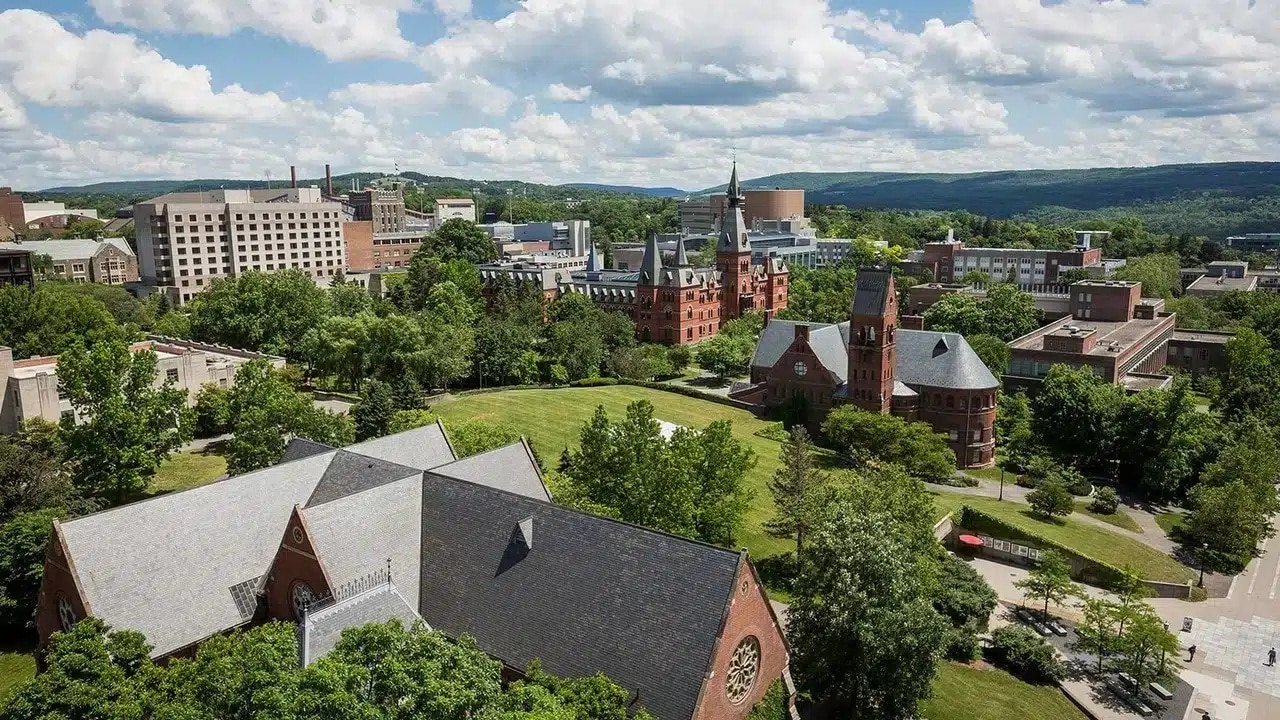
Those projects include the new Meinig Fieldhouse for varsity and recreational athletics, restoration work at McGraw Hall and construction of Atkinson Hall, which expands space for collaborative research in sustainability, biomedicine and public health.
The campaign also supported the new Computing and Information Science Building, expansion of Duffield Hall and construction of Martin Y. and Margaret Lee Tang Hall.
Some campaign gifts have already been received, while others are structured as multiyear pledges, bequests or endowment contributions.
Cornell said that once all campaign commitments are received, the university’s permanent endowment is expected to grow by more than $2.6 billion.
Endowment gifts are invested permanently, with Cornell currently drawing about 4% of annual earnings for uses specified by donors.
Alumni participation exceeds campaign goal
Cornell also exceeded its goal of engaging 200,000 alumni during the campaign.
More than 220,630 alumni participated, representing nearly 70% of Cornell’s global alumni population, according to the university.
For the Ithaca and Cornell Tech campuses, more than 70% of campaign funding came from alumni.
Approximately 13,000 alumni volunteers also participated in efforts to connect graduates with students, university programs, networking opportunities and other activities.
Cornell Board of Trustees Chair Anne Meinig Smalling said establishing an alumni engagement goal alongside the fundraising target was intended to strengthen long-term connections between graduates and the university.
The campaign also surpassed other major benchmarks. Cornell Annual Funds raised $432 million against a $400 million goal, while the Undergraduate Affordability Initiative exceeded its target by more than $44 million.
Fred Van Sickle, Cornell’s vice president for alumni affairs and development, said campaign donors made investments that will affect students and university research for years to come.

FingerLakes1.com is the region’s leading all-digital news publication. The company was founded in 1998 and has been keeping residents informed for more than two decades. Have a lead? Send it to news@fingerlakes1.com.