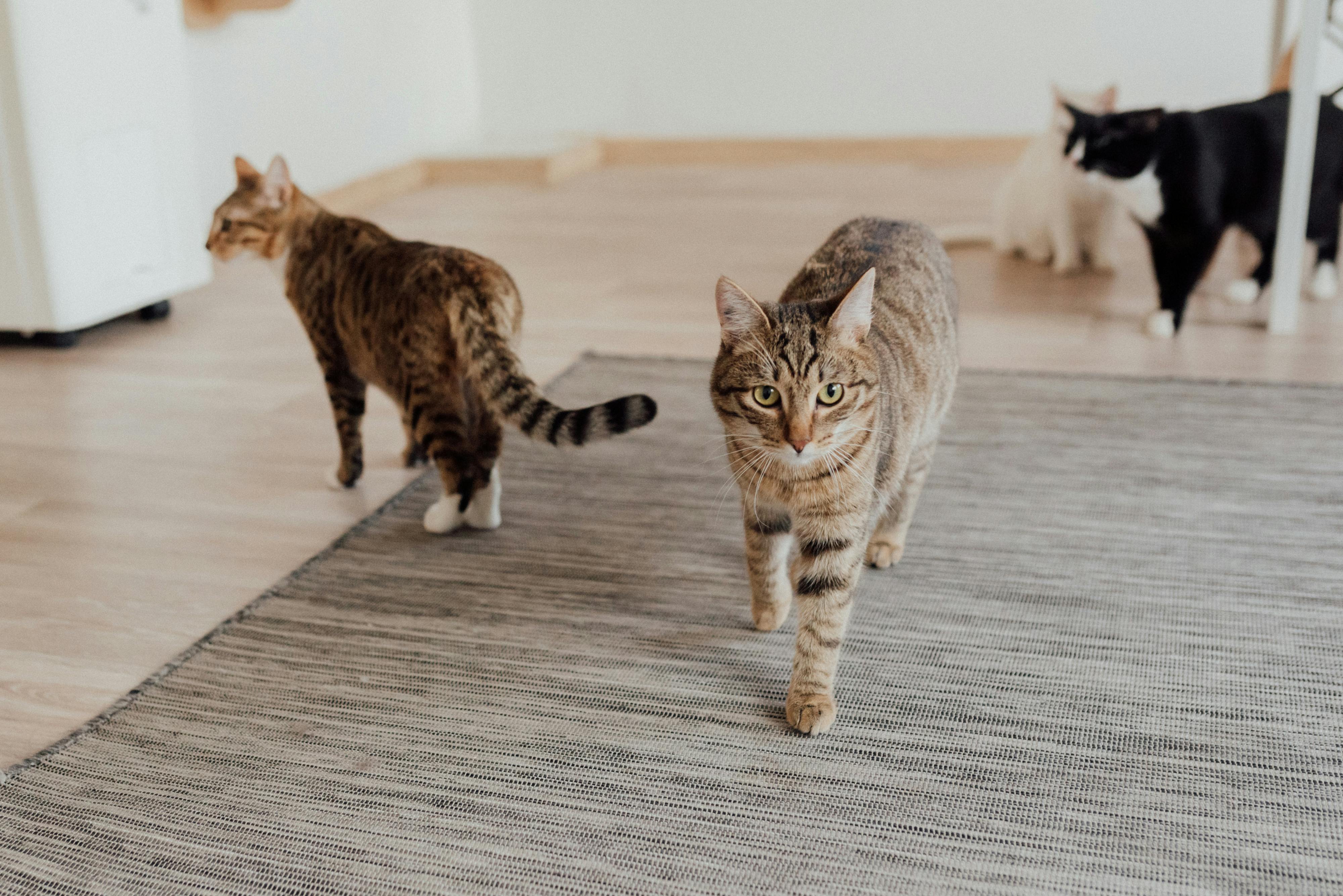
Cats given a simple hiding box in shelters score lower on stress measures and settle into new surroundings faster than cats housed without one. The behavior that worries owners most is frequently the one that does the most good for their cat.
Hiding, perching, grooming, and the sudden mid-crisis yawn are all ordinary ways cats manage pressure. Knowing where each one stops being healthy is what tells you when to wait and when to call your vet.
Start With What Normal Looks Like
None of these signals mean quite the same thing in every household. A cat who greets guests at the door has a different baseline from one who has always watched arrivals from the landing.
To get an understanding of your cat’s regular baseline, spend a quiet week paying attention while nothing in particular is happening. Note where your cat sleeps and when they turn up in the evening, and you’ll have something to measure against later.
Once that’s established, you can more clearly identify their needs and implement changes to improve their comfort during more unsettling times. If you do plan to try new items or routines to support your cat’s stress, keep everything else steady for a couple of weeks at a time. That way you can measure what’s working and how things shift. In other words, avoid overhauling changes to litter, adding diffusers, or moving furniture in a single week, because afterward nobody can say what helped.
Two Ways Cats Create Safety
Hiding is the primary coping mechanism of a small predator who is also prey. A cat who retreats into an enclosed space is regulating, and that shelter-finding holds up in living rooms just as well. Climbing serves the same purpose from the opposite direction. A cat on top of a wardrobe has left floor-level traffic behind while keeping every entrance in view, which is why the kitty who vanishes during a party sometimes turns up atop the refrigerator.
Both behaviors remain healthy signs of coping as long as your cat keeps eating and using the litter box near their normal schedule. Not only allowing but providing safe places for them to retreat are among the most useful things you can do for your cat who may be facing an unsettled week.

Grooming, and the Point Where It Turns
Cats groom to regulate temperature, maintain the coat, and settle themselves. A cat who grooms after a startling noise is entirely ordinary. When it comes to overgrooming, that can often be visible in the coat, with thinning fur along the belly or inner thighs, stubble where hair has broken off close to the skin, and bald patches with healthy skin underneath. While it does develop slowly, you can run your hand along your cat’s belly now and then and you’ll catch it early.
The Small Tells of a Settled Cat
Body language does nearly all the work in how cats communicate. Posture and small gestures will each tell you something about how your cat is feeling. Common signs they are relaxed include sitting in the loaf position with paws tucked. And if they’re stretched out on one side or asleep with the belly exposed, they are properly off duty. Slow blinking aimed at you is a deliberate signal of ease, and a cat will often return one you offer first.
A sudden grooming burst or a large yawn during a tense moment is a displacement behavior that discharges the uncertainty about whether to approach or withdraw. Brief displacement is normal, but a cat cycling through it for an hour is telling you the situation has gone on too long.
What Changes After Forty-Eight Hours
If your cat hides through a weekend of houseguests and resumes their routine on Monday, that’s generally not a cause for concern. But if they’re going more than a day with no eating or drinking water, that’s a different situation.
A cat’s appetite is what to watch most closely of all. Call your veterinarian if your cat hasn’t eaten for 24 to 48 hours, and call sooner if they are vomiting or showing signs of lethargy. Litter box changes are also important, since straining or producing very little can create their own set of issues.
You’ll Know the Difference
Most of what worries cat owners turns out to be normal. The cat behind the sofa during a dinner party is doing what cats do in crowded rooms, and they’ll be out by morning. Once you know your own cat’s habits, the disruptive weeks get easier on you too. You’ll see when your cat is handling something on their own, and you’ll catch the few signs that mean it’s worth calling your vet.

This content is brought to you by the FingerLakes1.com Team. Support our mission by visiting www.patreon.com/fl1 or learn how you send us your local content here.