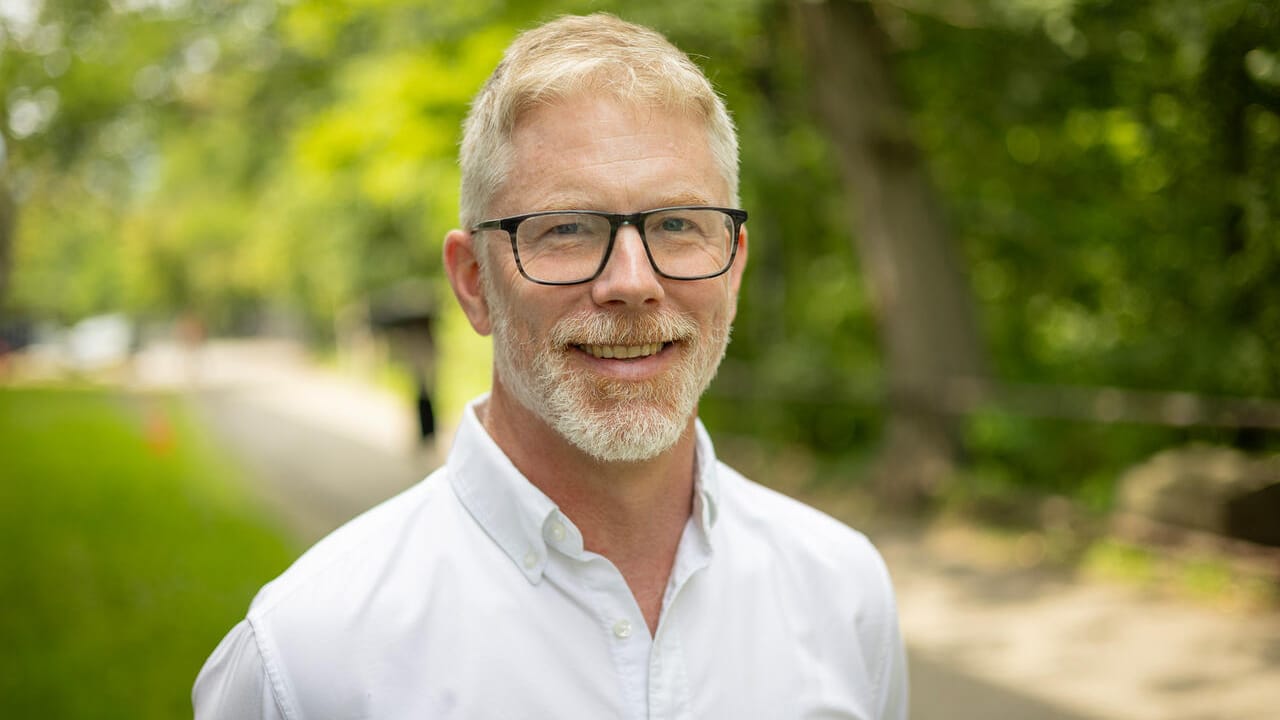
Cornell University has appointed professor Austin Bunn as its new provost’s fellow for public engagement, giving him a three-year role focused on expanding community-engaged learning and research across the university.
Bunn, a professor of performing and media arts in the College of Arts and Sciences, began the appointment July 1. He is the seventh faculty member to hold the position since the initiative launched in 2011.
In the role, Bunn will work with Cornell’s Office of the Vice Provost for Engagement and Land-Grant Affairs, the David M. Einhorn Center for Community Engagement and faculty and administrators across the university.
The work will focus on strengthening public engagement opportunities, including community-based research, internships, entrepreneurship, field studies, workshops and cooperative education.
Bunn will report to Vice Provost for Engagement and Land-Grant Affairs Katherine McComas.
McComas said Bunn’s experience leading the Milstein Program in Technology and Humanity and working across disciplines will be an asset as Cornell seeks to expand engagement opportunities for students.
Bunn directed the Milstein Program from 2020 to 2025 and joined Cornell’s faculty in 2012. His career has included journalism, screenwriting, documentary filmmaking and audiobook production.
Cornell wants all undergraduates involved
Cornell’s long-term goal is for every undergraduate student to participate in some form of community-engaged learning.
The university says 89% of the Class of 2026 reported having such an experience. Within the College of Arts and Sciences, the rate was 64%.
Arts and Sciences offered 33 community-engaged learning courses during the 2025-26 academic year.
Bunn said one of his priorities will be making those opportunities easier for students to identify, including potentially tagging courses that include a public-engagement component.
He also plans to help faculty recognize when existing coursework already meets Cornell’s standards for community-engaged learning.
Those standards include addressing a community interest or issue, working with and learning from a community partner, connecting the experience to academic content and incorporating structured reflection.
Focus extends beyond traditional service work
Cornell is also taking a broader view of what qualifies as public engagement.
Rather than limiting the concept to traditional service projects, Bunn said the university is looking at educational experiences that place students directly in contact with communities and organizations outside campus.
That could include internships, entrepreneurial projects, field work, workshops and research conducted with community partners.
Bunn said those experiences can expose students to perspectives they may not encounter in the classroom and teach skills such as receiving feedback, navigating difficult conversations and understanding the impact of their work.
His own projects have included documentary work involving rural communities and student storytelling projects with local residents.
Bunn said universities also have an institutional interest in strengthening those connections.
“Universities have realized that we need to do a better job looking outside, welcoming people in and grounding our research, so that the general public can see the results and benefit from the talent and resources of a university like Cornell,” he said.
The appointment gives Bunn three years to help build that work into a more visible and consistent part of the undergraduate experience.

FingerLakes1.com is the region’s leading all-digital news publication. The company was founded in 1998 and has been keeping residents informed for more than two decades. Have a lead? Send it to news@fingerlakes1.com.