

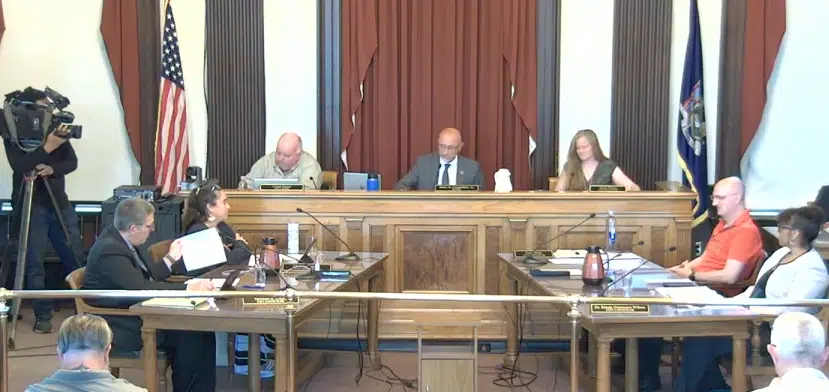
Auburn City Council delayed its final vote on the city’s 2026-27 budget Thursday after a lengthy meeting that centered on whether the city can restore proposed cuts, reopen Casey Park Pool and reduce or avoid an 8% property tax increase.

The meeting included public hearings on the proposed budget and a local law that would allow the city to override New York’s property tax cap. The tax-cap override remains scheduled for a vote next week, while the budget vote was pushed back to June 11 after Councilor Craig Diego argued the council needed more time to scrutinize revenue estimates and department spending lines.

The proposed general fund budget totals about $48.9 million. City Manager Jenny Haines and Comptroller Mary Beth Leeson said the plan reflects an 8% tax levy increase, which would raise the levy from about $15 million to $16.2 million and add roughly $109 to the tax bill for the average home.
City officials said Auburn is facing flat revenue, inflation, rising fringe benefit costs and labor uncertainty as it negotiates with five unions. The budget proposal also reduces staffing through vacant positions, retirements, resignations and layoffs, though several threatened reductions have shifted as new revenue and agreements emerged.
One major change came through a $500,000 agreement between Auburn City Ambulance and Auburn Community Hospital. The deal, approved unanimously, allows the city ambulance service to provide a dedicated advanced life support ambulance for hospital transports from July 1, 2026, through June 30, 2027.
Haines said the contract allows the city to retain full-time ambulance staff that had been considered for reductions. However, she cautioned that dedicating an ambulance to the hospital will mean one fewer ambulance available for 911 calls.
Council also approved a $250,000 agreement with Salt City Kings Inc. for use of Casey Park Ice Rink from September through March. The city will continue to operate and maintain the rink, retain public skating revenue and require the group to make ice time available to local users, including Auburn youth hockey and the Auburn school district.
Much of the night’s public discussion focused on services residents feared could be lost.
Auburn YMCA CEO Scott Sincerebo urged the city to open Casey Park Pool this summer, saying the YMCA would provide lifeguards free of charge for four weeks, a contribution valued at up to $16,000. He also said Wegmans awarded a $15,000 grant to help cover chlorine costs, bringing the outside support to about $31,000.
Haines said with lifeguard costs removed and the Wegmans grant applied, the city would need just over $23,000 to open the pool, assuming needed repairs can be completed before opening.
Several council members voiced support for the pool. Councilor Terry Cuddy said the new state aid and outside support should allow the city to offer at least four weeks of swimming at Casey Park. Councilor Rhoda Overstreet-Wilson supported the idea but warned the city cannot rely on one-time help every year.
Crossing guards were another flashpoint. Residents urged council to preserve positions near schools and busy intersections, saying the guards are part of the safety system for children who walk to school. Haines said staff had been considering reducing the program to six crossing guards at major intersections, while Cuddy said he supported keeping all 13. Leeson said keeping the full program would cost about $170,000.
Residents also raised broader concerns about transparency, policing, automated license plate readers and the city’s handling of public records requests. James Udall criticized the city over an outstanding FOIL request and said the budget should not be approved until more revenue options are examined, including whether the city can capture occupancy tax from county-paid emergency housing. City officials later said Cayuga County is exempt from occupancy taxes as a municipal entity.
Several speakers again criticized Auburn’s use of Flock license plate reader cameras, arguing the technology creates privacy risks and should not receive additional public funding. Others questioned police staffing levels and urged the city to prioritize youth recreation.
Diego delivered the sharpest critique of the proposed budget, saying the city should not rely on temporary state aid to balance recurring expenses. He said the city received nearly $4 million in additional state support or related funding this budget cycle, including $2 million tied to state Sen. Rachel May’s efforts, but warned that money may not return next year.
Diego also argued that some revenue projections and spending lines appear too aggressive. He said he reviewed hundreds of revenue lines and more than 1,000 expenditure lines, finding areas where departments were budgeted far above current-year actual spending. He said tightening those lines could save hundreds of thousands of dollars, potentially paying for the pool, crossing guards and other priorities without relying as heavily on the tax increase.
Other council members asked Diego to share specific line items with staff so the numbers can be reviewed before the final vote. Haines noted that the actual spending figures Diego referenced were current as of May 22 and did not include the rest of May or June.
Council then agreed to delay the budget vote from June 4 to June 11. Council members said staff will use the extra week to review disputed line items and revisit priorities including Casey Park Pool, crossing guards and summer programming.
The meeting ended with council entering executive session to discuss matters involving a corporation’s financial history, potential litigation, collective negotiations, real estate and personnel.

FingerLakes1.com is the region’s leading all-digital news publication. The company was founded in 1998 and has been keeping residents informed for more than two decades. Have a lead? Send it to news@fingerlakes1.com.