

The 2026 spring pollen report signals a tough allergy season across much of the United States. Warmer weather is pushing pollen north earlier than usual. Experts warn millions of Americans could face stronger symptoms this spring and summer.
Pollen levels expected to rise across much of the U.S.
AccuWeather meteorologists say 29 states may see above-average pollen levels this year.
The trend follows a pattern of longer growing seasons and shifting weather patterns.
Key factors driving the 2026 allergy season include:
- Warmer spring temperatures
- Strong winds carrying pollen long distances
- Heavy rainfall followed by dry, breezy conditions
- Extended growing seasons linked to climate trends
Meteorologists say pollen levels can change quickly depending on nearby storms and temperature swings.
“Temperature and rainfall determine how much pollen is released and how quickly levels spike,” said AccuWeather Senior Meteorologist Alan Reppert.
Strong winds can carry pollen hundreds of miles before it settles back to the ground.
Tree pollen starts early in many regions

Tree pollen season has already started in parts of the southern and western United States.
Early activity is reported across:
- Southern California
- Southern Arizona
- The Gulf Coast
Levels will climb as warmer air spreads north through the spring.
AccuWeather expects the Ohio Valley to experience some of the highest tree pollen levels this year.
Rainfall during April could trigger intense bursts of pollen in the region.
However, a late-spring frost could temporarily reduce pollen levels before they surge again later.
Certain trees respond differently to frost:
- Early bloomers such as juniper and alder may see damage
- Later bloomers such as birch, maple, and pine are less affected
Tree pollen may remain lower than average in parts of New England due to colder spring conditions.
Grass pollen expected to spike in the Great Lakes
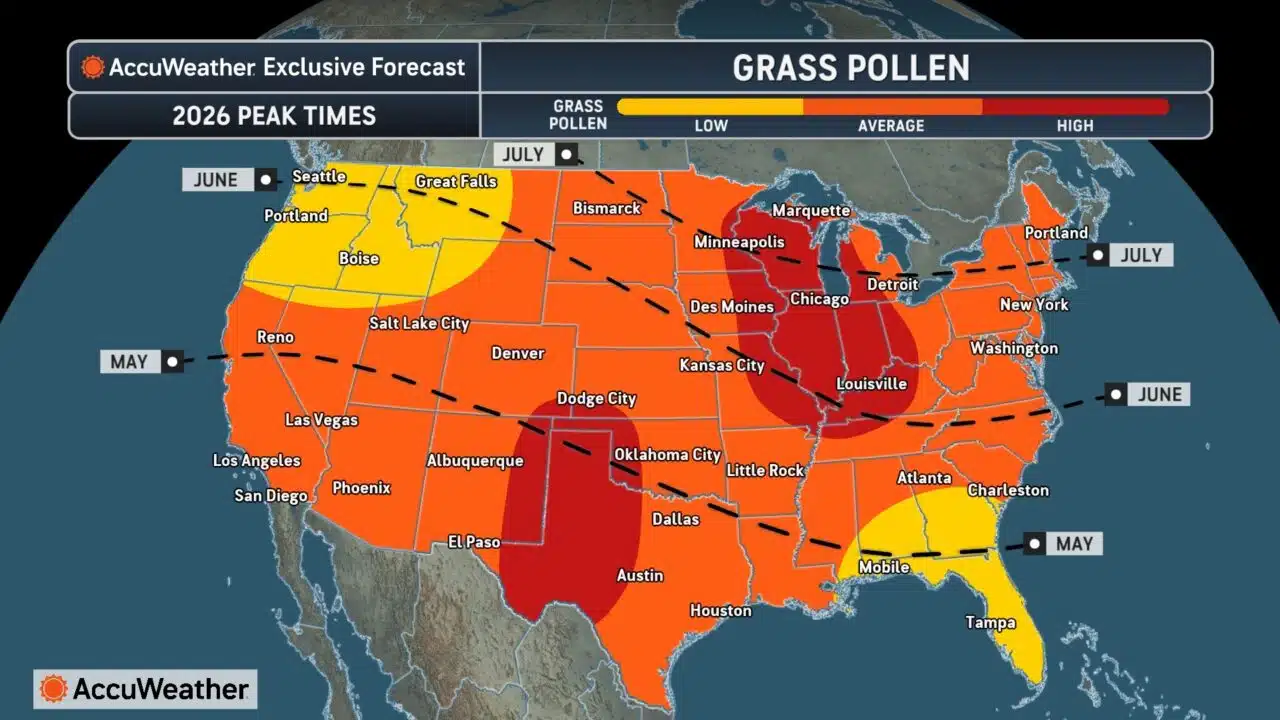
Grass pollen usually increases after tree pollen fades.
Meteorologists expect an early grass pollen spike across the northern Plains and Great Lakes during June and July.
Cities likely to experience high or extreme levels include:
- Chicago
- St. Louis
- Minneapolis
Above-average rainfall combined with warmer temperatures will allow grass to grow quickly.
Grass can surge within days after soaking rain.
Meanwhile, some regions may see lower levels.
Areas expected to experience below-average grass pollen include:
- Florida
- Parts of the Southeast
- Sections of the Gulf Coast
Dry conditions early in summer may limit grass growth in those areas.
Weed pollen likely to intensify later in summer
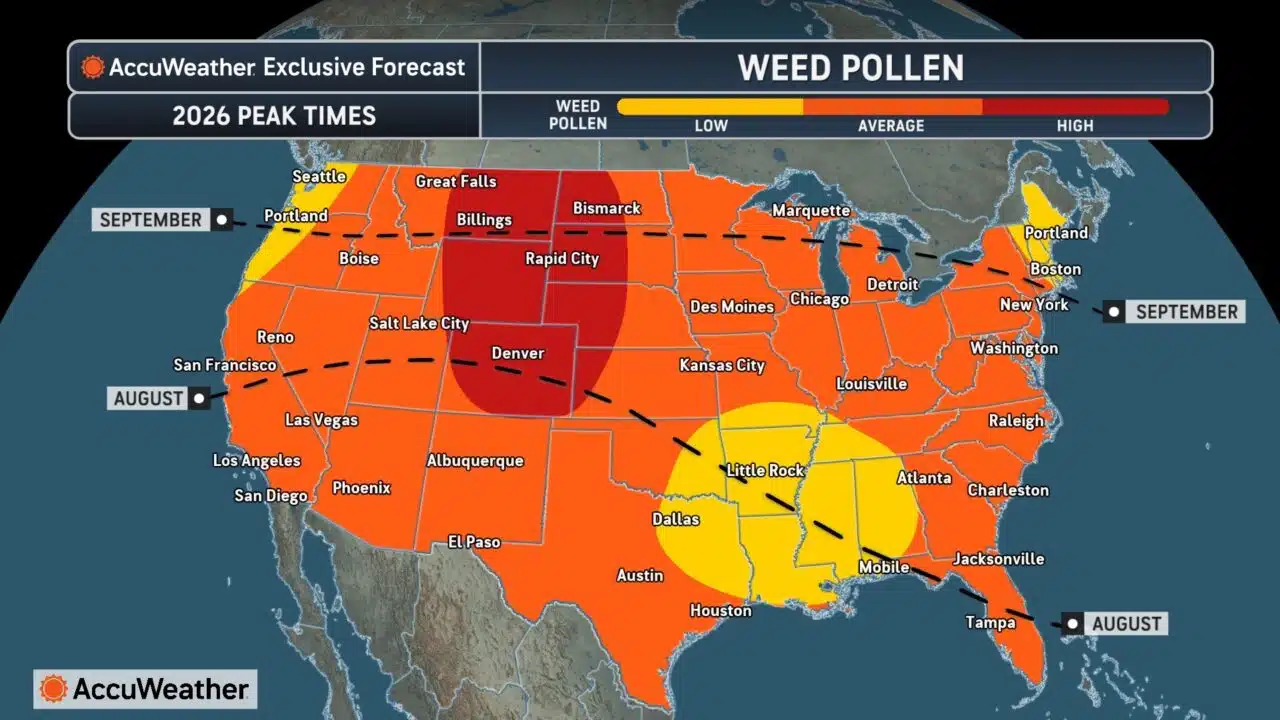
Weed pollen typically peaks later in the year.
Common triggers include:
- Ragweed
- Thistle
- Sagebrush
- Mugwort
The Rocky Mountains region could see the highest weed pollen levels this season.
Higher rainfall and a longer warm period may allow weeds to grow rapidly.
However, the season may end earlier than usual if colder weather arrives quickly.
In contrast, weed pollen may stay lower in:
- Eastern Texas
- Kentucky
- Alabama
- Parts of New England
Frequent storms along the Pacific Northwest coast could also wash pollen out of the air.
Why allergy seasons keep getting longer
Climate experts say the 2026 forecast fits a broader national trend.
Seasonal allergy seasons are expanding on both ends of the calendar.
Several factors are driving the change:
- Milder winters allow plants to bloom earlier
- Later frosts delay the end of pollen production
- Rising carbon dioxide increases plant growth
Temperature data shows the contiguous United States has warmed about 0.5°F per decade over the past 70 years.
Longer growing seasons allow trees, grass, and weeds to produce pollen for extended periods.
Experts say this could worsen symptoms for millions of Americans who already struggle with seasonal allergies.
What allergy sufferers should expect this spring
People with seasonal allergies may notice symptoms earlier than usual this year.
Common symptoms include:
- Sneezing
- Runny nose
- Itchy eyes
- Congestion
- Fatigue
Weather swings can cause pollen counts to spike rapidly.
Even a few dry and windy days after rainfall can push levels much higher.
Health experts recommend tracking local pollen forecasts and limiting outdoor exposure on high-count days.
What happens next
The 2026 spring pollen report suggests many areas will see waves of pollen through spring and summer.
Conditions will vary by region depending on rainfall, temperature patterns, and storm activity.
More seasonal updates are expected as the allergy season progresses.

This content is brought to you by the FingerLakes1.com Team. Support our mission by visiting www.patreon.com/fl1 or learn how you send us your local content here.