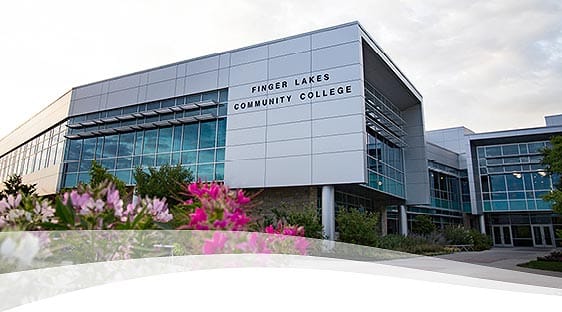
A simple request for a student discount turned into a $6,000 donation for Finger Lakes Community College.
ETS Laboratories in St. Helena, California, has pledged to donate analytical lab services worth up to $2,000 per year for three years to FLCC’s Viticulture and Wine Technology program.
The company will test student-made wine at different stages of fermentation. Those tests measure compounds like acids, which shape how wine tastes, how long it lasts, and how well it resists harmful microbes.
The in-kind donation gives students access to industry-standard data. They’ll gain hands-on experience interpreting lab results and making winemaking decisions based on chemistry.
“Our students will now be able to take a deeper dive into wine chemistry when comparing fermentation and processing techniques,” said Associate Professor Paul Brock. “This will undoubtedly result in a higher level of understanding of how the winemaking process affects the final product.”
The opportunity started with Peter Wronski, an FLCC student who lives in Charlestown, Rhode Island. He completes much of his coursework online and drives five and a half hours for in-person labs.
Wronski and his lab partner, Daniel Shafer of Geneva, experimented with a different type of yeast in their Enology I class. They wanted advanced chemical analysis of the wine they produced.
Wronski asked ETS for an educational discount. He felt comfortable reaching out because he directs laboratory and research services for the nonprofit RIH Orthopaedic Foundation.
Instead of a discount, ETS offered a donation.
“Peter went above and beyond while pursuing analysis services from ETS,” Brock said. “While FLCC has paid for ETS services in the past, Peter was able to explain that he was a student, and now ETS sees FLCC as an investment.”
Wronski and Shafer began their class project with a hypothesis. They believed a different yeast might give white hybrid wines greater aromatic complexity.
Lab results showed different chemical properties, but not enough to change the outcome of a blind taste test. The experience still reinforced a key lesson of research: sometimes you rule out an idea.
Wronski and his wife, Jodi Frank, grow an acre of grapes near their home. They started making wine as a hobby.
“We got to the point where we just needed to stop learning everything the hard way,” Wronski joked.
He chose FLCC for its mix of online courses and hands-on learning.
“It suits my style of learning better,” Wronski said. “It’s also about getting to really know the people, not just within the FLCC program, but in the wine industry around the Finger Lakes. I have a network of people that I can now reach out to and say, ‘Hey, I’ve got this issue,’ or, ‘What do you think about this problem?’ That was an invaluable part of coming out here.”
Wronski has one more class, Enology II, before he completes the viticulture and wine technology training. He hopes to elevate his own wine and strengthen wine culture back home.
“If I can help bring back to Rhode Island a little bit of that cooperation and quality that the Finger Lakes has developed, that would be wonderful,” he said.

FingerLakes1.com is the region’s leading all-digital news publication. The company was founded in 1998 and has been keeping residents informed for more than two decades. Have a lead? Send it to news@fingerlakes1.com.