


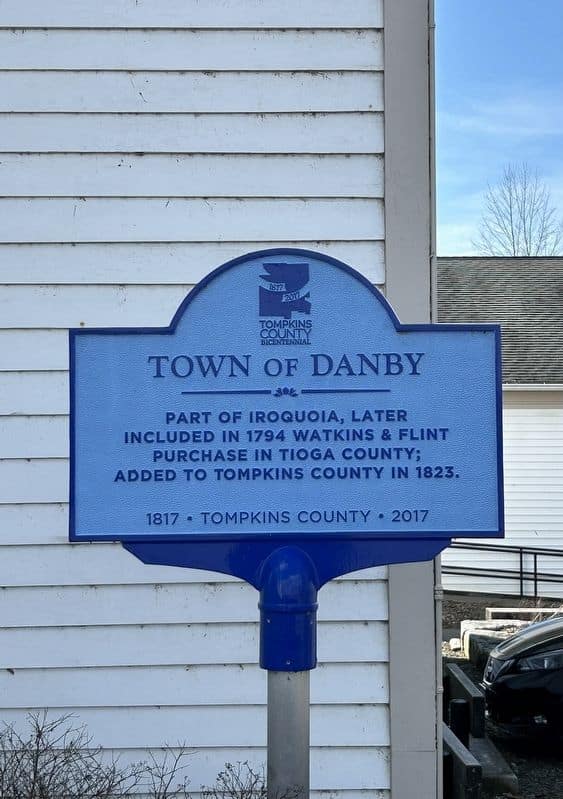
A scathing audit of the Town of Danby’s justice court operations uncovered major gaps in how town clerks handled tax payments and public funds — including missing deposits, delayed remittances, and sloppy recordkeeping that led to nearly $65,000 in accounting errors.
The New York State Comptroller’s office released the findings in May 2022 after reviewing the town’s financial activity from January 2019 through mid-2021.

Thousands in tax funds went missing
The audit revealed that in 2021 alone, over $1,000 in cash from tax collections was never deposited and could not be accounted for. Deposits were routinely late — with 79% of tax collection deposits made after the legal deadline — and some were not deposited “intact,” meaning cash was mixed with other funds or held unsecured for days at a time.
In one case, a $3,095 tax payment included $1,004 in cash that was never deposited.
Delayed payments hurt town and county budgets
Auditors also flagged serious issues with how and when the clerks turned over money to the town supervisor and Tompkins County. Tax payments were often delayed by weeks or even months.
For example:
- In 2020, the clerk collected $795,500 in the first two weeks of January — but didn’t remit it weekly as required.
- In 2021, $2 million in taxes wasn’t passed along to the town until February, and county payments were similarly late.
These delays meant public money wasn’t available to support local operations when it was needed.
Bookkeeping errors topped $64,000
Auditors identified multiple mistakes that added up to $64,959 in accounting discrepancies. Some of the biggest issues:
- Nearly $27,000 in mortgage tax was wrongly deposited into the town’s tax account.
- Almost $13,000 was mistakenly paid into the water fund.
- Over $7,000 was due back to taxpayers after duplicate or excess payments.
- A utility tax payment to the county was off by $3,700.
By the end of June 2021, the tax collection account was short $1,267.
Poor documentation, no oversight
Beyond the missing money and missteps, auditors found that the clerks failed to keep adequate records. More than half of the tested transactions lacked supporting documentation. Deposit slips didn’t include itemized details, making it hard to trace the source of payments.
The audit also called out the town board for not performing required annual audits of the clerk’s records, which might have caught some of the problems earlier.
Town clerk responds: “A learning experience”
Janice Adelman, the current clerk, took office in late 2020 after her predecessor resigned. In a detailed response included in the audit, she acknowledged the issues and said she’s taken steps to improve.
“I continued to make mistakes both on my own, and by following my two predecessors’ leads,” she wrote.
Since then, she’s overhauled the tax collection process, installed better security for handling cash, and enrolled in multiple state and county trainings. She also began performing monthly reconciliations — a basic accounting step that had previously been skipped.
Still, some challenges remain, especially when it comes to integrating payments from other departments and fixing software systems that don’t communicate well.
Key recommendations
The audit laid out clear steps for improvement, including:
- Depositing and remitting collections on time
- Keeping detailed and secure records
- Performing monthly reconciliations
- Conducting regular audits
- Seeking formal training
The town said it plans to implement corrective actions.

FingerLakes1.com is the region’s leading all-digital news publication. The company was founded in 1998 and has been keeping residents informed for more than two decades. Have a lead? Send it to news@fingerlakes1.com.