

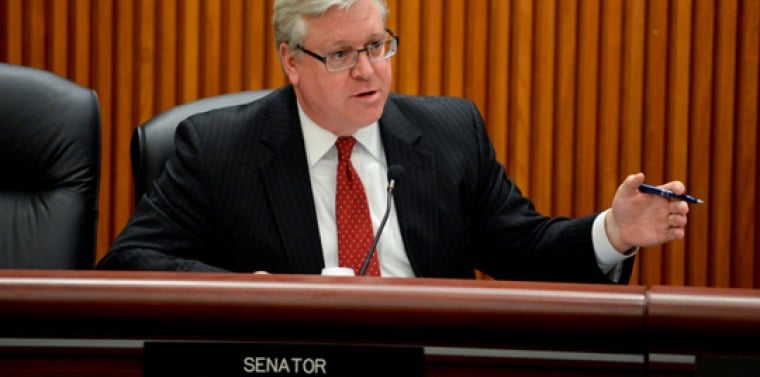
State Senator Tom O’Mara has sharply criticized New York’s recently signed Climate Change Superfund Act, arguing that the measure will impose significant financial burdens on residents and businesses without offering viable alternatives to meet the state’s energy needs.
The law, signed by Governor Kathy Hochul, aims to collect $3 billion annually from gas and oil companies over the next 25 years, totaling $75 billion. Supporters of the legislation argue that these companies are responsible for greenhouse gas emissions and should bear the costs of mitigating their impacts. However, opponents, including O’Mara, say the law disproportionately targets New York-based industries while failing to address global emission realities.

In his weekly column, O’Mara highlighted what he sees as a contradiction in Hochul’s approach to affordability. He pointed to her December pledge to focus on “putting money back in your pockets,” juxtaposed against the subsequent signing of a law he claims will drive up energy costs statewide.
Justin Wilcox, Executive Director of Upstate United, called the law a “misguided move” and warned it would disproportionately affect residents who rely on fossil fuels for basic needs like heating their homes during harsh winters. Wilcox predicted the legislation would trigger lawsuits, creating further costs for taxpayers.

O’Mara also referenced recent utility rate hikes approved by the Public Service Commission, which have seen increases exceeding 30% in some cases. These rising costs, he argued, stem from previous mandates under the state’s 2019 Climate Leadership and Community Protection Act.
A broad coalition, including the New York Farm Bureau, Business Council of New York, and regional manufacturing associations, had urged Hochul to veto the bill, citing concerns about its economic impact and implementation feasibility. The coalition argued that the state had previously recognized the essential role of fossil fuels in public safety and economic stability, particularly through initiatives like the FUEL NY strategic reserve program.
O’Mara warned that the Superfund Act could make New York an even more expensive state to live and do business in. While legal challenges are expected to delay the law’s full impact, he stressed that, if implemented, the financial burden would inevitably fall on consumers.
Governor Hochul has not responded directly to O’Mara’s criticisms but has framed the law as a necessary step toward combating climate change and holding polluters accountable.

FingerLakes1.com is the region’s leading all-digital news publication. The company was founded in 1998 and has been keeping residents informed for more than two decades. Have a lead? Send it to news@fingerlakes1.com.