

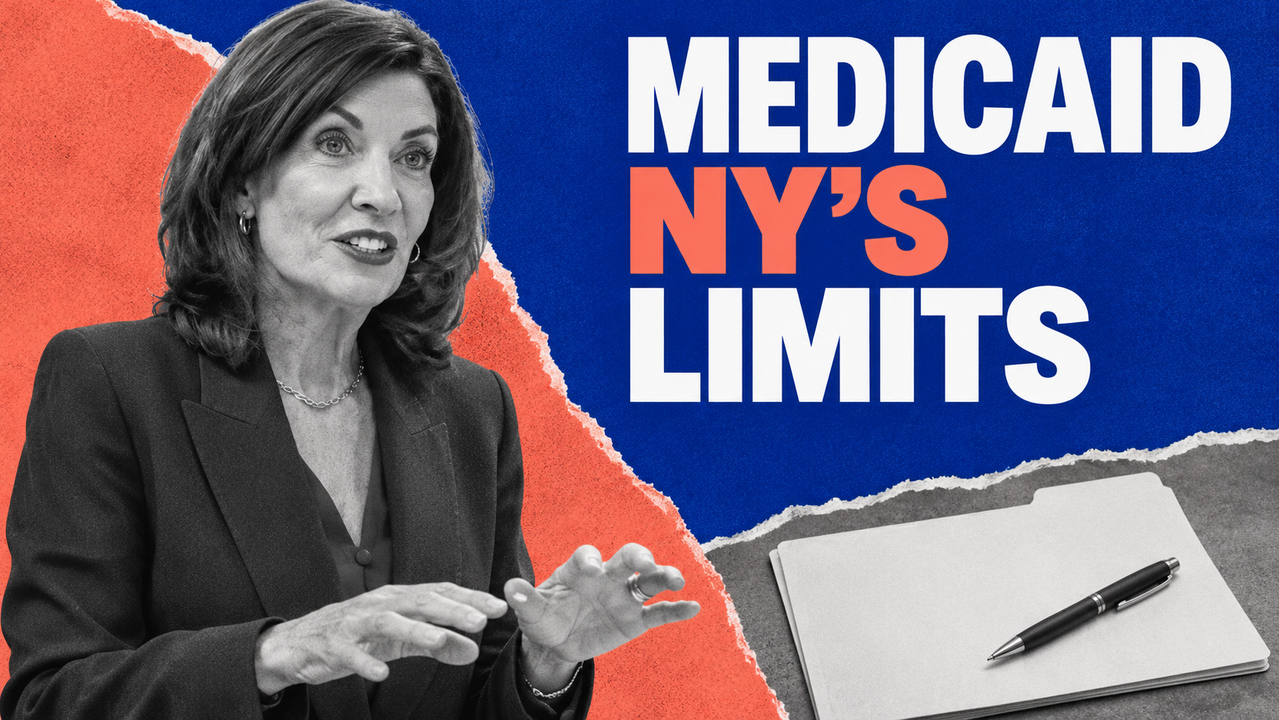
Gov. Kathy Hochul can buy time for Medicaid recipients, fund enrollment help and seek exemptions from new federal requirements. She cannot repeal those requirements or restore federal funding through a state announcement.
That’s central to the Medicaid protections Hochul announced Thursday, aimed at nearly 2 million New Yorkers potentially affected by federal work and community engagement rules.
New York plans to use a federal option temporarily preventing coverage losses tied to those requirements, seek a hardship exemption for Bronx residents and commit $213 million over five years to enrollment assistance.
The actions show how a state can influence the consequences of federal policy through implementation, spending and litigation. Their reach depends on the authority Congress has granted, decisions by federal agencies and rulings from courts.
New York can delay coverage losses while implementing the rules
The immediate protection comes from an option the Trump administration made available to states Nov. 13.
Under the federal “hold harmless” policy, participating states can suspend application denials and disenrollments based solely on an otherwise eligible person’s failure to demonstrate compliance with the work requirements.
The option applies to applications received and renewals initiated through June 30, 2027.
It does not suspend every Medicaid eligibility rule. People must still meet other requirements, including applicable income limits.
New York also must continue implementing the federal system beginning Jan. 1, assessing whether affected applicants and recipients meet the requirements or qualify for an exclusion. CMS requires approval of a state’s mitigation plan before it implements the protection, according to its guidance to Medicaid directors.
The federal requirements generally concern certain adults ages 19 through 64, rather than everyone enrolled in Medicaid. Qualifying activities include employment, community service and work programs totaling 80 hours monthly, while at least half-time enrollment in an educational program provides another route, according to CMS.
For recipients, the state’s decision provides temporary protection against one category of coverage loss while the underlying requirements remain in place.
Exemptions depend on federal eligibility standards
Hochul also directed the Department of Health to seek a temporary economic-hardship exemption for Bronx residents.
The administration said the Bronx is currently New York’s only county meeting the applicable unemployment standard. It said officials would monitor other counties and pursue additional exemptions when appropriate.
That request requires federal approval. Hochul cannot extend a countywide exemption to the Finger Lakes or Central New York simply because residents there also face economic difficulties.
Federal rules permit short-term hardship exceptions in specified circumstances, including qualifying county unemployment levels and certain medical or disaster-related situations.

States also have a role in identifying people who qualify for individual exclusions and exceptions, including applicable medical protections. Using reliable information already available to government can reduce the paperwork residents must supply.
But New York cannot obtain an unrestricted waiver removing the work requirement statewide. The federal implementing rule says Congress prohibited using Medicaid’s ordinary Section 1115 demonstration authority to waive the new community engagement provisions.
State spending can help people navigate the system
Enrollment assistance is an area where New York has more direct control.
Hochul announced $213 million for five-year Navigator contracts, with annual funding reaching $42.6 million after a second round of awards planned for early 2027.
The first round provides $32 million annually for 49 community-based organizations and 22 subcontractors. An additional $10.6 million annually would support the second round.
Navigators help residents apply for coverage, complete paperwork and understand their benefits. The state is also investing in eligibility systems, income verification, outreach and staffing.
“Our primary mission is to ensure that administrative changes do not become barriers to health care,” state Medicaid Director Amir Bassiri said.
Those investments can help eligible residents document compliance or establish an exemption. They cannot make someone eligible for federally funded coverage when federal law excludes them.
The $213 million supports enrollment assistance; it does not replace the federal Medicaid funding affected by the broader legislation.
Courts can change regulations, while Congress controls the statute
New York has already demonstrated another way states can affect federal implementation: challenging agency rules in court.
Attorney General Letitia James joined a multistate lawsuit against restrictions affecting the “medically frail” exclusion from work requirements.
On Oct. 29, a federal court struck down a restrictive part of that definition, according to James’ office. The challenged provision would have required people with certain serious conditions to demonstrate how those conditions impaired their ability to meet the work requirement.
CMS’ subsequent hold harmless guidance acknowledges that states do not have to implement the portion of the regulation the court vacated.
That ruling changed a federal agency’s implementation of the law. It did not repeal the work requirement enacted by Congress.
Changing the statute itself requires federal legislative action. New York’s congressional delegation can pursue that change, but Hochul and the state Legislature cannot accomplish it through state law.
For residents, the immediate task remains maintaining coverage under the rules that apply to their circumstances. New York advises Medicaid members to keep their contact information current, review renewal notices and seek free enrollment assistance through NY State of Health or by calling 1-855-355-5777.
Make FL1 part of your day.
Local reporting. Useful updates. More ways to stay close to your community.
Go ad-free
Support independent local reporting and enjoy FL1 without display ads.
$4.99 / month
Become a member →Cancel anytime. Third-party media players may contain ads.Get the daily briefing
Start your morning with the headlines that matter across the Finger Lakes.
Find more FL1 on Google
Choose FingerLakes1.com as a preferred source to see more of our reporting in your Google news results.

FingerLakes1.com is the region’s leading all-digital news publication. The company was founded in 1998 and has been keeping residents informed for more than two decades. Have a lead? Send it to news@fingerlakes1.com.