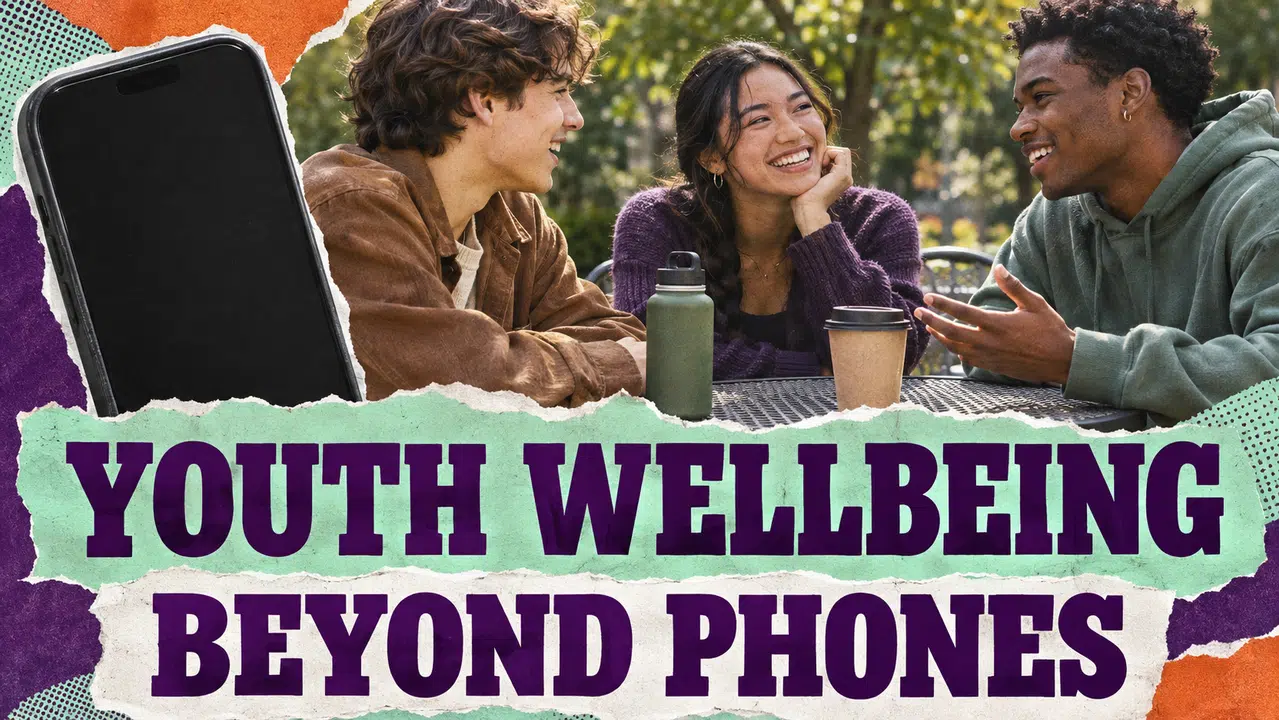
Household finances, safety at home and relationships with caregivers were more strongly associated with young people’s wellbeing than online habits in a new international study released as New York continues its push to restrict smartphones in schools.
The Gallup and Boston Children’s Digital Wellness Lab research also found that frequent short-video scrolling and stronger attachment to digital devices were associated with lower wellbeing and greater loneliness.
Together, the findings broaden the questions facing New York schools and families beyond how much time students spend looking at a screen.
The research surveyed 15,925 people ages 15 to 22 in 16 countries between May 28 and Aug. 21. Its findings describe associations across those countries, rather than estimates specifically for New York, and do not establish that particular online activities cause mental health problems.
Relationships and home circumstances stood out
The strongest associations with overall life evaluations involved perceived household financial circumstances, feeling safe at home and the quality of the relationship with a primary caregiver.
After accounting for other relevant factors, young people who reported comfortable household finances, consistently feeling safe at home and a strong caregiver relationship rated their lives an average of 3.4 points higher on a 10-point scale than those reporting the opposite circumstances.
In-person friendships also mattered.
Across the countries surveyed, a median of 93% reported having a close in-person friend, compared with 37% who reported a close online-only friend.
Medium- and high-quality in-person friendships were associated with higher life evaluations. Having an online-only friendship was not associated with a comparable improvement after accounting for other friendship types.

Weekly participation in in-person group activities and having a trusted adult outside the family were also associated with higher wellbeing.
Short-video scrolling showed a different pattern
Among the online activities measured, scrolling short-form videos was the only one associated with lower life evaluations after researchers accounted for other relevant factors.
Watching longer videos did not show the same relationship.
The researchers also developed a measure of digital attachment using time spent on a person’s most-used platform, nighttime online activity in bed and how often someone felt lost without a phone.
Young people with higher digital attachment reported more loneliness and more symptoms of anxiety or depression. Those symptom measures came from a screening questionnaire, rather than clinical diagnoses.
The study was conducted with support from the Pinterest Impact Fund. It used nonprobability online samples in 14 countries and probability-based, face-to-face samples in two.
New York’s response includes school rules and treatment access
New York’s phone-free schools law requires school districts, charter schools and BOCES to restrict unsanctioned use of smartphones and other internet-enabled personal devices throughout the school day, including lunch and study halls.
The law includes exceptions for health needs, emergencies, approved educational uses and other specified circumstances. Schools must also provide a way for parents to contact students.
The Gallup research did not evaluate New York’s policy or measure whether school phone bans improve mental health.
New York’s youth mental health efforts also include school-based clinics that connect students and families with treatment in familiar settings.
The Office of Mental Health maintains a directory of licensed programs and school-based services. Families seeking support can ask their school about available services or use the state’s program directory to find providers by county.
Make FL1 part of your day.
Local reporting. Useful updates. More ways to stay close to your community.
Go ad-free
Support independent local reporting and enjoy FL1 without display ads.
$4.99 / month
Become a member →Cancel anytime. Third-party media players may contain ads.Get the daily briefing
Start your morning with the headlines that matter across the Finger Lakes.
Find more FL1 on Google
Choose FingerLakes1.com as a preferred source to see more of our reporting in your Google news results.

FingerLakes1.com is the region’s leading all-digital news publication. The company was founded in 1998 and has been keeping residents informed for more than two decades. Have a lead? Send it to news@fingerlakes1.com.