


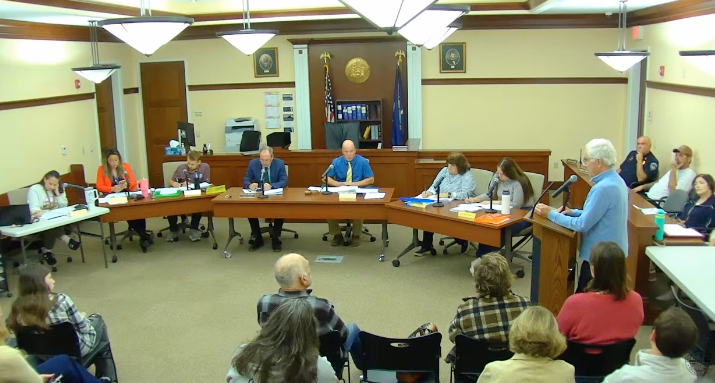
The Seneca Falls Town Board moved toward a 2% property tax levy increase for 2027 during its Nov. 9 workshop, directing staff to revise the budget using spending reductions, police reserve money and additional landfill revenue.
The agreement lowers the target from the previously proposed 4% increase, but it does not constitute final budget adoption. Staff must finish calculating the revised spending plan and the additional revenue needed to balance it.
Members identified approximately $79,500 in spending and funding changes before directing staff to close the remaining gap. That balance was discussed as roughly $20,000, with the final amount dependent on updated calculations.
The workshop followed the Nov. 3 meeting at which the board rejected a tax-cap override and postponed budget adoption. A special meeting is scheduled for Nov. 12 at 5 p.m.
Planning funds reduced, police purchases shifted to reserves
The largest new reduction was $50,000 from comprehensive plan implementation, lowering that proposed allocation from $400,000 to $350,000.
Members debated how much money should remain available for zoning work, community branding and transportation planning. Some projects depend on competitive grants, and reimbursement arrangements could require the town to pay expenses before receiving grant money.
Councilwoman Wendy Crane questioned whether the town should commit the full amount before knowing which grants it will receive. Other participants cautioned that cutting too deeply could undermine projects the board had already supported.
The board also worked toward removing a proposed $7,500 payment to Police Chief Timothy Snyder for overseeing zoning and code enforcement, discussing other ways to assign those responsibilities.
Another $22,000 would come off the police vehicle appropriation and instead be paid from an existing police reserve. Members discussed using approximately $30,000 from that same reserve for firearms.
That vehicle change shifts the funding source rather than eliminating the purchase.
The latest revisions follow the October workshop at which members tallied $436,556 in proposed reductions, including leaving a police vacancy unfilled.
Landfill money remains the central disagreement
The debate again divided members over how much landfill revenue should support current services and how much should be preserved for the future.
Crane argued that residents struggling with food, electricity and other household expenses need immediate relief. She supported using a relatively small additional share of available landfill money to limit the tax increase.

Supervisor Frank Schmitter warned that repeated withdrawals from accumulated funds would leave the town facing difficult choices when landfill revenue ends. Councilman Jackson Puylara also urged the board to consider its long-term financial resilience recommendations.
An earlier motion to use $50,000 in additional landfill revenue failed.
After further discussion of cuts and reserve funding, members returned to a smaller amount. The closing motion directed staff to use the additional revenue necessary to reach the 2% target, leaving the precise figure to the budget calculations.
The discussion also exposed confusion over the difference between the tax levy, assessed property values and the tax rate. The workshop did not establish a final household tax-bill estimate.
Public Works savings remain contingent on dissolution
The proposed elimination of the Department of Public Works remained a major unresolved issue.
Supporters pointed to approximately $90,000 in potential savings from eliminating the director’s position, along with possible proceeds from selling redundant equipment.
But the department has not been dissolved. A public hearing and further board action are expected in December, after the November budget deadline discussed at the workshop.
Members debated who would supervise buildings and grounds employees, how responsibilities would transfer and which expenses would remain even if the department were eliminated.
Highway Superintendent Jeremy Wendt discussed retaining useful equipment and potentially disposing of six or seven redundant pieces across the departments. No final equipment-sale proceeds were established.
Members also discussed placing buildings and grounds under the supervisor. Formal assignments and the broader reorganization still require additional action.
The immediate budget revisions therefore did not depend on counting the full proposed Public Works savings.
Retiree health costs add another question
Former Highway Superintendent Jim Peterson urged the board to increase assistance for retirees facing rising out-of-pocket health care costs.
Members requested information about past reimbursements, actual spending and unused funds before considering a change. No specific increase in retiree assistance was established during the discussion.
The board now heads toward its Nov. 12 special meeting with a lower tax target and several identified revisions, while the final funding calculation, Public Works reorganization and retiree health assistance remain outstanding.

FingerLakes1.com is the region’s leading all-digital news publication. The company was founded in 1998 and has been keeping residents informed for more than two decades. Have a lead? Send it to news@fingerlakes1.com.